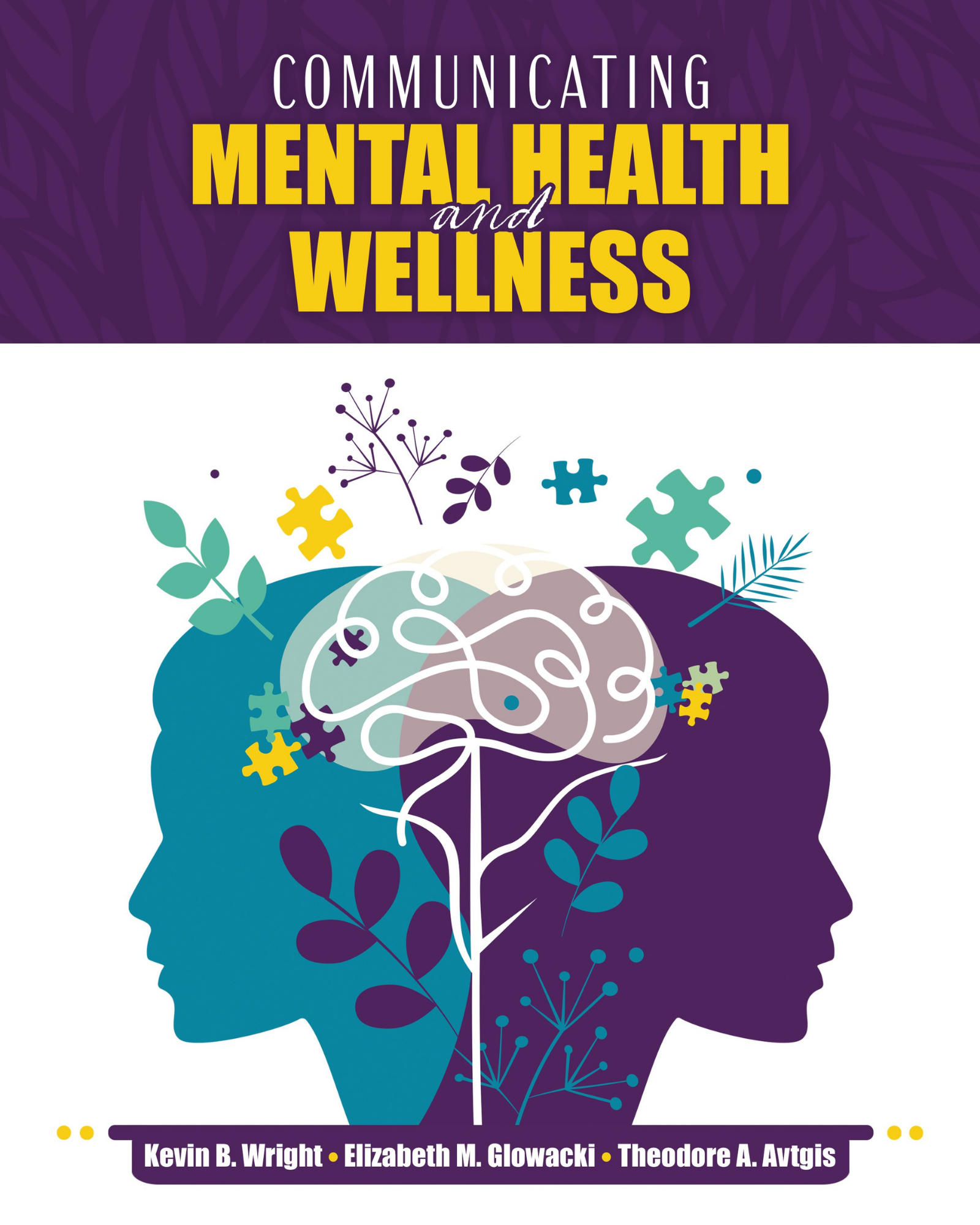
Communicating Mental Health & Wellness
Edition: 1
Copyright: 2027
Pages: 330
Edition: 1
Copyright: 2027
Pages: 330
Choose Your Format
$110.00 USD
Ebook
$55.00 USD
Our health is central to functioning in life. Without our physical health, mental health, and psychological well-being, human beings find it difficult to function well, thrive as people, achieve their goals and dreams, and be there for their loved ones. Positive and negative emotions and life experiences influence mental health and well-being.
Communicating Mental Health and Wellness examines mental health, communication, and psychological well-being in a variety of communication contexts and from multiple scholarly perspectives, including such mental health topics as:
- Work and burnout
- Social support
- Mass communication
- Social media
- Campaigns
- Communication traits
- Communication apprehension and anxiety
- New technologies
- Family relationships
- Romantic relationships
Mental health communication is a relatively new area of study in the field of communication and has begun to garner increasing attention from both academic and lay publics. The way we communicate with, relate to, and co-exist with others reveal a great deal about our mental health. This is one of the first survey textbooks on mental health communication and invites both educators and learners to think about the crucial role communication plays in facilitating, advocating for, and presenting challenges to mental health.
Chapter 1: The Journey Begins: Exploring Mental Health, Psychological Well-being, and Mental Health Communication
Chapter 2: Mental Health Across the Lifespan
Chapter 3: My Cup Runneth Over; What a Mess! Positive Communication and Mental Health
Chapter 4: Take This Job and ___! Communication, Burnout, and Psychological Well-being
Chapter 5: I’ve Got Your Back! Mental Health Communication as Social Support
Chapter 6: First Comes Love Then Comes…Mental Health? The Bidirectional Nature of Romantic Relationships and Psychological Wellness
Chapter 7: From the Big Screen to the Small Screen: Mental Health and Mass Communication
Chapter 8: There’s an App for That: New Technologies and Mental Health
Chapter 9: Canceled or Credible? Recommendations for Effective Mental Health Campaigns
Chapter 10: Birds of a Feather Flock Together: Mental Health and Communication Traits
Chapter 11: Communication Apprehension, Communication Anxiety and Mental Health
Chapter 12: Living in Darkness While Searching for Light: The Linguistic Aspects of Descriptions of Mental Health

Dr. Kevin B. Wright is a Professor in the Department of Communication at George Mason University and the Director of the Center for Health and Risk Communication. His research examines community-based social media health interventions, online social support community communication processes, health-related stigma, and the relationship of these concepts to key health outcomes, such as stress, depression, coping ability, and quality of life. Dr. Wright has a growing secondary interest in online research methods, and his (2005) researching internet populations article influenced a generation of online survey researchers. More recently, Dr. Wright is conducting studies and testing the utility of AI (machine learning) approaches to social media content analysis using LLMs, including research which uses AI to code the discussion posts, comments, engagement data, and social network data of online support communities such as those in Reddit. Dr. Wright also researches social support, communication issues such as openness and avoidance in face-to-face caregiving relationships, how these variables influence are related to health outcomes for both caregivers and the person they are caring for, including families coping with cancer and autism. His work also examines triadic communication issues between caregivers, patients, and health care providers. Dr. Wright has published 11 books and over 150 journal articles and book chapters. In addition, he has engaged in numerous collaborations with health communication and strategic communication scholars internationally, including Amsterdam VU, University of Copenhagen, Hong Kong Baptist University, Jinan University, Nişantaşı University, Renmin University, Shanghai University, Tilburg University, and the Turkish Ministry of Health.

Dr. Elizabeth M. Glowacki (PhD, University of Texas at Austin) is an Associate Teaching Professor jointly appointed in the Department of Public Health and Health Sciences (Bouvé College of Health Sciences) and in the Department of Communication Studies (College of Arts, Media and Design) at Northeastern University. Her research interests lie in health communication, message design, persuasion, and mobile health. Her work has appeared in Substance Abuse, Journal of Health Communication, Journal of Language and Social Psychology, and American Journal of Infection Control. Dr. Glowacki has taught courses on medical communication, interpersonal communication, interviewing, public speaking, media writing, and intercultural communication. She is also the Associate Chair of Faculty Governance in the Department of Public Health and Health Sciences. Dr. Glowacki has been interviewed and quoted in such outlets as ABC News and National Public Radio. Dr. Glowacki has published over 40 journal articles and book chapters, and recently published Mental Health Case Studies With Implications for Communication, an edited work that illustrates connections between theory and practice in order to identify recommendations for improving mental health communication.

Theodore A. Avtgis, Ph.D., is an Assistant Professor specializing in health communication and organizational communication processes in general business and healthcare organizations. Dr. Avtgis received his Ph.D. in Communication Studies from Kent State University. Dr. Avtgis has authored over 70 peer-reviewed articles and book chapters focusing on organizational communication, health communication, risk and crisis communication, and aggressive communication. His work has appeared in journals such as Management Communication Quarterly, Journal of Trauma: Injury, Infection, and Critical Care, Communication Education, and Communication Research Reports among many others. He is co-author of seventeen books. Dr. Avtgis was recognized as one of the top 50 most productive researchers in the field of communication studies between 1996-2001 (tied for 12th). Other honors include being named a Centennial Scholar (2009 Eastern Communication Association), Distinguished Scholar (2011 Eastern Communication), Past Presidents’ Award Recipient (Eastern Communication Association), Research Fellow (2012 Eastern Communication Association), Teaching Fellow (2013 Eastern Communication Association), Honoree (2013 Ohio Magazine Excellence in Education), and recipient of the Ashland University Academic Mentor Award (2015). Dr. Avtgis has served as Editor in Chief of Communication Research Reports and has served on the boards of eleven scholarly journals. He is co-founder of the medical communication consulting firm Medical Communication Specialists and was recognized as a member of the World Council on Hellenes Abroad (USA Region of American Academics). Throughout his career, Professor Avtgis has served on the faculty of academic institutions including St. John’s University, West Virginia University, Ashland University, the University of Akron, and Western Illinois University.
Our health is central to functioning in life. Without our physical health, mental health, and psychological well-being, human beings find it difficult to function well, thrive as people, achieve their goals and dreams, and be there for their loved ones. Positive and negative emotions and life experiences influence mental health and well-being.
Communicating Mental Health and Wellness examines mental health, communication, and psychological well-being in a variety of communication contexts and from multiple scholarly perspectives, including such mental health topics as:
- Work and burnout
- Social support
- Mass communication
- Social media
- Campaigns
- Communication traits
- Communication apprehension and anxiety
- New technologies
- Family relationships
- Romantic relationships
Mental health communication is a relatively new area of study in the field of communication and has begun to garner increasing attention from both academic and lay publics. The way we communicate with, relate to, and co-exist with others reveal a great deal about our mental health. This is one of the first survey textbooks on mental health communication and invites both educators and learners to think about the crucial role communication plays in facilitating, advocating for, and presenting challenges to mental health.
Chapter 1: The Journey Begins: Exploring Mental Health, Psychological Well-being, and Mental Health Communication
Chapter 2: Mental Health Across the Lifespan
Chapter 3: My Cup Runneth Over; What a Mess! Positive Communication and Mental Health
Chapter 4: Take This Job and ___! Communication, Burnout, and Psychological Well-being
Chapter 5: I’ve Got Your Back! Mental Health Communication as Social Support
Chapter 6: First Comes Love Then Comes…Mental Health? The Bidirectional Nature of Romantic Relationships and Psychological Wellness
Chapter 7: From the Big Screen to the Small Screen: Mental Health and Mass Communication
Chapter 8: There’s an App for That: New Technologies and Mental Health
Chapter 9: Canceled or Credible? Recommendations for Effective Mental Health Campaigns
Chapter 10: Birds of a Feather Flock Together: Mental Health and Communication Traits
Chapter 11: Communication Apprehension, Communication Anxiety and Mental Health
Chapter 12: Living in Darkness While Searching for Light: The Linguistic Aspects of Descriptions of Mental Health
Dr. Kevin B. Wright is a Professor in the Department of Communication at George Mason University and the Director of the Center for Health and Risk Communication. His research examines community-based social media health interventions, online social support community communication processes, health-related stigma, and the relationship of these concepts to key health outcomes, such as stress, depression, coping ability, and quality of life. Dr. Wright has a growing secondary interest in online research methods, and his (2005) researching internet populations article influenced a generation of online survey researchers. More recently, Dr. Wright is conducting studies and testing the utility of AI (machine learning) approaches to social media content analysis using LLMs, including research which uses AI to code the discussion posts, comments, engagement data, and social network data of online support communities such as those in Reddit. Dr. Wright also researches social support, communication issues such as openness and avoidance in face-to-face caregiving relationships, how these variables influence are related to health outcomes for both caregivers and the person they are caring for, including families coping with cancer and autism. His work also examines triadic communication issues between caregivers, patients, and health care providers. Dr. Wright has published 11 books and over 150 journal articles and book chapters. In addition, he has engaged in numerous collaborations with health communication and strategic communication scholars internationally, including Amsterdam VU, University of Copenhagen, Hong Kong Baptist University, Jinan University, Nişantaşı University, Renmin University, Shanghai University, Tilburg University, and the Turkish Ministry of Health.
Dr. Elizabeth M. Glowacki (PhD, University of Texas at Austin) is an Associate Teaching Professor jointly appointed in the Department of Public Health and Health Sciences (Bouvé College of Health Sciences) and in the Department of Communication Studies (College of Arts, Media and Design) at Northeastern University. Her research interests lie in health communication, message design, persuasion, and mobile health. Her work has appeared in Substance Abuse, Journal of Health Communication, Journal of Language and Social Psychology, and American Journal of Infection Control. Dr. Glowacki has taught courses on medical communication, interpersonal communication, interviewing, public speaking, media writing, and intercultural communication. She is also the Associate Chair of Faculty Governance in the Department of Public Health and Health Sciences. Dr. Glowacki has been interviewed and quoted in such outlets as ABC News and National Public Radio. Dr. Glowacki has published over 40 journal articles and book chapters, and recently published Mental Health Case Studies With Implications for Communication, an edited work that illustrates connections between theory and practice in order to identify recommendations for improving mental health communication.
Theodore A. Avtgis, Ph.D., is an Assistant Professor specializing in health communication and organizational communication processes in general business and healthcare organizations. Dr. Avtgis received his Ph.D. in Communication Studies from Kent State University. Dr. Avtgis has authored over 70 peer-reviewed articles and book chapters focusing on organizational communication, health communication, risk and crisis communication, and aggressive communication. His work has appeared in journals such as Management Communication Quarterly, Journal of Trauma: Injury, Infection, and Critical Care, Communication Education, and Communication Research Reports among many others. He is co-author of seventeen books. Dr. Avtgis was recognized as one of the top 50 most productive researchers in the field of communication studies between 1996-2001 (tied for 12th). Other honors include being named a Centennial Scholar (2009 Eastern Communication Association), Distinguished Scholar (2011 Eastern Communication), Past Presidents’ Award Recipient (Eastern Communication Association), Research Fellow (2012 Eastern Communication Association), Teaching Fellow (2013 Eastern Communication Association), Honoree (2013 Ohio Magazine Excellence in Education), and recipient of the Ashland University Academic Mentor Award (2015). Dr. Avtgis has served as Editor in Chief of Communication Research Reports and has served on the boards of eleven scholarly journals. He is co-founder of the medical communication consulting firm Medical Communication Specialists and was recognized as a member of the World Council on Hellenes Abroad (USA Region of American Academics). Throughout his career, Professor Avtgis has served on the faculty of academic institutions including St. John’s University, West Virginia University, Ashland University, the University of Akron, and Western Illinois University.