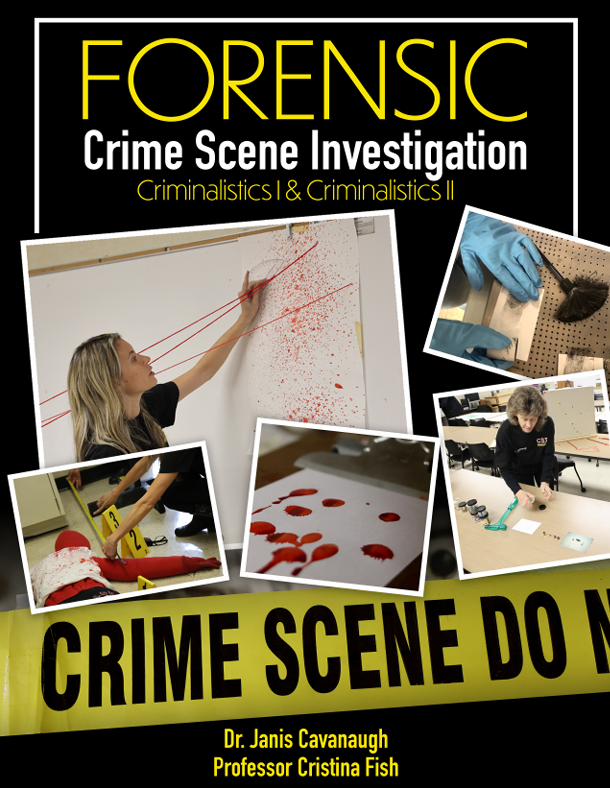
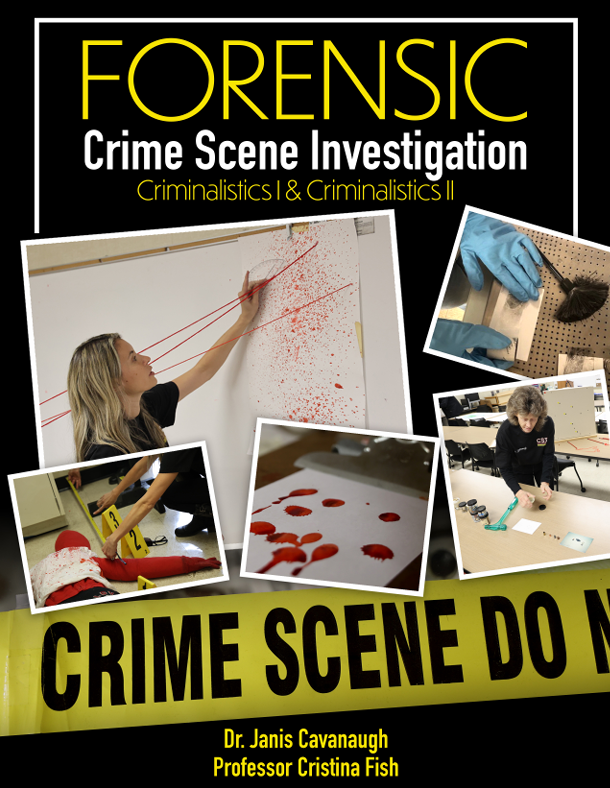
Forensic Crime Scene Investigation: Criminalistics I and Criminalistics II
Edition: 1
Copyright: 2026
Pages: 164
Choose Your Format
Ebook
$55.00 USD
Forensic Crime Scene Investigations: Criminalistics I & II provides an introduction to the principles, methods, and professional practices used in forensic science and crime scene investigation. The text begins with the history and foundations of forensic science, including the scientific method, evidence admissibility, forensic laboratories, expert testimony, and the role of the forensic scientist. It then examines crime scene procedures such as photography, sketching, searching for evidence, evidence collection and preservation, chain of custody, and the legal requirements surrounding searches, warrants, and the Fourth Amendment.
The later chapters focus on major areas of criminalistics, including physical evidence, fingerprint analysis, bloodstain patterns, impression evidence, firearms and tool marks, hair and fibers, glass, paint, soil, forensic toxicology, and DNA analysis. The text also covers death investigations, including determining cause and manner of death, the role of the pathologist, and the stages of decomposition. Finally, it addresses careers in forensic science and emphasizes professional preparation, ethical responsibilities, education, portfolios, interviews, student involvement, and professional organizations. Overall, the book connects scientific principles with practical crime scene techniques and legal considerations to provide students with a broad foundation for pursuing careers in forensic science and criminal investigations.
About the Authors
CHAPTER ONE Introduction to Forensic Science
History of Forensic Science
Natural Sciences and the Scientific Method
Chart on Inductive versus Deductive (Examples)
Theory and the Courts—The Future
Admissibility of Evidence
Types of Crime Laboratories
The Forensic Scientist
Expert Testimony
Historians
Everything Forensic
CHAPTER TWO The Crime Scene
Investigation Tips
Terms to Define and Understand
Marketing Department at ELAC
Photography
Cameras Throughout the Years
Sketching, Measuring, Diagramming
Here Are Some Key Aspects of Crime Scene Sketches
Sample Sketch (Rough Draft)
Tape Measure
Protractor
Search for Evidence
Types of Searches
Grid Search
Quadrant Search
Spiral Search
Collecting, Packaging, and Transportation of Evidence
Locard Exchange Principle
Types of Evidence at Crime Scene
Chain of Custody
Evidence Collection Chart by Dr. Cavanaugh and Professor Fish
Evidence Log
Legal Considerations, Use of Warrants, Constitutional and Case Law
Legal Considerations, Use of Warrants
Searches and Legal Considerations (Police Officers)
Legal Considerations and the Fourth Amendment (CSI’s)
Evidence Code
Rule of Law
Separation of Powers
CHAPTER THREE Physical Evidence
Types of Physical Evidence
Securing the Crime Scene
Chain of Custody
Laboratory Analysis of Physical Evidence
The Role of Physical Evidence in Criminal Investigations
Forensic Databases
NIBIN (National Integrated Ballistic Information Network)
CODIS (Combined DNA Index System)
CHAPTER FOUR Fingerprint Analysis
Basic Fingerprint Analysis
Latent Fingerprint Processing and Chemical Processing
Dusting and Lifting of Latent Prints
Chemical Processing of Latent Prints
Advanced Fingerprint Analysis
Henry Classification—Primary
Courtroom Testimony—The Latent Print Examiner Expert
CHAPTER FIVE Bloodstain Analysis
All About Blood
How Much Blood Is in Your Body?
Bloodstain Pattern Terminology
Texture of Blood
Direction and Angle of Impact
Origin of Bloodstains
Point of Convergence
Low Velocity, Medium Velocity, High Velocity
Documentation
String Grid Method of Documentation
Collection of Blood
Preservation
CHAPTER SIX Impression Evidence
Impressions
Tire Tread Impression Evidence
Do Any of the Treads Below Match the Impression? Pictured Above?
Tire Track Terminology
To Conduct a Thorough Tire Investigation at a Crime Scene, Follow These Steps
Understanding Tire Tread Design
Tire Impression Analysis Techniques
Tire Impression Evidence Analysis May Reveal
Recognize, Identify, and Collect
Preserve and Document
Cast, Photo, and Trace—Comparison and Examination
Process Your Forensic Evidence
Firearms, Ballistics, and Gunshot Residue
Gunshot Residue
Tool Marks
Bite Mark Analysis
CHAPTER SEVEN Hair, Glass, Metal, Paint, and Soil
Hair and the Crime Scene
Hair Analysis
Fibers
Ammunition
Glass Evidence
Scientific Working Group
CHAPTER EIGHT Forensic Toxicology
Forensic Toxicology—Tracing Chemicals in Crime
What Is Forensic Toxicology?
Major Areas of Forensic Toxicology
How Forensic Toxicology Is Used in Investigations
Biological Evidence in Toxicology
Forensic Drug Identification and Handling of Narcotic Evidence
Types of Controlled Substances
Methods of Drug Identification
Collection of Narcotic Evidence
Understanding DNA
The Structure of DNA
DNA in Forensic Science
Types of DNA Evidence at Crime Scenes
Collection of DNA Evidence
DNA Analysis in the Laboratory
Conclusion
CHAPTER NINE Death Investigation
A Brief History of Death Investigation
Role of the Pathologist
Responsibilities
Scene Investigations
Coroner Investigator Duties
Cause, Manner, Mode of Death, and Types of Deaths
Time of Death
The Stages of Death/Decomposition
CHAPTER TEN Careers and Preparation
Career Opportunities
Preparation, Application
Interview Process
Your Portfolio
Student Involvement
Professional Organizations
The Moral of the Story!
Dr. Cavanaugh began her career from the outside looking in. As a student at the college her goal was to become a police officer. She faced such opposition that I am sure most people would not have endured. She achieved a position as a police officer wearing a skirt, blouse, nylons, and pumps. That was soon changed, but it gives the reader an idea of the times that women faced early on in police work. As the decades progressed, she acquired many titles of prominence—Professor, Public Safety and Forensic Science Coordinator, and Chief of Police—to name a few. Her plans to retire keep changing. She will know when the time is right. Dr. Cavanaugh always maintains that the students give her energy. Embedded in teaching is the ability to help those who need guidance, positive reinforcement, and consistency.
Professor Cristina Fish has dedicated her career to the fields of forensic science, criminal investigation, and education. She began her forensic science career with the Pasadena Police Department in 2007, where she developed extensive experience in crime scene investigation and forensic evidence processing. In 2009, she became a court-qualified Latent Print Examiner, providing expert analysis and testimony in criminal cases. Driven by a passion for educating future forensic professionals, Cristina began teaching forensic
science courses with the La Puente Valley Regional Occupational Program in 2010. Her commitment to student success and hands-on forensic education led her to higher education, where she was hired as an adjunct professor in 2015 at East Los Angeles College. In 2016, Cristina was hired as a full-time professor in the Administration of Justice Department, where she has developed and expanded innovative forensic science curriculum and training opportunities for students. In 2024, she was appointed Program Director of the Forensic Crime Scene Investigation Program, continuing her mission of preparing the next generation of forensic scientists and investigators. Through her combined experience as a forensic practitioner, educator, and mentor, Cristina remains committed to advancing forensic science education and inspiring students to pursue careers in the criminal justice and forensic science professions.