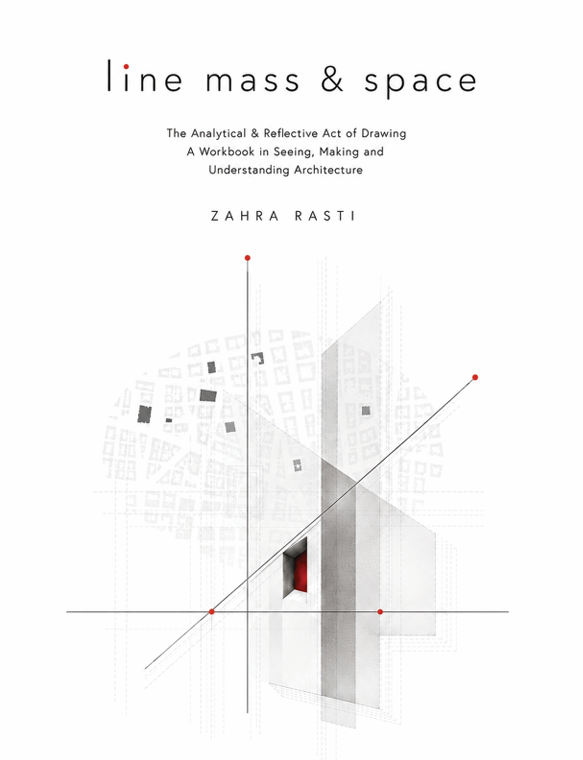
Line, Mass & Space: The Analytical and Reflective Act of Drawing: A Workbook in Seeing, Making and Understanding Architecture
Edition: 1
Copyright: 2026
Pages: 290
Choose Your Format
$70.00 USD
This architecture workbook introduces the fundamental role of drawing as a tool for observing, understanding, and communicating architectural ideas. It explores how lines are used to translate perception into visual representation, examines the relationship between mass and space in architectural design, and develops an understanding of space as a core element of the built environment. Together, these concepts help students build foundational skills in architectural thinking, visualization, and design.
Preface
Introduction: Why Drawing Matters
Module 1 What Is a Line?
-Observation, Translation, and Perception
Module 2 Mass and Space in Architecture
Module 3 Space
Zahra Rasti is an Assistant Teaching Professor of Architecture at the University of Washington. Her work focuses on participatory design, community engagement, and social justice, exploring how architecture can create positive social change. She is also the founder of VOICE, a nonprofit organization dedicated to inclusive and equitable design practices.