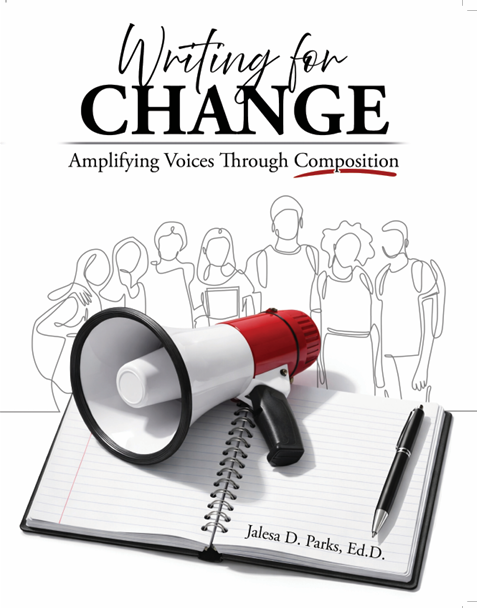
Writing for Change: Amplifying Voices Through Composition
Edition: 1
Copyright: 2026
Pages: 154
Edition: 1
Copyright: 2026
Pages: 154
Choose Your Format
$80.00 USD
Ebook
$60.00 USD
In the world we reside, social, political, and environmental problems persist. Addressing them remains in high demand, and composition continues to be a medium utilized to propel inspiration and action—even though it may look different now. What began as the transmission of messages in a bottle, on a stone tablet, or across the screens of a grainy television has been transformed into 30-second video clips on social media. Imagine the ways in which Dr. King’s “I Have a Dream” speech would be conveyed on the most popular social media apps. Add the growing demand for artificial intelligence, and you have a hodgepodge of communication tools that can negatively skew or misrepresent the intended message
Thoughtfully constructed, written composition continues to provide a platform for exploring both historical and contemporary issues and solutions with extreme depth, nuance, and longevity, which is often amiss in today’s ever-growing focus on media virality and social influence. By developing writing skills with an intentional focus on activism, you will build a muscle suited for:
- developing self-confidence that promotes both self-expression;
- establishing critical consciousness that inspires a deeper understanding of world problems and obstacles
for change; - communicating messages that inspire community support and action;
- using language to shape long-lasting narratives that deeply resonate with readers who desire substance over sensationalism; and
- honoring, reimagining, and taking responsibility for oral traditions before you, be they cultural, geographical, or generational in nature.
Whether you aspire to be a lawyer, educator, plumber, or social media star, engaging in rhetoric that is comforting, compelling, and carefully crafted never goes out of style. Therefore, this book will guide you through various modes of writing, such as narrative, argumentation, and analysis, while also building in opportunities for you to develop skills to navigate ever-changing technological demands, such as artificial intelligence
Writing for Activism: Getting Started
Chapter 1: Essential Writing Skills
Chapter 2: The Narrative Behind Change
Chapter 3: Revising and Editing an Essay
Chapter 4: Using Rhetoric and Analysis Toward Change
Chapter 5: Formatting Supporting Evidence
Chapter 6: Developing and Defending a Position
Chapter 7: Conducting Research for Change
Chapter 8: Speaking Up for Change
Chapter 9: Analyzing Literary Trendsetters
Chapter 10: Using Game-Changing Grammar and Punctuation