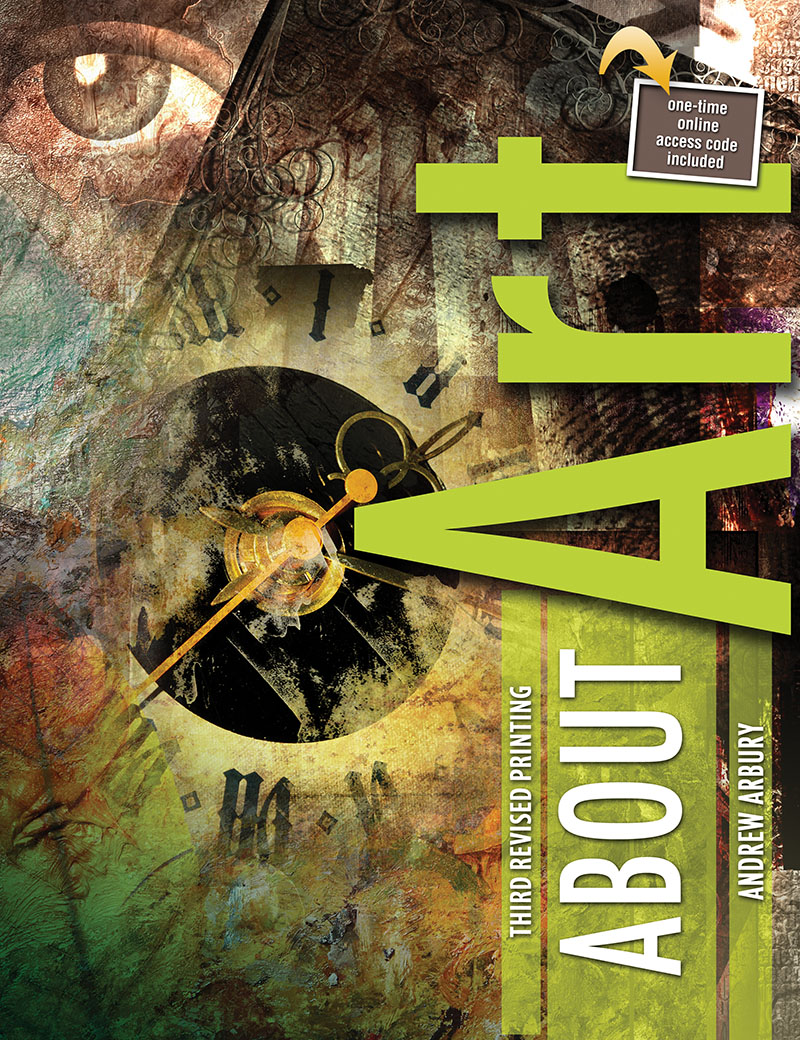
About Art
Edition: 1
Copyright: 2008
Edition: 1
Copyright: 2008
Choose Your Format
Ebook Package
$106.96 USD
Print Package
$133.71 USD
This text provides an introduction to the history, theory, and appreciation of visual art from prehistoric times to the twentieth century. It explores the elements and principles of design by tracing the development of artistic expression from prehistoric cultures through the ancient civilizations of the Near East, Egypt, the Aegean, Greece, Rome, the Middle Ages, the Renaissance, the Baroque period, the nineteenth century, and into the diverse movements of modern and contemporary art. In all, About Art helps readers understand how artistic expression reflects human creativity, history, and society.
Preface
1. What is Art?
2. The Elements and Principles of Art?
3. Prehistoric Art
4. Drawing
5. Ancient Near East
6. Ancient Egyptian Art
7. Art of the Aegean
8. Painting
9. Greek Art
10. Sculpture
11. Etruscan and Roman Art
12. Architecture
13. The Middle Ages
14. Fine Applied Arts
15. Renaissance & Mannerist Art
16. Printmaking
17. Art of the 17th Centuries
18. The 19th Century
19. Photography
20. 20th Century Art
21. Graphic Design
Maps
Mythology and Religion
Pronunciation Guide
Glossary Websites
Index
Steve Arbury, Ph.D. is Professor of Art History, Chair of the Department of Art, and Chief Curator of the Radford University Art Museum. He earned a Ph.D. and M.A. in Art History from Rutgers University, specializing in Spanish art, and a B.A. magna cum laude in Spanish and Psychology from Albion College, including a year of study in Spain. A Fulbright Scholar, his research focuses on Spanish Renaissance and Baroque art, particularly funerary monuments and religious architecture. In addition to teaching art history and museum studies, Dr. Arbury has published scholarly research, presented at professional conferences, and curated numerous exhibitions, with academic interests spanning the historical, cultural, religious, and social contexts of art.