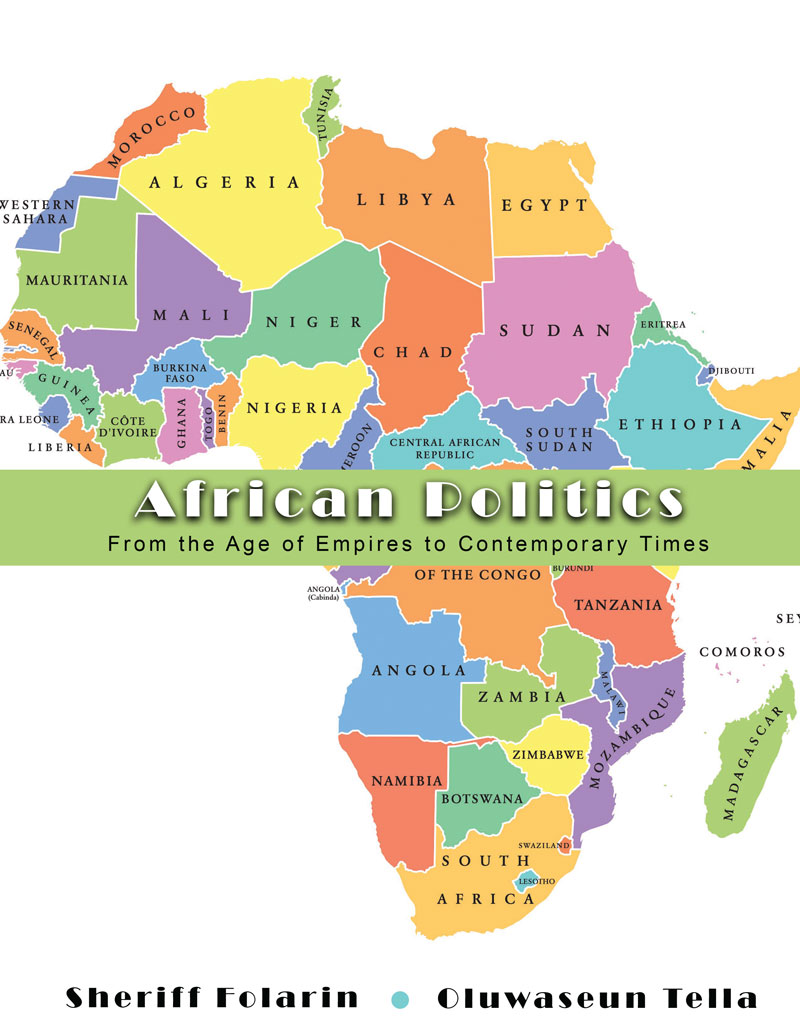
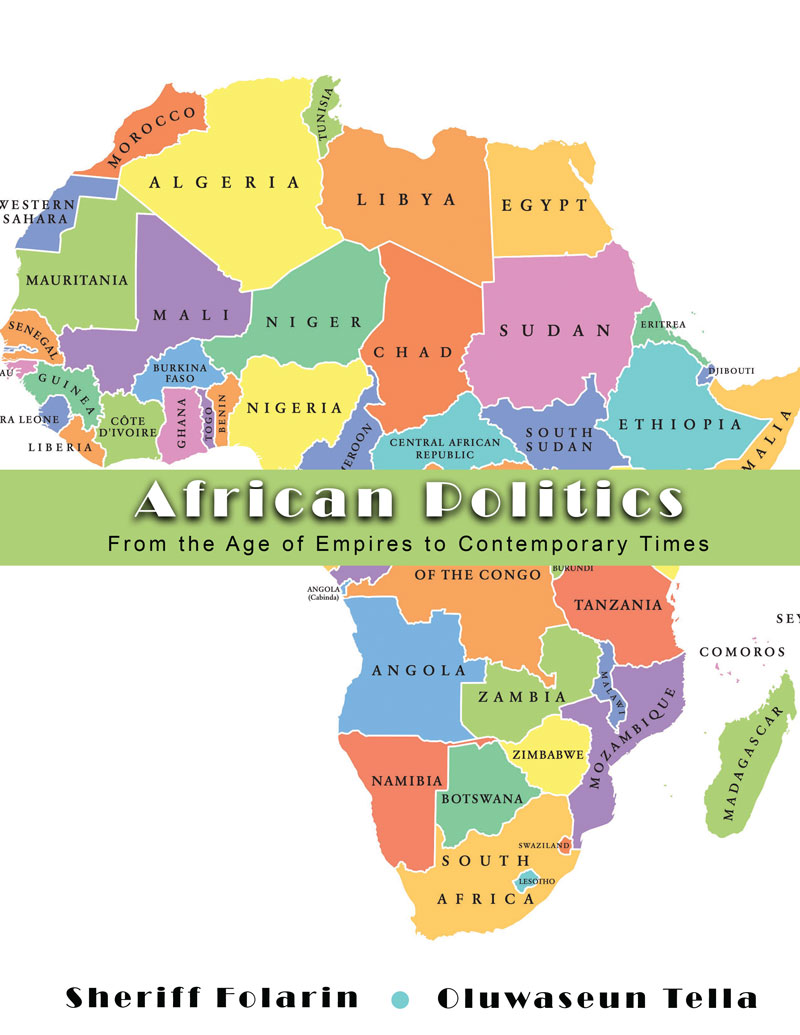
African Politics: From the Age of Empires to Contemporary Times
Edition: 1
Copyright: 2025
Pages: 320
Choose Your Format
Choose Your Platform | Help Me Choose


Ebook
$85.00 USD
African Politics: From the Age of Empires to Contemporary Times delves into major topics and issues in African political developments from the pre-colonial era to the present. Aside from identifying and analyzing those monumental developments in Africa, it also adopts a chronological discourse, enabling learners and researchers to better appreciate the sequence of events and phases of African political history as they evolved.
The objective of this book is to simplify the study of African politics for those who are not familiar with the continent and its peoples, as it attempts an introductory analysis of key subjects and issues. The text is primarily for scholars at all levels in North America, where the study of African politics remains limited or frequently overlooked.
Additional Contributors:
The Contributors
Ahmed Jazbhay (PhD) is a Senior Lecturer in the Department of Political Sciences at the University of South Africa.
Celestina Chukwudi (PhD) teaches in the Department of Political Science and International Relations, Covenant University, Nigeria.
Dare Leke Idowu (PhD) is a Research Assistant in the Department of Politics and International Relations, University of Johannesburg, South Africa.
Elizabeth Njoaguani (PhD) is a Health Policy Researcher and Analyst in Calgary, Alberta, Canada.
Gideon Ibukuntomiwa Folorunso (PhD) teaches in the Department of Political Science and International Relations, Covenant University, Nigeria.
Godwyns Agbude (PhD) is an African Political Philosophy and Policy Analyst based in California, United States.
Ifenna Daniel is an African Politics Researcher, and a graduate of the Department of Political Science and International Relations, Covenant University, Nigeria.
Innocent Ndahiriwe (PhD) teaches in the Department of Governance and Public Administration, School of Governance, Development and Society, College of Arts and Social Sciences, University of Rwanda.
Innocent Rugaragu (PhD) teaches at the Center for Conflict Management, University of Rwanda.
J. Peter Mugume (PhD) teaches at the Center for Conflict Management and serves as Dean of Studies for Security Institutions at the University of Rwanda.
Julius Niringiyimana (PhD) teaches Political Science at Makerere University, Uganda.
Moses Duruji (PhD) is a Professor of Political Science at Covenant University, Nigeria.
Olaniyi Ayodele (PhD) is an African ICT Revolution Specialist, and a Program Advisor at Mount Royal University, Canada.
Ola-Rotimi Ajayi (PhD) is a Professor of Political Science at the Federal University, Lokoja, Nigeria. He previously served as Dean of the Faculty of Social Sciences and Vice-Chancellor of Landmark University in Nigeria.
Olusola Ogunnubi (PhD) is a Research Fellow at Queen’s University, Canada, and at the University of the Free State, South Africa.
Oluwakemi Udoh (PhD) teaches in the Department of Political Science and International Relations, Covenant University, Nigeria.
Sadamu Francois teaches in the Department of Governance and Public Administration, School of Governance Development and Society, College of Arts and Social Sciences, University of Rwanda.
Segun Joshua (PhD) is a Professor of Political Science at the Federal University, Lokoja, Nigeria.
Segun Oshewolo (PhD) is an Associate Professor of Political Science at the Federal University, Lokoja, Nigeria.
The Editors
The Contributors
Foreword
Acknowledgments
About the Book
Introduction
CHAPTER 1 Notions of Prehistoric, Modern, and Contemporary Africa
CHAPTER 2 Pre-Colonial Africa: Kingdoms, Empires, States, and Interstate Relations
CHAPTER 3 Foundations of the African Diaspora
CHAPTER 4 The Old Scramble for Africa and Its Colonization
CHAPTER 5 Nationalist Movement and Pan-Africanism
CHAPTER 6 Regionalism and Regional Groupings in Africa
CHAPTER 7 Governance and Leadership in Africa: Theories, Forms, and Dynamics
CHAPTER 8 Women in African Politics
CHAPTER 9 Conflict and National Security Issues
CHAPTER 10 Africa and the Wider World
CHAPTER 11 Health Pandemics and Environmental Governance in Africa
CHAPTER 12 Africa and Information (Communication) Technology
CHAPTER 13 New Scramble for Africa
CHAPTER 14 African Good Governance Initiatives
CHAPTER 15 Africa and the Fourth Industrial Revolution
CHAPTER 16 Decoloniality and the Future of Africa
Conclusion
Sheriff F. Folarin (PhD) is a Professor of International Relations. He teaches full-time in the Department
of Political Science at Texas State University, as a visiting professor at the Center for Conflict Management
at the University of Rwanda, and the Institute for Peace, Security and Development at Nnamdi Azikiwe
University, Nigeria. He is also a Senior Research Associate, Institute for the Future of Knowledge, Faculty of
the Humanities, University of Johannesburg, South Africa. He has authored Declining Hegemonical Foreign
Policies of Nigeria (Springer, 2024), Rwanda’s Radical Transformation Since the End of the Genocide against
the Tutsi (Springer, 2023); and edited Homeland Security and Terrorism in Nigeria (Bloomsbury-Lexington,
2024), Religion and Global Politics: Soft Power in Nigeria and Beyond (Lexington, 2022), The United Nations
and Sustainable Development Goals (Palgrave Macmillan, 2022). Folarin has over 100 scholarly articles published in high-impact and university-based journals, books, and conference proceedings. He currently edits
the Good Governance Worldwide journal’s Africa Symposia Issue, and serves as the Associate Editor in Chief
of that journal, published by the Section for Public Management Practice of the American Society for Public
Administration.
Oluwaseun Tella (PhD) is the Head of the Future of Diplomacy at the University of Johannesburg’s Institute
for the Future of Knowledge in South Africa. He holds a doctorate in Political Science from the University of KwaZulu-Natal, South Africa. He has authored and edited eight books, including Nigeria-South Africa Relations and Regional Hegemonic Competence (Springer, 2019) and Africa’s Soft Power: Philosophies, Political Values, Foreign Policies and Cultural Exports (Routledge, 2021), which is the first book on African soft power. In addition, he has published over 40 mostly single-authored book chapters and journal articles in Politikon, Social Dynamics, Journal of Asian and African Studies, Journal of Black Studies, and other reputable academic journals. He has also written approximately 30 op-eds. His research interests encompass soft power, international relations, peace and conflict studies, African politics, and knowledge production in Africa.