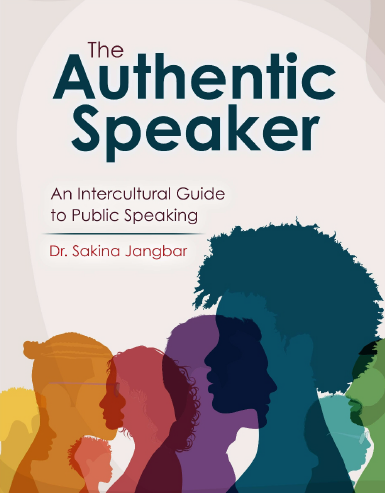
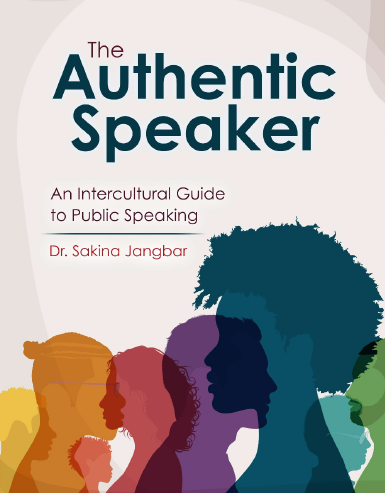
The Authentic Speaker: An Intercultural Guide to Public Speaking

Author(s): Sakina Jangbar

Edition: 1

Copyright: 2025

Pages: 96

Choose Your Format

Choose Your Platform | Help Me Choose

Ebook

$50.00 USD

ISBN 9798385191345

Details Electronic Delivery EBOOK 180 days

This book is a guide for anyone who wants to deliver effective oral presentations—teachers, students, industry professionals, and social media content creators alike. The Authentic Speaker: An Intercultural Guide to Public Speaking addresses not only the diversity of audiences but also the diversity of speakers. It is grounded in the belief that authenticity is persuasive. I define authenticity as breaking away from the norms of public speaking that are not aligned with one’s personal and cultural identities, especially in the moment of delivery. In the era of generative AI, the rhetorical canons of delivery and style have become more important than ever. While tools like ChatGPT can generate written content, they cannot embody the breath and presence of a human speaker. Oratory remains a deeply human art—an embodied experience that asks the speaker to engage with their audience artfully.

Author’s Note 

CHAPTER 1 Introduction to Public Speaking 
Definition of Public Speaking 
Characteristics of Public Speaking 
Speech Anxiety
     General Anxiety 
     Situational Anxiety 
     Reasons for Speech Anxiety 
     Dealing With Speech Anxiety 
     Strategies for Managing Anxiety Peaks 
Why Is Public Speaking an Important Skill? 
     Empowerment 
     A Return to Orality 
     Career Advancement 

CHAPTER 2 Understanding an Audience 
Why Consider the Audience? 
Characteristics of an Audience 
Gathering Information About an Audience 
Topic Selection 
     Techniques for Topic Selection 

CHAPTER 3 Organizing and Outlining a Speech 
Logical Organization 
Organizational Patterns 
Outlining 
     Complete Outline 
     Outline Template 
     Components of an Introduction 
     Components of a Conclusion 
     Transitions 
Delivery Outline 

CHAPTER 4 Delivering a Speech 
Delivery Styles 
Verbal Delivery 
     Project Your Voice 
     Speak in Your Natural Voice 
     Enunciate 
     Reduce Filler Words 
     Regulate the Rate of Speech 
     Manage Your Tone 
     Use Silence 
Nonverbal Delivery 
     Hand and Arm Movements 
     Queer Gestures 
     Distracting Gestures 
     Disabilities 
     Eye Contact 
     Appearance 
     Facial Expressions 
Presentation Aids 
     Types of Presentation Aids 
          Objects and Models 
          PowerPoints 
          Person 

CHAPTER 5 Developing a Digital Strategy 
Video and Audio Aspects to Consider 
     Lighting 
     Background 
     Camera Height 
     Shot 
     Volume 
     Speaker Position on the Camera 
     Standing Versus Sitting 
Personal Appearance 

CHAPTER 6 Ethics of Public Speaking 
Ethics of Speaking 
     How to Be an Ethical Speaker 
     Add Value 
     Articulate Your Interest 
     Do Research 
     Provide Citations 
     Use Artificial Intelligence Ethically 
     Declare Personal Gain 
     Avoid Fallacies 
Ethics of Listening 
     Why Listen? 
     What Is Listening?
     How to Listen?

CHAPTER 7 Informative Speeches 
Types of Informative Speeches 
     Introductory Speech 
     Demonstration Speech 
     Culture Speech 
     Pros and Cons Speech 
Sample Informative Speeches 

CHAPTER 8 Persuasive Speeches 
Part 1: Argumentation 
     Definition and Structure of an Argument
     Developing an Argument 
     Types of Evidence 
     Enthymematic Arguments 
Part 2: Types of Persuasive Speeches 
     Position Speech 
     Policy Speech 
     Refutational Speech 
Sample Persuasive Speeches 

CHAPTER 9 Special Occasion Speeches 
Toasts 
Awards 
     Introducing an Award Recipient 
     Award Acceptance Speech 
Eulogies 
Sample Special Occasion Speeches 

CHAPTER 10 Impromptu Speeches 
Organization 
Examples of Impromptu Speeches 
     Example 1 
     Example 2

Sakina Jangbar

Dr. Sakina Jangbar received her doctorate from the University of Texas at Austin in Communication Studies. She is an Associate Professor at St. John’s University in New York where she teaches courses in public speaking and rhetoric.

This book is a guide for anyone who wants to deliver effective oral presentations—teachers, students, industry professionals, and social media content creators alike. The Authentic Speaker: An Intercultural Guide to Public Speaking addresses not only the diversity of audiences but also the diversity of speakers. It is grounded in the belief that authenticity is persuasive. I define authenticity as breaking away from the norms of public speaking that are not aligned with one’s personal and cultural identities, especially in the moment of delivery. In the era of generative AI, the rhetorical canons of delivery and style have become more important than ever. While tools like ChatGPT can generate written content, they cannot embody the breath and presence of a human speaker. Oratory remains a deeply human art—an embodied experience that asks the speaker to engage with their audience artfully.

Author’s Note 

CHAPTER 1 Introduction to Public Speaking 
Definition of Public Speaking 
Characteristics of Public Speaking 
Speech Anxiety
     General Anxiety 
     Situational Anxiety 
     Reasons for Speech Anxiety 
     Dealing With Speech Anxiety 
     Strategies for Managing Anxiety Peaks 
Why Is Public Speaking an Important Skill? 
     Empowerment 
     A Return to Orality 
     Career Advancement 

CHAPTER 2 Understanding an Audience 
Why Consider the Audience? 
Characteristics of an Audience 
Gathering Information About an Audience 
Topic Selection 
     Techniques for Topic Selection 

CHAPTER 3 Organizing and Outlining a Speech 
Logical Organization 
Organizational Patterns 
Outlining 
     Complete Outline 
     Outline Template 
     Components of an Introduction 
     Components of a Conclusion 
     Transitions 
Delivery Outline 

CHAPTER 4 Delivering a Speech 
Delivery Styles 
Verbal Delivery 
     Project Your Voice 
     Speak in Your Natural Voice 
     Enunciate 
     Reduce Filler Words 
     Regulate the Rate of Speech 
     Manage Your Tone 
     Use Silence 
Nonverbal Delivery 
     Hand and Arm Movements 
     Queer Gestures 
     Distracting Gestures 
     Disabilities 
     Eye Contact 
     Appearance 
     Facial Expressions 
Presentation Aids 
     Types of Presentation Aids 
          Objects and Models 
          PowerPoints 
          Person 

CHAPTER 5 Developing a Digital Strategy 
Video and Audio Aspects to Consider 
     Lighting 
     Background 
     Camera Height 
     Shot 
     Volume 
     Speaker Position on the Camera 
     Standing Versus Sitting 
Personal Appearance 

CHAPTER 6 Ethics of Public Speaking 
Ethics of Speaking 
     How to Be an Ethical Speaker 
     Add Value 
     Articulate Your Interest 
     Do Research 
     Provide Citations 
     Use Artificial Intelligence Ethically 
     Declare Personal Gain 
     Avoid Fallacies 
Ethics of Listening 
     Why Listen? 
     What Is Listening?
     How to Listen?

CHAPTER 7 Informative Speeches 
Types of Informative Speeches 
     Introductory Speech 
     Demonstration Speech 
     Culture Speech 
     Pros and Cons Speech 
Sample Informative Speeches 

CHAPTER 8 Persuasive Speeches 
Part 1: Argumentation 
     Definition and Structure of an Argument
     Developing an Argument 
     Types of Evidence 
     Enthymematic Arguments 
Part 2: Types of Persuasive Speeches 
     Position Speech 
     Policy Speech 
     Refutational Speech 
Sample Persuasive Speeches 

CHAPTER 9 Special Occasion Speeches 
Toasts 
Awards 
     Introducing an Award Recipient 
     Award Acceptance Speech 
Eulogies 
Sample Special Occasion Speeches 

CHAPTER 10 Impromptu Speeches 
Organization 
Examples of Impromptu Speeches 
     Example 1 
     Example 2

Sakina Jangbar

Dr. Sakina Jangbar received her doctorate from the University of Texas at Austin in Communication Studies. She is an Associate Professor at St. John’s University in New York where she teaches courses in public speaking and rhetoric.
