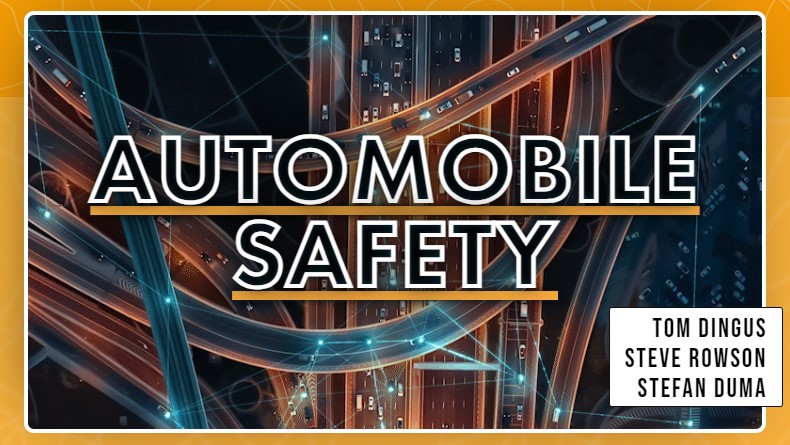
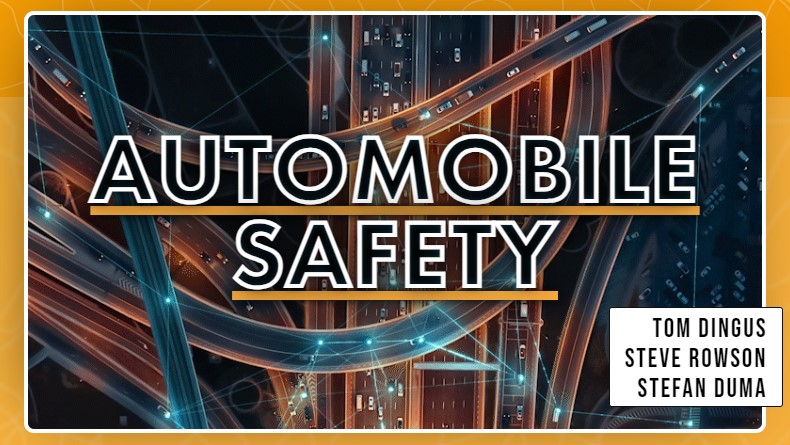
Automobile Safety
Edition: 1
Copyright: 2024
Choose Your Format
Website
$125.00 USD
Automobile Safety is an asynchronous online publication, authored by global leaders in the driving safety realm, that provides historical background and design considerations for automobile safety technologies used in cars throughout the world. Automobile crashes, despite an evolution of improvements in design and policy, are still the leading cause of death for individuals age 5-29 worldwide. Providing both scientific and practical knowledge to students for both crash worthiness and crash avoidance technologies, this text covers the historical and ongoing development of safety features such as seatbelts and airbags, as well as modern considerations such as policies to reduce distracted drivers and cell phones.
Additionally, this title presents the design decisions that must be made in order to protect a wide range of occupants from children and teens, to pregnant occupants, to the elderly population. Throughout the book, ethical considerations are presented relative to the laws, media, and societal norms around seatbelt use and crash avoidance technologies.
Automobile Safety takes students on a journey where they will:
- Analyze the critical historical development of the automobile and the cultural influences that led to automobile adoption as the major form of global transportation.
- Examine the history and design of various seatbelt systems and how laws and media affect usage rates.
- Evaluate the history and design of airbag systems and the ethical issues around their implementation.
- Quantify the history and ethics surrounding human volunteer testing to make cars safer.
- Analyze the ethics and effectiveness of test track, simulation and naturalistic driving research to identify opportunities for improvements to vehicles and roadway designs.
- Interpret the history of pregnant occupant injuries and compare the cultural, political, and societal implications for safety restraints, specifically for pregnant occupants.
- Evaluate the future design possibilities of advanced driver assistance systems being deployed in today’s automobiles as well as fully autonomous vehicles and their implications on crash risk factors such as driver distraction.
Chapter 1: History of the Wheel
Chapter 2: History of the Automobile
Chapter 3: Death on the Road
Chapter 4: Unsafe at Any Speed
Chapter 5: Safety Regulations
Chapter 6: Seat Belts
Chapter 7: Human Volunteer Testing
Chapter 8: Crash Test Dummies
Chapter 9: Crash Causation, Crash Avoidance, and Active Safety Systems
Chapter 10: History of VTTI
Chapter 11: Airbags Part 1
Chapter 12: Airbags Part 2
Chapter 13: Crash Avoidance Countermeasures
Chapter 14: Human Factors, Roads, and Environments
Chapter 15: Vehicle Compatibility
Chapter 16: Rear-End Collisions
Chapter 17: Vulnerable Road Users
Chapter 18: Lab 1: Vulnerable Road Users
Chapter 19: Cell Phones and Driver Distraction
Chapter 20: Lab 2: Distracted Drivers
Chapter 21: Pregnant Occupant Protection
Chapter 22: Protecting Children
Chapter 23: NCAP and IIHS
Chapter 24: Exotic Airbag Designs
Chapter 25: Race Car Safety
Chapter 26: Future of Automobile Safety
Chapter 27: Extra Credit
Chapter 28: Final Exam
Chapter 29: Final Essay
Chapter 30: Feedback