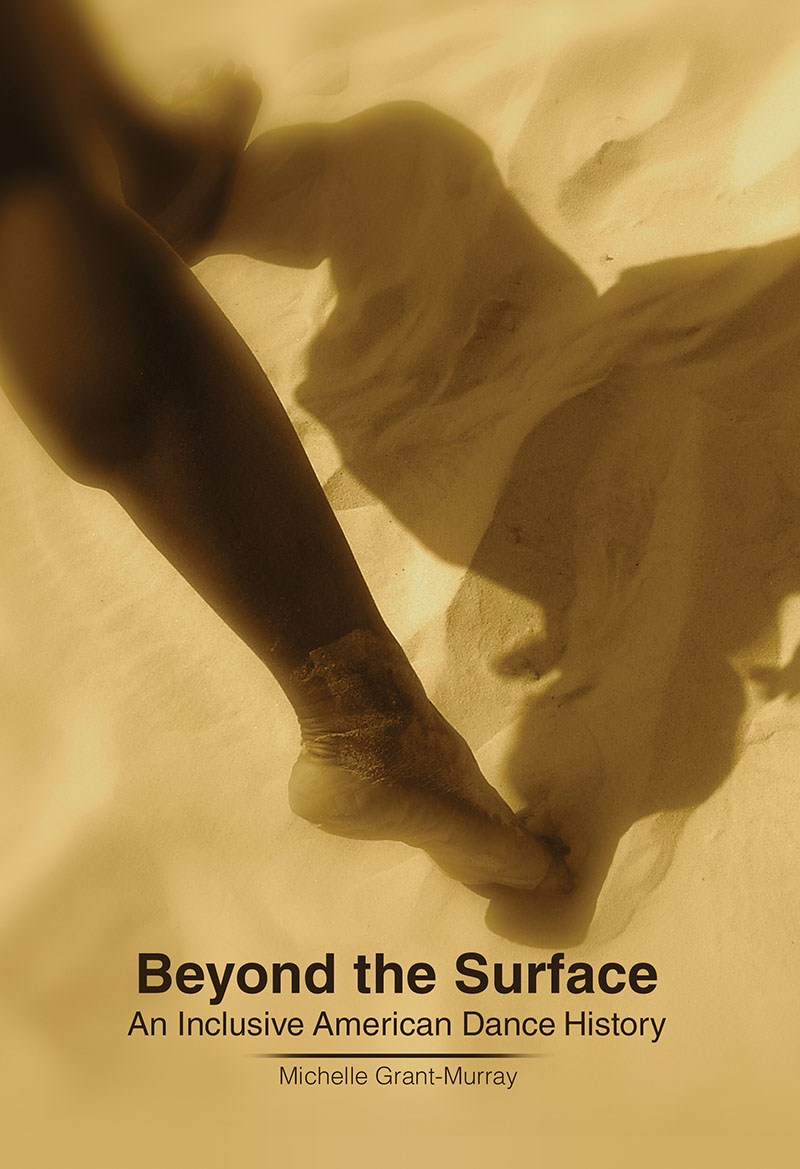
Beyond the Surface: An Inclusive American Dance History
Edition: 2
Copyright: 2014
Pages: 154
Edition: 2
Copyright: 2015
Pages: 154
Choose Your Format
Ebook
$68.07 USD
$136.13 USD
The primary objective of this textbook is to generate an open discussion on what is inclusive of American dance and its history. The text focuses on the history of dance in the U.S., including ballet, modern, jazz, hip- hop, African diaspora dance, swing, and tap, all of which are fused with the aforementioned to create contemporary dance forms. Other dance forms from Europe, India, Asia, Africa, and the Americas are discussed. Such forms of dance are essential to the foundational and fundamental influences of dance in America. These cultural dance idioms have made a significant impact upon the development, implications, historical perspective, and cultural relevance of dance in America. Cultural dance idioms and their power have been underestimated in the context of developing, implementing, and codifying technical dance forms.
The aim of this book is to first engage dance academia in the core principles of what is American dance. Secondly, its objective is to empower emerging artists, students, and the general public to embrace American dance, utilizing historical evidence to pay homage to its ancient forms— forms that have shaped the foundations of American culture. Its final intent is to inspire new dance forms.
Acknowledgments
Preface
I. What Is Dance?
II. The Call: A Synopsis of the Impact of the Traditional Dance and Its Relevance to American Dance History
III. Dance Techniques, Forms, and Styles
-African Dance: A Transcultural Expression
-Jazz Dance: One Step Ahead
-Hip-Hop Dance: Articulation of the Collective Breakdown
-Ballet Dance: Balance, Breathe and Beyond
-Modern Dance: The Fundamental Freedom to Move
-Tap Dance: An American Response to the Call of Ancestral Rhythms
IV. Writing About Dance
-Going Beyond Muscle Memory, Now let’s Begin! by Brittany Williams
V. Practice: Idiom, Identification, and Implications
-Perspectives by Michelle Grant-Murray
-Transforming Tradition by Tami Harris Idun-Ogde
-There’s An Elephant In Da Room! by Rennie Harris
-Encountering Newness in the Third Space by Joanna M. Ursal
-Belly Dance by Tiffany Hanan Madera
VI. Murray Method: Ancestral Dance Movement Memory
A. Day Break
B. Sankofa
C. Deep wisdom: Embodied knowledge
D. Decolonizing the Body
E. Chai Methods: Four Movements of Analysis
Results: The Life Source Moving the Mind
Works Cited
Michelle Grant-Murray is a choreographer, performer, educator, author, and social activist who serves as Coordinator of Dance at Miami Dade College's Kendall Campus. She holds a B.S. in Dance Education and an M.F.A. in Choreography from Jacksonville University, as well as an M.A. in African Studies from Florida International University. Trained in ballet, modern, West African, Afro-Brazilian, jazz, and dance composition, she has studied with renowned artists including Katherine Dunham, Jawole Willa Jo Zollar, Rennie Harris, and Nora Chipaumire. Grant-Murray is the Artistic Director of Olujimi Dance Theatre and the Miami Dade College Jubilation Dance Ensemble, and her choreographic and performance work has been presented throughout the United States, Europe, South America, Asia, and the Caribbean.