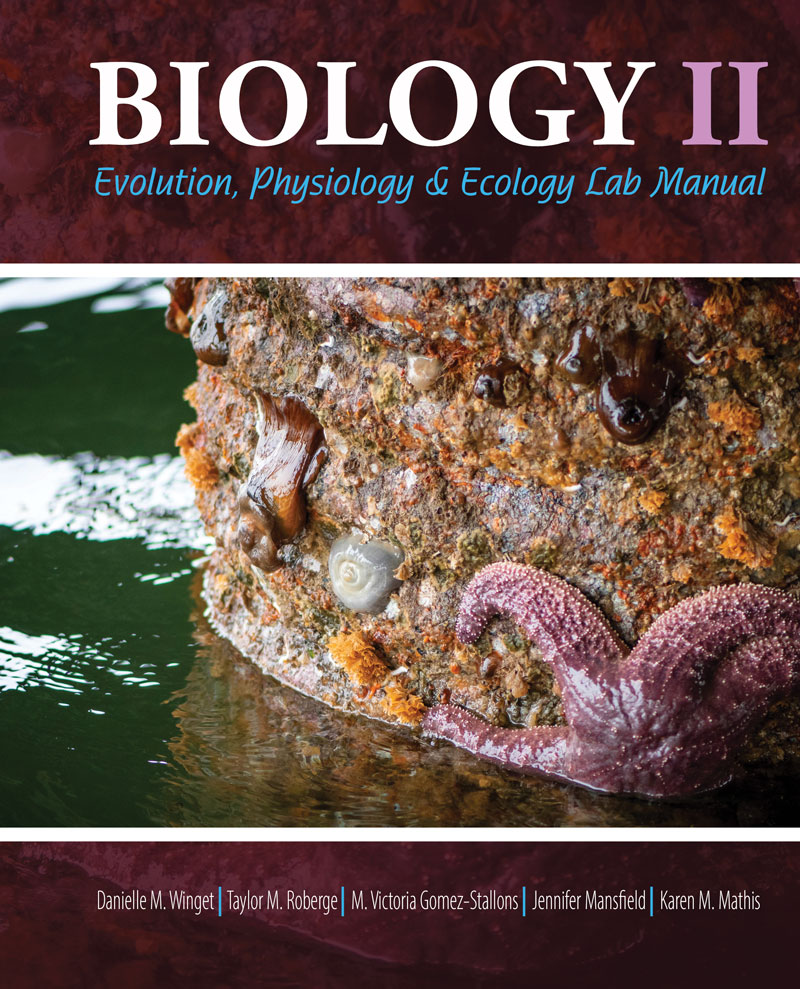
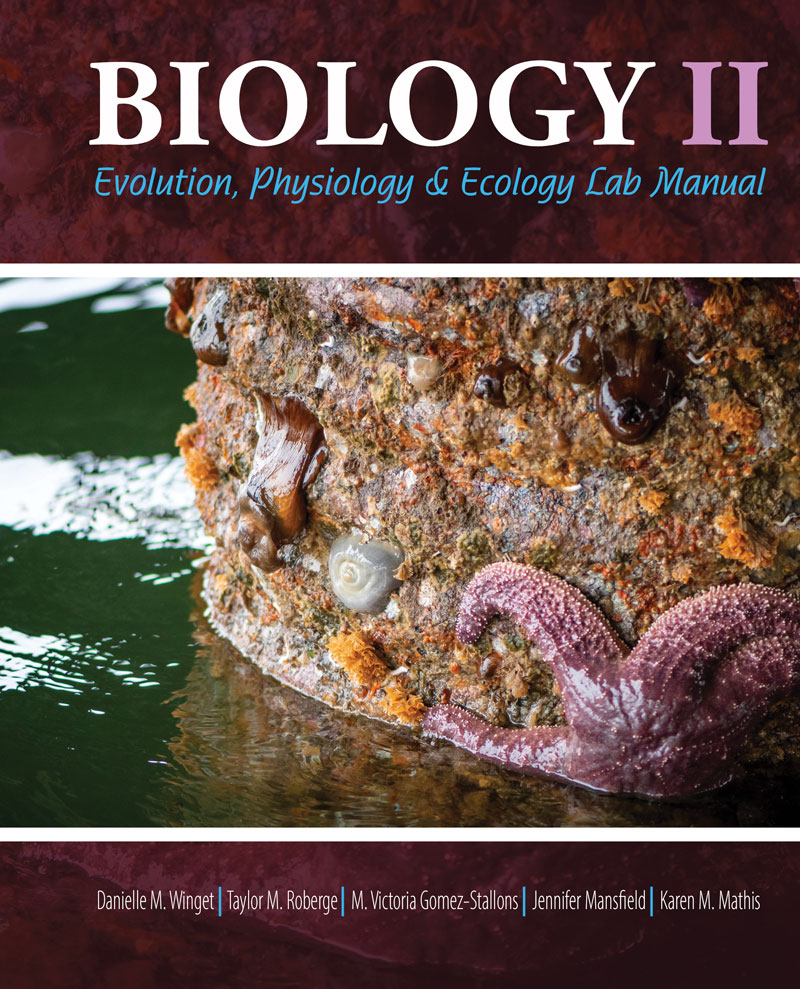
Biology II: Evolution, Physiology & Ecology Lab Manual
Edition: 1
Copyright: 2024
Pages: 186
Edition: 1
Copyright: 2023
Choose Your Format
Choose Your Platform | Help Me Choose


$52.50 USD
Ebook
$47.25 USD
Biology II Laboratory is an introduction to the biodiversity within and around us. Using the techniques of scientific investigation, microscopy, electrophoresis, and dissection, students develop skills in experimental design, scientific data collection and analysis, biotechnol ogy, comparative anatomy, and critical thinking while interacting with a broad diversity of prokaryotic and eukaryotic organisms. Most importantly, students gain an appreciation for the network of life that supports and sustains our own human population and learn how to communicate scientific information with others
Acknowledgments
Author Biographies
Experimental Design, Evolution, and Prokaryotes
LAB 1 Welcome to Biology II Laboratory at Clermont College
LAB 2 Experimental Design and Statistics
LAB 3 Simulating Evolution via Natural Selection and Quantifying Evolution Using the Hardy–Weinberg Equilibrium Principle
LAB 4 Determining Fish Phylogenetics Using SDS-PAGE
LAB 5 Bacterial Diversity and Antibiotic Zone of Inhibition Assay
Protists and Invertebrates
LAB 6 Protists
LAB 7 Intriguing Eukaryotes
LAB 8 Phylum Porifera, Ctenophora, and Cnidaria
LAB 9 Phylum Mollusca: Clams, Snails, and Squid
LAB 10 Phyla Annelida, Platyhelminthes, and Nematoda: Segmented Worms, Flatworms, and Roundworms
LAB 11 Phylum Arthropoda
LAB 12 Phylum Echinodermata: Starfish, Sea Urchins, and Sea Cucumbers
Vertebrates
LAB 13 Phylum Chordata: Lancelets, Tunicates, and Fish
LAB 14 Phylum Chordata, Class Amphibia: Frogs and Salamanders
LAB 15 Phylum Chordata, Class Reptilia: Turtles, Lizards, and Birds
LAB 16 Phylum Chordata, Class Mammalia: Rodents
Plants and Fungi
LAB 17 Seedless Plants
LAB 18 Phyla Coniferophyta and Gingkophyta: Gymnosperms
LAB 19 Phylum Anthophyta: Angiosperm Stems, Roots, and Leaves
LAB 20 Phylum Anthophyta: Angiosperm Fruits, Flowers, and Seeds
LAB 21 Phylum Mucoromycota: Molds and Lichens
LAB 22 Phyla Ascomycota and Basidiomycota: Mushrooms
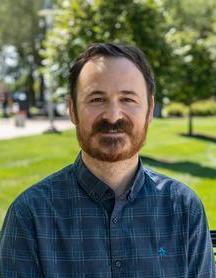
I grew up spending much of my time fishing, wandering around in the woods, playing in creeks, and flipping through Zoobooks and field guides of fresh and saltwater fish. I never anticipated finding a career in teaching because of my fear of public speaking but found that fear melted away when sharing my passion for biology while completing my graduate work studying temperature-dependent sex determination in turtles. I have been teaching since 2017 and still feel the incredible rush of excitement after the first class of a new semester. You can still find me fishing and stomping around the woods and creeks, but now with my wife and two kids.
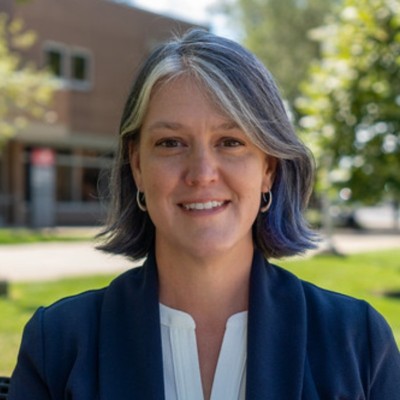
After ten years of marine microbial ecology field research, I began teaching undergraduate biology and environmental science in 2012. My education and travels have allowed me to live in nine different U.S. states and one Canadian province. My husband and I met as undergraduates when we were organic chemistry study partners, and we now have twin sons and one dog. In my free time I enjoy reading science fiction, watching action movies, playing Dungeons and Dragons, hiking, and fishing.
I was born in Argentina and moved to Florida with my parents and three siblings when I was 14 years old. I came to Cincinnati for my undergraduate studies with the intention of becoming a pediatrician – I love kids! However, during my undergraduate research, I fell in love with the lab and decided to pursue my doctoral degree in molecular biology. I started teaching at UC (University of Cincinnati) Clermont during my post-doctoral studies, when I discovered my true passion: Teaching biology to students! When not in the classroom, I love to spend time with my husband, three toddlers and great Pyrenees/Collie mix dog, named Luna.
I began my science career performing ecotoxicological studies on remediated soils. I then transitioned to undergraduate teaching in biology (both majors and non-majors) with a particular love of ecology classes. I taught for over 20 years and then transitioned back to research. Currently I work at a nonprofit as a research ecologist. I spend much of my time in the woods, and spring wildflowers are some of my favorite plants.
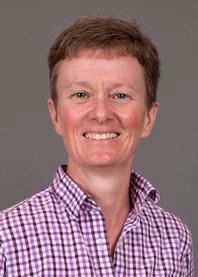
My original intention was to become a veterinarian with my BS (Bachelor of Science) in biology, but working for a vet showed me that I was not cut out to deal with the patients’ owners. Instead, I pursued a doctoral degree in the field of renal physiology. This eventually led me to the classroom. Career pathways are not always straightforward! I still love animals and currently have two dogs and a pony; my children are away at college, so I have more time to devote to my enormous garden. I still find the field of biology fascinating as there are so many interesting things to discover. When not in the garden or riding my pony, I love to read science fiction/fantasy novels.
Biology II Laboratory is an introduction to the biodiversity within and around us. Using the techniques of scientific investigation, microscopy, electrophoresis, and dissection, students develop skills in experimental design, scientific data collection and analysis, biotechnol ogy, comparative anatomy, and critical thinking while interacting with a broad diversity of prokaryotic and eukaryotic organisms. Most importantly, students gain an appreciation for the network of life that supports and sustains our own human population and learn how to communicate scientific information with others
Acknowledgments
Author Biographies
Experimental Design, Evolution, and Prokaryotes
LAB 1 Welcome to Biology II Laboratory at Clermont College
LAB 2 Experimental Design and Statistics
LAB 3 Simulating Evolution via Natural Selection and Quantifying Evolution Using the Hardy–Weinberg Equilibrium Principle
LAB 4 Determining Fish Phylogenetics Using SDS-PAGE
LAB 5 Bacterial Diversity and Antibiotic Zone of Inhibition Assay
Protists and Invertebrates
LAB 6 Protists
LAB 7 Intriguing Eukaryotes
LAB 8 Phylum Porifera, Ctenophora, and Cnidaria
LAB 9 Phylum Mollusca: Clams, Snails, and Squid
LAB 10 Phyla Annelida, Platyhelminthes, and Nematoda: Segmented Worms, Flatworms, and Roundworms
LAB 11 Phylum Arthropoda
LAB 12 Phylum Echinodermata: Starfish, Sea Urchins, and Sea Cucumbers
Vertebrates
LAB 13 Phylum Chordata: Lancelets, Tunicates, and Fish
LAB 14 Phylum Chordata, Class Amphibia: Frogs and Salamanders
LAB 15 Phylum Chordata, Class Reptilia: Turtles, Lizards, and Birds
LAB 16 Phylum Chordata, Class Mammalia: Rodents
Plants and Fungi
LAB 17 Seedless Plants
LAB 18 Phyla Coniferophyta and Gingkophyta: Gymnosperms
LAB 19 Phylum Anthophyta: Angiosperm Stems, Roots, and Leaves
LAB 20 Phylum Anthophyta: Angiosperm Fruits, Flowers, and Seeds
LAB 21 Phylum Mucoromycota: Molds and Lichens
LAB 22 Phyla Ascomycota and Basidiomycota: Mushrooms
I grew up spending much of my time fishing, wandering around in the woods, playing in creeks, and flipping through Zoobooks and field guides of fresh and saltwater fish. I never anticipated finding a career in teaching because of my fear of public speaking but found that fear melted away when sharing my passion for biology while completing my graduate work studying temperature-dependent sex determination in turtles. I have been teaching since 2017 and still feel the incredible rush of excitement after the first class of a new semester. You can still find me fishing and stomping around the woods and creeks, but now with my wife and two kids.
After ten years of marine microbial ecology field research, I began teaching undergraduate biology and environmental science in 2012. My education and travels have allowed me to live in nine different U.S. states and one Canadian province. My husband and I met as undergraduates when we were organic chemistry study partners, and we now have twin sons and one dog. In my free time I enjoy reading science fiction, watching action movies, playing Dungeons and Dragons, hiking, and fishing.
I was born in Argentina and moved to Florida with my parents and three siblings when I was 14 years old. I came to Cincinnati for my undergraduate studies with the intention of becoming a pediatrician – I love kids! However, during my undergraduate research, I fell in love with the lab and decided to pursue my doctoral degree in molecular biology. I started teaching at UC (University of Cincinnati) Clermont during my post-doctoral studies, when I discovered my true passion: Teaching biology to students! When not in the classroom, I love to spend time with my husband, three toddlers and great Pyrenees/Collie mix dog, named Luna.
I began my science career performing ecotoxicological studies on remediated soils. I then transitioned to undergraduate teaching in biology (both majors and non-majors) with a particular love of ecology classes. I taught for over 20 years and then transitioned back to research. Currently I work at a nonprofit as a research ecologist. I spend much of my time in the woods, and spring wildflowers are some of my favorite plants.
My original intention was to become a veterinarian with my BS (Bachelor of Science) in biology, but working for a vet showed me that I was not cut out to deal with the patients’ owners. Instead, I pursued a doctoral degree in the field of renal physiology. This eventually led me to the classroom. Career pathways are not always straightforward! I still love animals and currently have two dogs and a pony; my children are away at college, so I have more time to devote to my enormous garden. I still find the field of biology fascinating as there are so many interesting things to discover. When not in the garden or riding my pony, I love to read science fiction/fantasy novels.