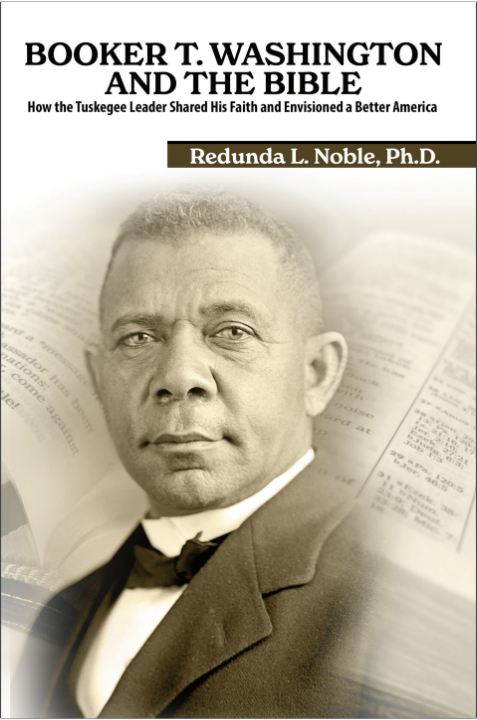
Booker T. Washington and the Bible: How the Tuskegee Leader Shared His Faith and Envisioned a Better America
Edition: 1
Copyright: 2026
Pages: 272
Edition: 1
Copyright: 2026
Pages: 272
Choose Your Format
Print Package
$55.00 USD
Ebook Package
$45.00 USD
This book is an ideological analysis of the religious rhetoric of Booker T. Washington and its impact on his audiences and followers. Washington became one of the most powerful Black men of the Progressive Era as leader of Tuskegee Normal and Industrial Institute in Alabama. Washington’s motivation grew out of his childhood slave experience and struggle to gain education following Emancipation in the Reconstruction South. He supported industrial education for Blacks, but rejected the political protest model demanding civil rights. He developed an educational model advocating economic independence and spiritual growth for Blacks through individual agency and personal accountability. Washington’s religious rhetoric involved not only practical life
lessons, but also powerful biblical principles promoting the virtues of hard work, servanthood and morality. He viewed education combined with Christian faith as the path for Blacks to escape poverty and gain independence. Drawing on select speeches and writings, the book explores religious speech previously neglected by scholars, and argues that Washington’s message of racial uplift remains relevant and inspiring to modern audiences.
Chapter 1: Introduction
Research Methodology and Purpose
America’s Rhetorical Religious Roots
Race and Religion in Rhetoric
Washington’s World
A Century of Washington Historiography
Recent Washington Historiography
Historical Lacunae
Study Significance
Scope and Limitations of the Study
Chapter 2: Washington’s Religious Influences
Introduction
Washington’s Mother
Washington’s Maternal Influences
Washington’s Mentor
Chapter 3: Washington’s Religious Rhetoric
Introduction
Washington’s Anti-Protest Stance
Washington’s Rhetorical Themes
Washington’s Religious Rhetoric
Washington’s Rhetorical Theme of Suffering
Washington’s Rhetorical Theme of Servanthood
Washington’s Rhetorical Strategies: Sympathy and Storytelling
Washington’s Oratorical Predecessor: Frederick Douglass
Washington’s Philosophical Nemesis: W. E. B. Du Bois
Washington’s Rhetoric on Race Relations
Chapter 4: Washington’s Bible School
Introduction
Washington’s Leading Men
Washington’s Leading Ladies
Washington’s Wives
Washington’s Social Gospel
Chapter 5: Washington’s Disciples
Introduction
Historiography Gaps
Washington as Race Leader
High-Profile Disciple: Emmett Jay Scott
T. Thomas Fortune
Race Uplift Educators: Isaac Fisher
Elizabeth Evelyn Wright
Martha Schofield
Conclusion
Chapter 6: Modern Uplift Voices
Introduction and Significance
Washington’s Message Ahead of Its Time
Carol M. Swain
Star Parker
Rev. Jesse Lee Peterson
Voddie Baucham
Dr. Ben Carson
Chapter 7: Re-Evaluating Washington’s Legacy
Conclusion
Redunda Noble serves as Visiting Assistant Professor of History in the College of Arts and Sciences at Anderson University in Anderson, South Carolina. She earned a bachelor’s degree from the University of Memphis and her Master’s and Doctor of Philosophy Degrees from Liberty University in Lynchburg, Virginia. Along with devotion as a pastor’s wife for more than three decades, much of her research and writing focuses on United States history, African American history, and the influence of Christian faith in American life. She is married to Dr. James D. Noble, and they are the parents of two sons and one daughter.