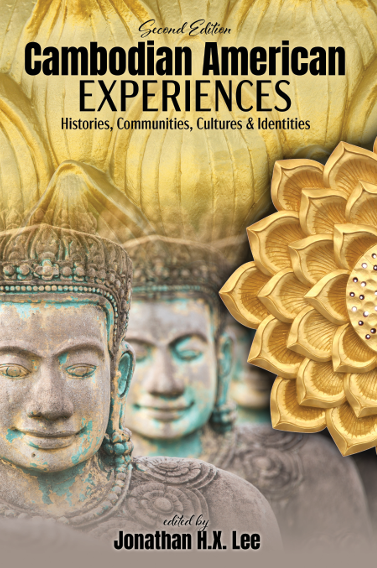
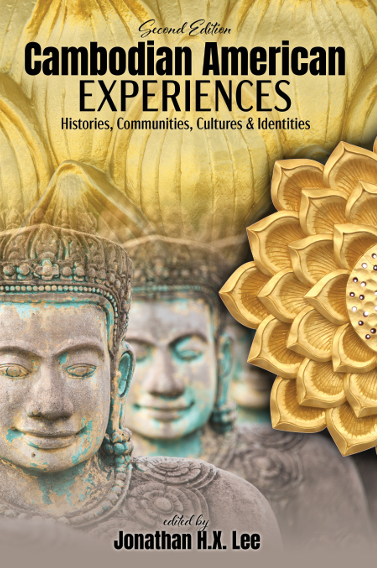
Cambodian American Experiences: Histories, Communities, Cultures and Identities
Edition: 2
Copyright: 2026
Pages: 432
Edition: 2
Copyright: 2026
Pages: 432
Choose Your Format
$86.81 USD
Ebook
$75.00 USD
This textbook provides a comprehensive examination of Cambodian American history by placing the community's experiences within the broader historical, political, social, and cultural developments that shape both Cambodia and the United States. Beginning with Cambodia's rich history and the events that led to war, genocide, and forced migration, the text traces the origins of one of the largest refugee diasporas of the late twentieth century. By connecting Cambodian American experiences to global political events, the bok demonstrates how migration, identity, and memory are deeply influenced by historical forces.
Building on this historical foundation, the book explores the resettlement and development of Cambodian American communities across the United States. It examines the challenges refugees faced as they rebuilt their lives including trauma, poverty, educational inequality, and social marginalization, while also highlighting the resilience, culture preservation, and civic engagement that have strengthened communities over time. The text further investigates identity formations, intergenerational change, religion, education, community institutions, and social mobility, offering a nuanced understanding of Cambodian American life across generations.
Drawing from disciplines such as history, sociology, anthropology, political science, psychology, education, migration studies, and Asian American studies, this interdisciplinary volume presents a multifaceted perspective on the Cambodian American experience. Trough historical research, oral histories, demographic analysis, and community-based scholarship, the book illustrates how Cambodian American history is an integral part of American, refugee, Asian American, and global history. It serves as both an authoritative introduction and a valuable resource for understanding the enduring themes of war, migration, resilience, identity, and belonging.
Section I: Cambodia
Chapter 1: An Outline History of Cambodia
Section II: War, Pol Pot, and the Khmer Rouge
Chapter 2: "The “Hot Wars” of Indochina: U.S. Intervention and the Cambodian Theater of the Vietnam War
Chapter 3: Who Was Pol Pot?
Chapter 4: Discovering S-21
Section III: Development of Cambodian American Communities
Chapter 5: 1970s: Escape from War and the Creation of Refugees
Chapter 6: Cambodian American Secondary Migration and Community Growth
Section IV: Cambodian American Personal Adjustments and Societal Integration
Chapter 7: Cambodian Resettlement in America
Chapter 8: Nature of Cambodian Gangs in America
Section V: Cambodian Americans and Education
Chapter 9: Cambodian Americans and the Model-Minority Stereotype
Chapter 10: Understanding the Education of Cambodian Students in the United States: Future Directions and Implications for Practice
Chapter 11: Academic Achievement Differences between Cambodian and Vietnamese Children: Cultural and Structural Explanations
Section VI: Cambodian American Dance and Music
Chapter 12: R.J. Sin on Being “Raised by Refugee Americans"
Chapter 13: Cambodian Music and Dance in North America
Section VII: Cambodian American Literature
Chapter 14: Trauma and Transformation: Th e Autobiographies of Cambodian Americans (1980-2010)
Chapter 15: Crossing the River and Ocean: A Review of Cambodian American Literature for the Young
Section VIII: Cambodian American Economic Integration
Chapter 16: Khmer Cultural Values and Economic Behavior
Chapter 17: The Doughnut Emporium
Chapter 18: Cambodian Americans and Welfare Reform as Social Control
Chapter 19: Cambodian American Women and the Politics of Welfare Reform
Section IX: Cambodian American Identity Formations
Chapter 20: Cambodian American Ethics of Identity Formation
Chapter 21: Narratives of “Khmerness” and Cambodian American Identity
Section X: Cambodian American Families, Genders, and Sexualities
Chapter 22: Shifting Ideals of Masculinity Among Cambodians and Cambodian Americans
Chapter 23: Khmer American Marriage Arrangements and Morality
Chapter 24: Out of the Killing Fields, Out of the Closet: A Personal Narrative on Finding Identity as a Gay Cambodian American
Chapter 25: (Re)Imagining the Meaning of Being Cambodian and Gay
Chapter 26: Cambodian American Women
Section XI: Cambodian American Religions
Chapter 27: Cambodian/Cambodian American Religiosity and Culture-Work
Chapter 28: Cambodian American Rice Bowl Christians
Chapter 29: Facing Death: Portraits from Cambodia’s Killing Fields
Section XII: Cambodian American Citizenship Post 9/11
Chapter 30: Forced Return: Th e Deportation of Former Cambodian Refugees from the U.S.
Epilogue
Jonathan H. X. Lee, Ph.D., is professor of Asian American studies at San Francisco State University. His family survived the Cambodian genocide and arrived to the United States in 1981 when he was 5 years old. He identifies as Chinese-Vietnamese-and-Cambodian American. He received his doctorate in religious studies from the University of California at Santa Barbara in 2009. He has published 16 books, and over 500 articles and essays on Asian American histories, folklore, cultures, and religions. Currently, he serves as editor-in-chief of Chinese America: History & Perspectives, a peer-review journal published by the Chinese Historical Society of America. He is dedicated to anti-racist pedagogy in education, and has been invited by several Silicon Valley corporations and public institutions to speak on issues of equity, inclusion, and diversity.