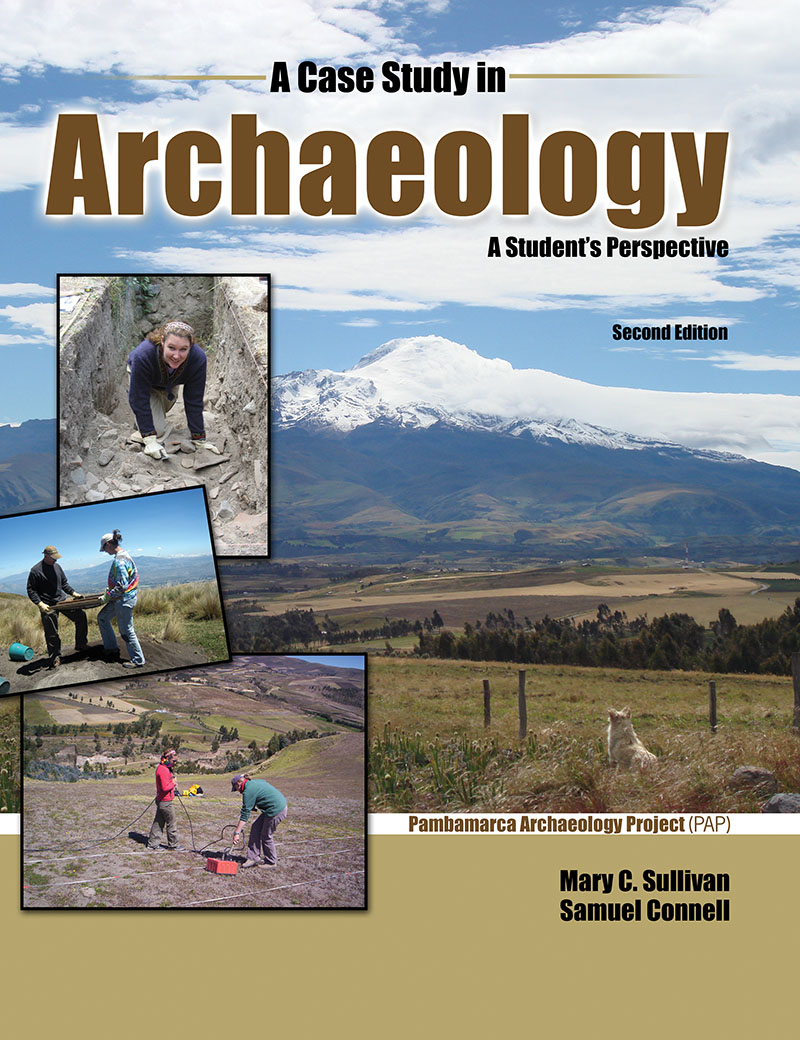
A Case Study in Archaeology: A Student's Perspective

Edition: 2

Copyright: 2012

Pages: 98

Choose Your Format

Ebook

$35.00 USD

ISBN 9781465228093

Details Electronic Delivery EBOOK 180 days


eBook Version

You will receive access to this electronic text via email after using the shopping cart above to complete your purchase.


The new second edition of A Case Study in Archaeology: A Student’s Perspective is a workbook intended to supplement the main textbook/coursework in an entry level anthropology or archaeology class. This text presents examples from an ongoing investigation, the Pambamarca Archaeology Project, giving students experience in what the field is like. A Case Study in Archaeology includes commentary and feedback from real students throughout the book and therefore is written from “A Student’s Perspective”.

This text intends to interest the reader, be easy to read, and be interactive. Students will explore the archaeology practice through critical thinking, discussion, group work, and by expressing themselves both verbally and in writing. 

A Case Study in Archaeology: A Student’s Perspective:

  • Features data from the Pambamarca Archaeology Project located high in the Andes Mountains of northern Ecuador, investigating the pre-Inca, Inca, and Spanish cultures
  • Provides interactive opportunities to think about, criticize, react to, and engage the material presented
  • Includes exercises to improve a student’s critical thinking, deductive reasoning, writing, and communication skills
  • Contains “Instructor’s Note” icons throughout for suggested homework and/or class discussion activities 
     
Acknowledgements
Preface for Instructors
Introduction to the Text

Chapter 1 – Becoming an Archaeologist and the Culture History of Pambamarca

Getting Started 
    Introducing the Pambamarca Archaeology Project (PAP) Understanding the Material Culture (Artifacts)
The Culture History of Pambamarca
The Cayambe 
    The Cayambe Late Period 
    The Cayambe Inca Period
The Inca 
    Pambamarca Battles and Settlement
The Spanish Arrive 
    Hacienda Period 
    Hacienda Guachala


Chapter 2 – Fieldwork

Step 1: Survey 
    Geophysics Surveys 
    GPR at Pambamarca 
    How It Works 
    Interpretation of GPR

Step 2: Excavation
Step 3: Lab Work

Chapter 3 – Applied Anthropology and Ethics

Behind the Scenes
A Brief History of Archaeology in the New World 
    Anthropologists: The Silver Lining 
    Native Groups Assert Themselves

PAP’s Role at Pambamarca 
    Meet the Locals 
    PAP: Remembering History 
    Who Benefits from an Archaeology Project? 
    Isn’t There a Metaphor About Good Intentions? 
    Inevitable Escalation


Chapter 4 – Endnotes and References

Endnotes 
    Chapter 1 
    Chapter 2 
    Chapter 3

References Cited
Mary Sullivan

Mary C. Sullivan is an adjunct instructor of anthropology at Palm Beach State College. She teaches courses that examine human biological and cultural diversity, archaeology, and the development of societies while encouraging students to apply anthropological perspectives to contemporary issues. Sullivan earned a Bachelor of Arts from Indiana University and a Master of Arts from the University of Mississippi.

Samuel Connell

Samuel Connell is an instructor of anthropology at Foothill College. An archaeologist specializing in the rise of complex societies, colonization, and resistance, his research spans Ecuador, Belize, California, Ireland, and Hawaii. Connell has led numerous archaeological field schools, providing students with hands-on experience in excavations, cultural heritage preservation, and applied anthropology. Before joining Foothill College, he worked in Hawaii as a forensic archaeologist recovering and identifying U.S. service members missing in action from past conflicts in Vietnam and Laos. He earned his Ph.D. from the University of California, Los Angeles (UCLA), where his dissertation examined Maya society and the relationships between common people and political leaders in Belize.


eBook Version

You will receive access to this electronic text via email after using the shopping cart above to complete your purchase.


The new second edition of A Case Study in Archaeology: A Student’s Perspective is a workbook intended to supplement the main textbook/coursework in an entry level anthropology or archaeology class. This text presents examples from an ongoing investigation, the Pambamarca Archaeology Project, giving students experience in what the field is like. A Case Study in Archaeology includes commentary and feedback from real students throughout the book and therefore is written from “A Student’s Perspective”.

This text intends to interest the reader, be easy to read, and be interactive. Students will explore the archaeology practice through critical thinking, discussion, group work, and by expressing themselves both verbally and in writing. 

A Case Study in Archaeology: A Student’s Perspective:

  • Features data from the Pambamarca Archaeology Project located high in the Andes Mountains of northern Ecuador, investigating the pre-Inca, Inca, and Spanish cultures
  • Provides interactive opportunities to think about, criticize, react to, and engage the material presented
  • Includes exercises to improve a student’s critical thinking, deductive reasoning, writing, and communication skills
  • Contains “Instructor’s Note” icons throughout for suggested homework and/or class discussion activities 
     

Acknowledgements
Preface for Instructors
Introduction to the Text

Chapter 1 – Becoming an Archaeologist and the Culture History of Pambamarca

Getting Started 
    Introducing the Pambamarca Archaeology Project (PAP) Understanding the Material Culture (Artifacts)
The Culture History of Pambamarca
The Cayambe 
    The Cayambe Late Period 
    The Cayambe Inca Period
The Inca 
    Pambamarca Battles and Settlement
The Spanish Arrive 
    Hacienda Period 
    Hacienda Guachala


Chapter 2 – Fieldwork

Step 1: Survey 
    Geophysics Surveys 
    GPR at Pambamarca 
    How It Works 
    Interpretation of GPR

Step 2: Excavation
Step 3: Lab Work

Chapter 3 – Applied Anthropology and Ethics

Behind the Scenes
A Brief History of Archaeology in the New World 
    Anthropologists: The Silver Lining 
    Native Groups Assert Themselves

PAP’s Role at Pambamarca 
    Meet the Locals 
    PAP: Remembering History 
    Who Benefits from an Archaeology Project? 
    Isn’t There a Metaphor About Good Intentions? 
    Inevitable Escalation


Chapter 4 – Endnotes and References

Endnotes 
    Chapter 1 
    Chapter 2 
    Chapter 3

References Cited

Mary Sullivan

Mary C. Sullivan is an adjunct instructor of anthropology at Palm Beach State College. She teaches courses that examine human biological and cultural diversity, archaeology, and the development of societies while encouraging students to apply anthropological perspectives to contemporary issues. Sullivan earned a Bachelor of Arts from Indiana University and a Master of Arts from the University of Mississippi.

Samuel Connell

Samuel Connell is an instructor of anthropology at Foothill College. An archaeologist specializing in the rise of complex societies, colonization, and resistance, his research spans Ecuador, Belize, California, Ireland, and Hawaii. Connell has led numerous archaeological field schools, providing students with hands-on experience in excavations, cultural heritage preservation, and applied anthropology. Before joining Foothill College, he worked in Hawaii as a forensic archaeologist recovering and identifying U.S. service members missing in action from past conflicts in Vietnam and Laos. He earned his Ph.D. from the University of California, Los Angeles (UCLA), where his dissertation examined Maya society and the relationships between common people and political leaders in Belize.