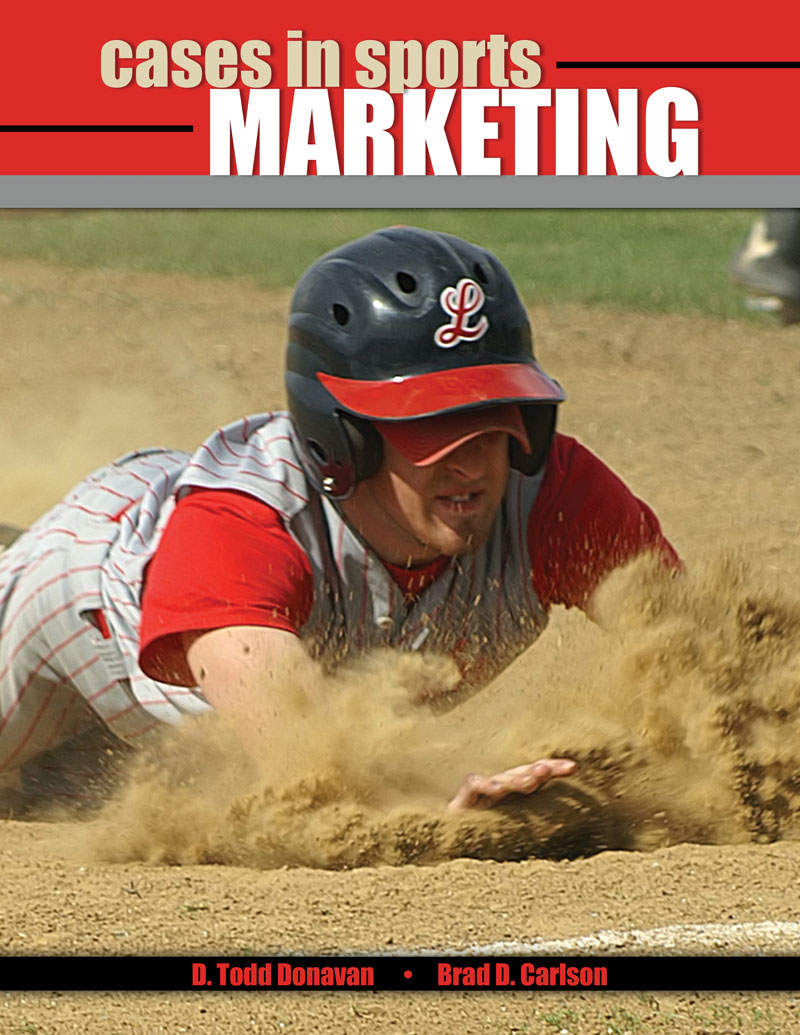
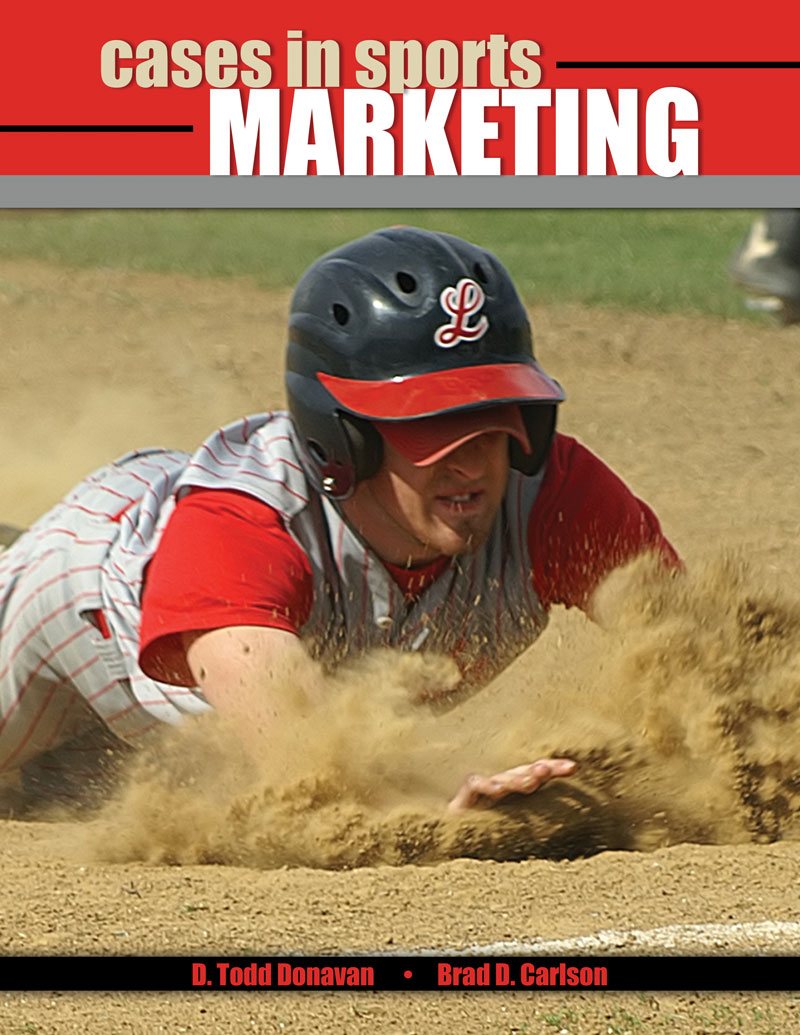
Cases in Sports Marketing
Edition: 1
Copyright: 2009
Pages: 175
Choose Your Format
Ebook
$108.49 USD
The sports industry is one of the top ten industries in the United States. Despite this fact, some may question how sports marketing is a special topic of marketing. There is a need to explore sports marketing and show how it uses marketing concepts to achieve business success. Sports marketing is “the specific application of marketing principles and processes to sports products and to the marketing of non-sports products through association with sports.”
This definition involves two key elements: (1) marketing sports, such as encouraging viewership of the Super Bowl and/or participation in a sporting activity, and (2) marketing products that have no direct relationship with sports by creating an association with sports. Examples of the two elements are ubiquitous throughout our culture. Marketers directly promote sports in countless ways, such as through traditional media commercials, on-site giveaways, and the use of event marketing.
To promote non-sports products, marketers often use sports celebrities, such as Shaquille O’Neal (the retired NBA star) who has been featured in a recent Icy Hot commercial. Likewise, Peyton Manning of the Denver Broncos has featured in a series of commercials for Papa John’s Pizza. Clearly, neither O’Neal nor Manning has a direct connection to these products. The brands are counting on their notoriety to increase awareness and possibly sales.
One interesting event, which occurs annually at the Kansas State University, contains elements of both facets of the definition. During the pre-game event called Harley Day, upward of 100 Harley-Davidson riders circle the football field while revving their engines. This event encourages fans to express their positive emotions toward the team. The two elements of the sports marketing definition occur in this example as follows: First, fans are encouraged to attend the game just to experience the spectacle of the Harley riders, and thus the sporting event is marketed. Second, while Harley-Davidson is not directly related to the football team, Harley gains some free promotion as 60,000 fans attend the event. Harley Day transforms the routine football game into an “experience.”
1- Sports Marketing: An Overview
2- Green and Gold: Tourism Relations between the Green BayPackers and the Host Community
Douglas Michele Turco, Ph.D., and Choonghoon Lim, M.S.
3- Every Game’s a Big Event: The Toledo Mud Hens Baseball Club
Jacquelyn Cuneen
4- Protecting the House of Under Armour
Patrick Kraft and Jason W. Lee
5- The Influence of Personality Traits on Sports Fan Identification
D. Todd Donavan, Brad D. Carlson, Mickey Zimmerman
6- Delivering Quality Service in Professional Sport
David Shilbury, M.S.
7- Star Players, Payroll Distribution, and Major LeagueBaseball Attendance
Dominic H. Rivers and Timothy D. DeSchriver
8- The Relationship between the Attitudes of Professional Sport Fans and Their Intentions to Watch Televised Games
Daniel F. Mahony and Anita M. Moorman
9- Exploring the Curious Demand for Athletes withControversial Images: A Review of Anti-Hero Product Endorsement Advertising
Rick Burton, Francis John Farrelly, and Pascale G. Quester
10- A Model of Image Creation and Image Transfer in Event Sponsorship
Kevin Gwinner
11- Donations: Are They Affected by a Football Championship?
Clay Daughtrey and David Stotlar
12- Creating a Sonic Identity for the University of Houston
Khalid Ballouli and Gregg Bennett

Todd’s primary research areas are customer orientation and identification. In his customer orientation (CO) stream Todd has investigated the personality traits that predict a CO disposition as well as the benefits of hiring CO employees. Employees that rank high on CO are more committed to the firm, more satisfied and they commit more helping behaviors. In the Identification stream, Todd has been investigating what makes both customers and employees more likely to identify with the firm. Todd has identified both personality traits as well as environmental situations that predict identification.
Todd regularly teaches principles of marketing and the seminar class in sports marketing. Through these classes, Todd has worked to give students some practical experience in the sports industry working with the Denver Nuggets. CSU students are benefitting from this experience and helping to endow a marketing scholarship.

Bradley Carlson, Ph.D., is a Professor of Marketing and the James J. Pierson Endowed Chair in Marketing. He earned a Ph.D. in Marketing from Oklahoma State University, an M.A. in Media Communications, and a B.A. in Psychology from Webster University.
His research focuses on consumer-brand relationships, celebrity endorsements, branding, customer engagement, and interactions between employees and customers. He has published extensively in leading marketing journals on topics such as customer engagement, brand communities, sales training, and customer satisfaction.
Dr. Carlson has received numerous awards for excellence in teaching, research, and service, including the Distinguished Faculty Member Award and Teaching Innovation Award. He is active in professional organizations, serving in leadership roles within the Academy of Marketing Science, and contributes to his community through business mentorship, youth coaching, and volunteer service.
The sports industry is one of the top ten industries in the United States. Despite this fact, some may question how sports marketing is a special topic of marketing. There is a need to explore sports marketing and show how it uses marketing concepts to achieve business success. Sports marketing is “the specific application of marketing principles and processes to sports products and to the marketing of non-sports products through association with sports.”
This definition involves two key elements: (1) marketing sports, such as encouraging viewership of the Super Bowl and/or participation in a sporting activity, and (2) marketing products that have no direct relationship with sports by creating an association with sports. Examples of the two elements are ubiquitous throughout our culture. Marketers directly promote sports in countless ways, such as through traditional media commercials, on-site giveaways, and the use of event marketing.
To promote non-sports products, marketers often use sports celebrities, such as Shaquille O’Neal (the retired NBA star) who has been featured in a recent Icy Hot commercial. Likewise, Peyton Manning of the Denver Broncos has featured in a series of commercials for Papa John’s Pizza. Clearly, neither O’Neal nor Manning has a direct connection to these products. The brands are counting on their notoriety to increase awareness and possibly sales.
One interesting event, which occurs annually at the Kansas State University, contains elements of both facets of the definition. During the pre-game event called Harley Day, upward of 100 Harley-Davidson riders circle the football field while revving their engines. This event encourages fans to express their positive emotions toward the team. The two elements of the sports marketing definition occur in this example as follows: First, fans are encouraged to attend the game just to experience the spectacle of the Harley riders, and thus the sporting event is marketed. Second, while Harley-Davidson is not directly related to the football team, Harley gains some free promotion as 60,000 fans attend the event. Harley Day transforms the routine football game into an “experience.”
1- Sports Marketing: An Overview
2- Green and Gold: Tourism Relations between the Green BayPackers and the Host Community
Douglas Michele Turco, Ph.D., and Choonghoon Lim, M.S.
3- Every Game’s a Big Event: The Toledo Mud Hens Baseball Club
Jacquelyn Cuneen
4- Protecting the House of Under Armour
Patrick Kraft and Jason W. Lee
5- The Influence of Personality Traits on Sports Fan Identification
D. Todd Donavan, Brad D. Carlson, Mickey Zimmerman
6- Delivering Quality Service in Professional Sport
David Shilbury, M.S.
7- Star Players, Payroll Distribution, and Major LeagueBaseball Attendance
Dominic H. Rivers and Timothy D. DeSchriver
8- The Relationship between the Attitudes of Professional Sport Fans and Their Intentions to Watch Televised Games
Daniel F. Mahony and Anita M. Moorman
9- Exploring the Curious Demand for Athletes withControversial Images: A Review of Anti-Hero Product Endorsement Advertising
Rick Burton, Francis John Farrelly, and Pascale G. Quester
10- A Model of Image Creation and Image Transfer in Event Sponsorship
Kevin Gwinner
11- Donations: Are They Affected by a Football Championship?
Clay Daughtrey and David Stotlar
12- Creating a Sonic Identity for the University of Houston
Khalid Ballouli and Gregg Bennett
Todd’s primary research areas are customer orientation and identification. In his customer orientation (CO) stream Todd has investigated the personality traits that predict a CO disposition as well as the benefits of hiring CO employees. Employees that rank high on CO are more committed to the firm, more satisfied and they commit more helping behaviors. In the Identification stream, Todd has been investigating what makes both customers and employees more likely to identify with the firm. Todd has identified both personality traits as well as environmental situations that predict identification.
Todd regularly teaches principles of marketing and the seminar class in sports marketing. Through these classes, Todd has worked to give students some practical experience in the sports industry working with the Denver Nuggets. CSU students are benefitting from this experience and helping to endow a marketing scholarship.
Bradley Carlson, Ph.D., is a Professor of Marketing and the James J. Pierson Endowed Chair in Marketing. He earned a Ph.D. in Marketing from Oklahoma State University, an M.A. in Media Communications, and a B.A. in Psychology from Webster University.
His research focuses on consumer-brand relationships, celebrity endorsements, branding, customer engagement, and interactions between employees and customers. He has published extensively in leading marketing journals on topics such as customer engagement, brand communities, sales training, and customer satisfaction.
Dr. Carlson has received numerous awards for excellence in teaching, research, and service, including the Distinguished Faculty Member Award and Teaching Innovation Award. He is active in professional organizations, serving in leadership roles within the Academy of Marketing Science, and contributes to his community through business mentorship, youth coaching, and volunteer service.