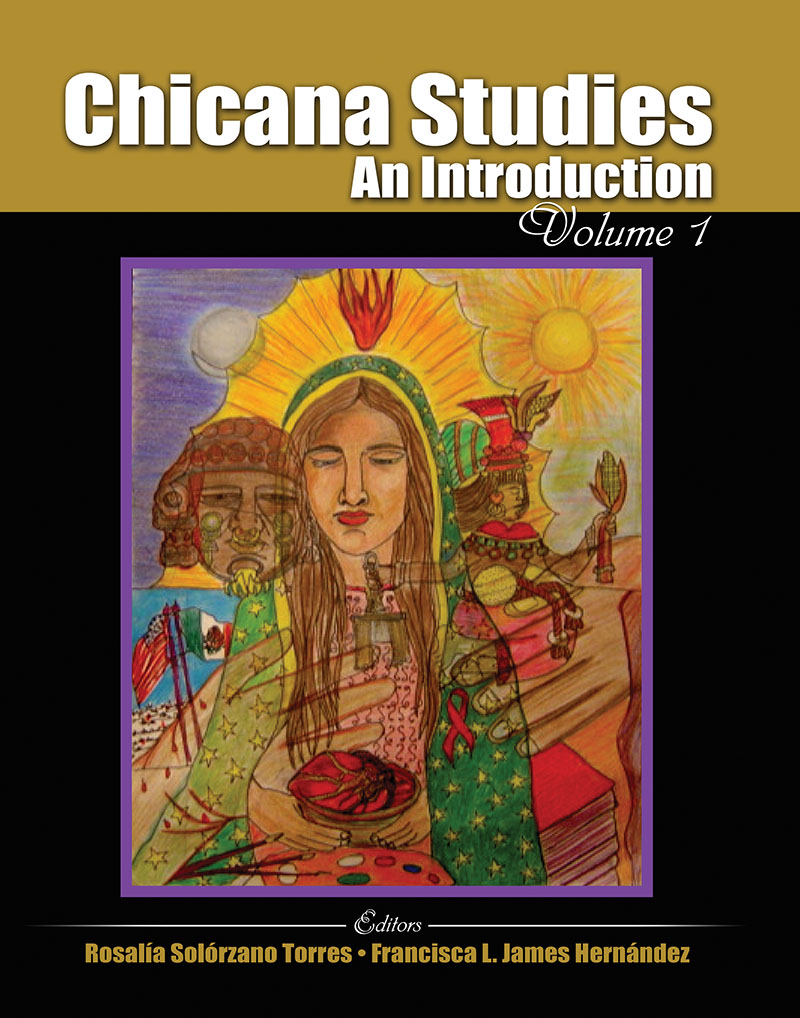
Chicana Studies: An Introduction, Volume 1
Edition: 1
Copyright: 2010
Pages: 458
Choose Your Format
$133.71 USD
Chicana Studies: An Introduction, Volume 1 introduces college, university and high school students to the interdisciplinary study of Chicanas, that is, women of Mexican heritage in the United States. Ideally, students have some background in the larger discipline of Chicana and Chicano Studies (also written as Chicana/o Studies or Chican@ Studies). However, previous study in the discipline is not necessary in order to meaningfully engage this text.
The field of Chicana Studies reveals much about the broader discipline of Chicana/o Studies, as well as the wider society. It is inclusive of men and people of other races and ethnicities, reflecting the realities in which Chicana lives are embedded. Chicana Studies, however, places Chicanas and Mexicanas at the center of scholarly inquiry. It focuses on their perspectives, experiences and voices as they struggle to create cultural identity, family and community within oppressive structures marked simultaneously by race, ethnicity, class, nationality, gender and sexuality. This text captures these and various other dimensions of Chicana Studies.
Rosalia Solorzano is a distinguished sociologist, educator, and advocate for Mexican-American Studies, Gender and Women’s Studies, and Border Studies. She spent 40 years teaching at Pima Community College (PCC) in Tucson, Arizona, where she served as a sociology instructor for over two decades before retiring in 2019. In recognition of her long-standing contributions, she was honored with faculty emerita status in February 2019, the most prestigious award given to retired PCC faculty.
Francisca James Hernández holds a Ph.D. in sociocultural anthropology from Stanford University where she also earned her M.A. and B.A. and has been a Research Associate at SIROW since 2012. She was a Mellon Postdoctoral Fellow in the Humanities at the University of California at Berkeley, Dept. of Ethnic Studies (2007-2009) and a Dissertation Fellow at UC Santa Barbara, Dept. of Feminist Studies (2004-2005). She won the SUNY Press Dissertation/First Book Prize in Gender and Women’s Studies for, Healing the Open Wound: Marginality and the Democratic Imaginary of the U.S.-Mexico Borderlands, a multidisciplinary, ethnographic, and intersectional examination of the neoliberalization of the borderlands, the resistance of dislocated garment workers there, and the implications of their struggles for re-envisioning democracy. James Hernández publications, including a co-edited volume, Chicana Studies: An Introduction (Kendall&Hunt 2010). Since 1992, Dr. James Hernández has taught anthropology, Chicana/o Studies, Gender & Women’s Studies, U.S.-Mexico Border Studies, political economy, and qualitative methods at various institutions, including UC Berkeley, UC Santa Barbara, and the University of Texas at El Paso. Since 1998, she has been full-time faculty at Pima Community College in Tucson, Arizona, teaching five courses per semester while researching and writing. In 2016, she co-founded the Dept. of Ethnic, Gender & Transborder Studies/Sociology at PCC and has served as Dept. Head since. Born and raised in Colorado, Dr. James Hernández’s personal and professional life have circulated throughout the U.S. Southwest and Mexico border region to which she dedicates her research, writing, and teaching.