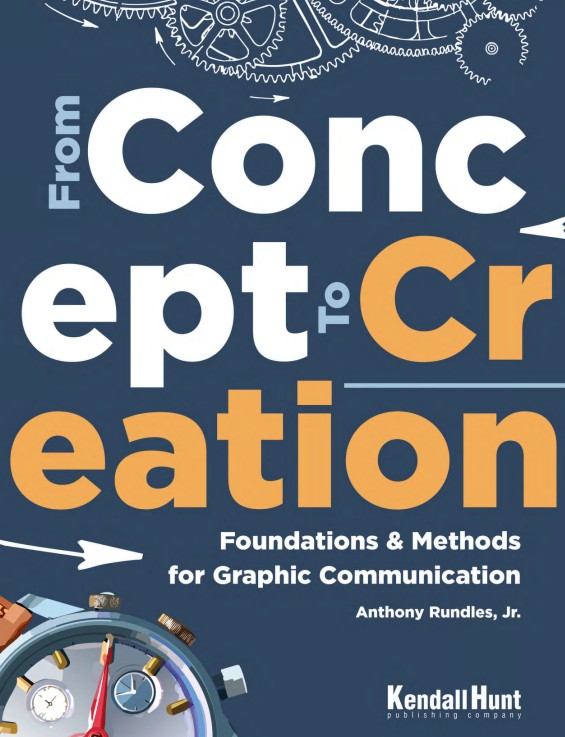
From Concept to Creation: Foundations & Methods for Graphic Communication

Author(s): ANTHONY RUNDLES

Edition: 1

Copyright: 2026

Pages: 96

Choose Your Format

Choose Your Platform | Help Me Choose

Ebook

$90.00 USD

ISBN 9798385196289

Details Electronic Delivery EBOOK 180 days

From Concept to Creation: Foundations & Methods for Graphic Communication is a practical introduction to the design process, built for students learning how to think and work like designers.

This book moves beyond surface-level design by focusing on how ideas are developed, refined, and executed. Readers are guided through key stages including research, concept development, iteration, and final production, while also learning the core principles that drive effective visual communication.

Structured around real-world application, the content helps students build confidence in their creative decisions and develop work that is both visually strong and strategically sound. By the end of the book, readers will understand not just how to design, but how to approach projects with clarity, purpose, and a professional mindset.

Acknowledgments
Introduction


Part I Design Foundations 

Chapter 1 Introduction to Graphic Design Methods 
What Is Graphic Design? 
Overview of the Creative Process
Conceptual Versus Formal Elements
Design Thinking and Problem-Solving 
Visual Language and Communication

Chapter 2 Elements of Design 
Introduction
1. Line 
2. Shape 
3. Texture
4. Color
5. Value
6. Space 
Design Element Spotlights: Famous Uses in History
Assignment: Visual Introductions
Summary

Chapter 3 Principles of Design 
Introduction
1. Harmony and Unity
2. Variety and Contrast
3. Emphasis and Focal Point 
4. Balance (Symmetry and Asymmetry)
5. Rhythm, Movement, and Pattern
Project: Fruit Face and Color Schemes
Summary


Part II Color, Typography, and Composition 

Chapter 4 Understanding Color and Value
Introduction
1. The Color Wheel and Terminology
2. Color Schemes 
3. Psychology of Color
Design Challenge: Color Psychology Campaign 
4. Cultural Meaning of Color
5. Value and Depth in Design
Project: Visual Analysis
Summary

Chapter 5 History of Graphic Design 
Introduction
1. Early Communication to the Bauhaus
2. Mid-Century Modernism 
3. Postmodernism and the Digital Age
4. Key Designers to Know
Project: Journey Through Art Periods 
Summary

Chapter 6 Typography I—The Basics 
Introduction
1. Anatomy of Letterforms
2. Typeface Versus Font
3. Typeface Classifications
4. Pairing Typefaces
Project: Harmony in Design 

Chapter 7 Typography II—Layout and Application
Introduction
1. Hierarchy and Visual Flow
2. Alignment, Grids, and Spacing 
3. Readability and Legibility
4. Expressive Typography 
Project: Alexander Girard Tribute
Summary


Part III Visual Communication in Practice 

Chapter 8 Advertising and Design 
Introduction
1. What Makes a Good Ad? 
2. Designing for Different Audiences 
3. The Role of Storytelling in Advertising 
4. Visual Persuasion Techniques
5. Case Study: Campaigns Across Cultures
Adobe Template Setup for 360° Ad System Sprint 
Project Instructions: 360° Ad System Sprint 
Summary

Chapter 9 Logo Design and Branding
Introduction
1. Logos and Identity Systems
2. Principles of Effective Logos
3. Research and Sketching 
4. Finalizing Vector Logos 
Case Study: Airbnb’s Logo and Identity System
Portfolio Project: Legacy Logo Redesign + Micro Brand System
Summary

Chapter 10 Layout and Composition 
Introduction
1. Visual Hierarchy and Scanning Patterns
2. Contrast and Repetition
3. Proximity and White Space
4. Using Grids in Print and Web Design 
Case Study: Spotify’s Responsive Layout System 
Portfolio Project: Type-Forward Advertisement
Accessibility Checklist 
Summary


Part IV Presentation, Collaboration, and Industry Prep

Chapter 11 Designing for Real-World Campaigns 
Introduction
1. Target Audience and Market Research
2. Message Development 
3. Medium-Specific Design
Portfolio Project: Magazine Layout

Chapter 12 Group Work and Feedback 
Introduction
1. Collaborative Methods in Design Practice
2. Constructive Critique and Feedback 
Portfolio Project: Group Zoom Presentation Showcase 

Chapter 13 Final Projects and 360° Branding
Introduction
1. Branding as a Semiotic System
2. From Research to Execution 
3. Portfolio-Ready Deliverables
Final Project: 360° Branding System 
Summary


Part V Beyond the Classroom

Chapter 14 Pathways in Design 
Introduction
1. Career Tracks in Graphic Design 
2. Creating Your First Portfolio 
3. Freelance Versus Agency Work
4. Ethics in Design 

Chapter 15 Resource Hub
Introduction
1. Glossary of Design Terms
2. Further Reading
3. Suggested Tools and Templates
4. Designer Profiles to Follow
Summary


About Me
About the Author
Instructor Notes Section

ANTHONY RUNDLES

Anthony Rundles is a graphic designer and Professor of Digital Media at Florida State College at Jacksonville, where he teaches visual communication, graphic design, and digital media courses. He also teaches within the Division of Graphic Communication at Florida A&M University.

His work focuses on bridging creative thinking with real-world application, helping students develop strong design processes from concept to execution. Rundles brings both industry experience and classroom-tested methods into his teaching, with an emphasis on portfolio development, problem-solving, and professional readiness.

He has presented research internationally, including at the IAFOR Kyoto Conference on Arts, Media & Culture, and has participated in a joint international teaching collaboration with Nelson Mandela University. He continues to develop curriculum that prepares emerging designers for careers in a rapidly evolving creative industry.

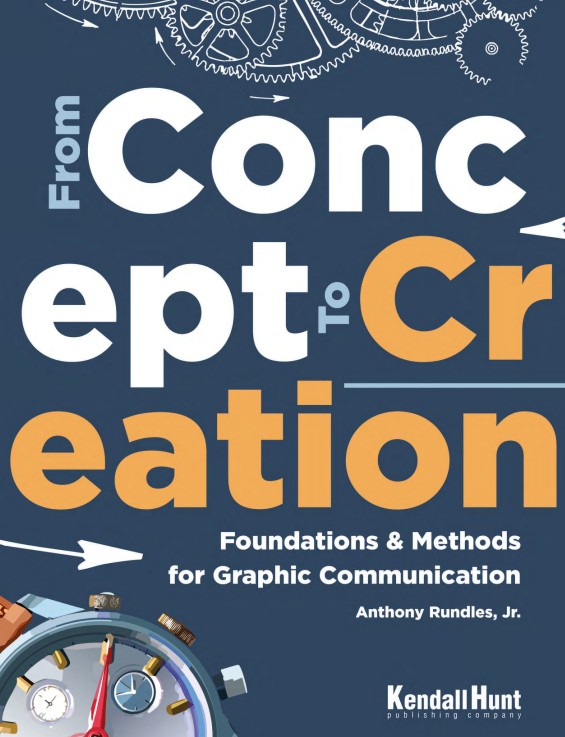
From Concept to Creation: Foundations & Methods for Graphic Communication is a practical introduction to the design process, built for students learning how to think and work like designers.

This book moves beyond surface-level design by focusing on how ideas are developed, refined, and executed. Readers are guided through key stages including research, concept development, iteration, and final production, while also learning the core principles that drive effective visual communication.

Structured around real-world application, the content helps students build confidence in their creative decisions and develop work that is both visually strong and strategically sound. By the end of the book, readers will understand not just how to design, but how to approach projects with clarity, purpose, and a professional mindset.

Acknowledgments
Introduction


Part I Design Foundations 

Chapter 1 Introduction to Graphic Design Methods 
What Is Graphic Design? 
Overview of the Creative Process
Conceptual Versus Formal Elements
Design Thinking and Problem-Solving 
Visual Language and Communication

Chapter 2 Elements of Design 
Introduction
1. Line 
2. Shape 
3. Texture
4. Color
5. Value
6. Space 
Design Element Spotlights: Famous Uses in History
Assignment: Visual Introductions
Summary

Chapter 3 Principles of Design 
Introduction
1. Harmony and Unity
2. Variety and Contrast
3. Emphasis and Focal Point 
4. Balance (Symmetry and Asymmetry)
5. Rhythm, Movement, and Pattern
Project: Fruit Face and Color Schemes
Summary


Part II Color, Typography, and Composition 

Chapter 4 Understanding Color and Value
Introduction
1. The Color Wheel and Terminology
2. Color Schemes 
3. Psychology of Color
Design Challenge: Color Psychology Campaign 
4. Cultural Meaning of Color
5. Value and Depth in Design
Project: Visual Analysis
Summary

Chapter 5 History of Graphic Design 
Introduction
1. Early Communication to the Bauhaus
2. Mid-Century Modernism 
3. Postmodernism and the Digital Age
4. Key Designers to Know
Project: Journey Through Art Periods 
Summary

Chapter 6 Typography I—The Basics 
Introduction
1. Anatomy of Letterforms
2. Typeface Versus Font
3. Typeface Classifications
4. Pairing Typefaces
Project: Harmony in Design 

Chapter 7 Typography II—Layout and Application
Introduction
1. Hierarchy and Visual Flow
2. Alignment, Grids, and Spacing 
3. Readability and Legibility
4. Expressive Typography 
Project: Alexander Girard Tribute
Summary


Part III Visual Communication in Practice 

Chapter 8 Advertising and Design 
Introduction
1. What Makes a Good Ad? 
2. Designing for Different Audiences 
3. The Role of Storytelling in Advertising 
4. Visual Persuasion Techniques
5. Case Study: Campaigns Across Cultures
Adobe Template Setup for 360° Ad System Sprint 
Project Instructions: 360° Ad System Sprint 
Summary

Chapter 9 Logo Design and Branding
Introduction
1. Logos and Identity Systems
2. Principles of Effective Logos
3. Research and Sketching 
4. Finalizing Vector Logos 
Case Study: Airbnb’s Logo and Identity System
Portfolio Project: Legacy Logo Redesign + Micro Brand System
Summary

Chapter 10 Layout and Composition 
Introduction
1. Visual Hierarchy and Scanning Patterns
2. Contrast and Repetition
3. Proximity and White Space
4. Using Grids in Print and Web Design 
Case Study: Spotify’s Responsive Layout System 
Portfolio Project: Type-Forward Advertisement
Accessibility Checklist 
Summary


Part IV Presentation, Collaboration, and Industry Prep

Chapter 11 Designing for Real-World Campaigns 
Introduction
1. Target Audience and Market Research
2. Message Development 
3. Medium-Specific Design
Portfolio Project: Magazine Layout

Chapter 12 Group Work and Feedback 
Introduction
1. Collaborative Methods in Design Practice
2. Constructive Critique and Feedback 
Portfolio Project: Group Zoom Presentation Showcase 

Chapter 13 Final Projects and 360° Branding
Introduction
1. Branding as a Semiotic System
2. From Research to Execution 
3. Portfolio-Ready Deliverables
Final Project: 360° Branding System 
Summary


Part V Beyond the Classroom

Chapter 14 Pathways in Design 
Introduction
1. Career Tracks in Graphic Design 
2. Creating Your First Portfolio 
3. Freelance Versus Agency Work
4. Ethics in Design 

Chapter 15 Resource Hub
Introduction
1. Glossary of Design Terms
2. Further Reading
3. Suggested Tools and Templates
4. Designer Profiles to Follow
Summary


About Me
About the Author
Instructor Notes Section

ANTHONY RUNDLES

Anthony Rundles is a graphic designer and Professor of Digital Media at Florida State College at Jacksonville, where he teaches visual communication, graphic design, and digital media courses. He also teaches within the Division of Graphic Communication at Florida A&M University.

His work focuses on bridging creative thinking with real-world application, helping students develop strong design processes from concept to execution. Rundles brings both industry experience and classroom-tested methods into his teaching, with an emphasis on portfolio development, problem-solving, and professional readiness.

He has presented research internationally, including at the IAFOR Kyoto Conference on Arts, Media & Culture, and has participated in a joint international teaching collaboration with Nelson Mandela University. He continues to develop curriculum that prepares emerging designers for careers in a rapidly evolving creative industry.
