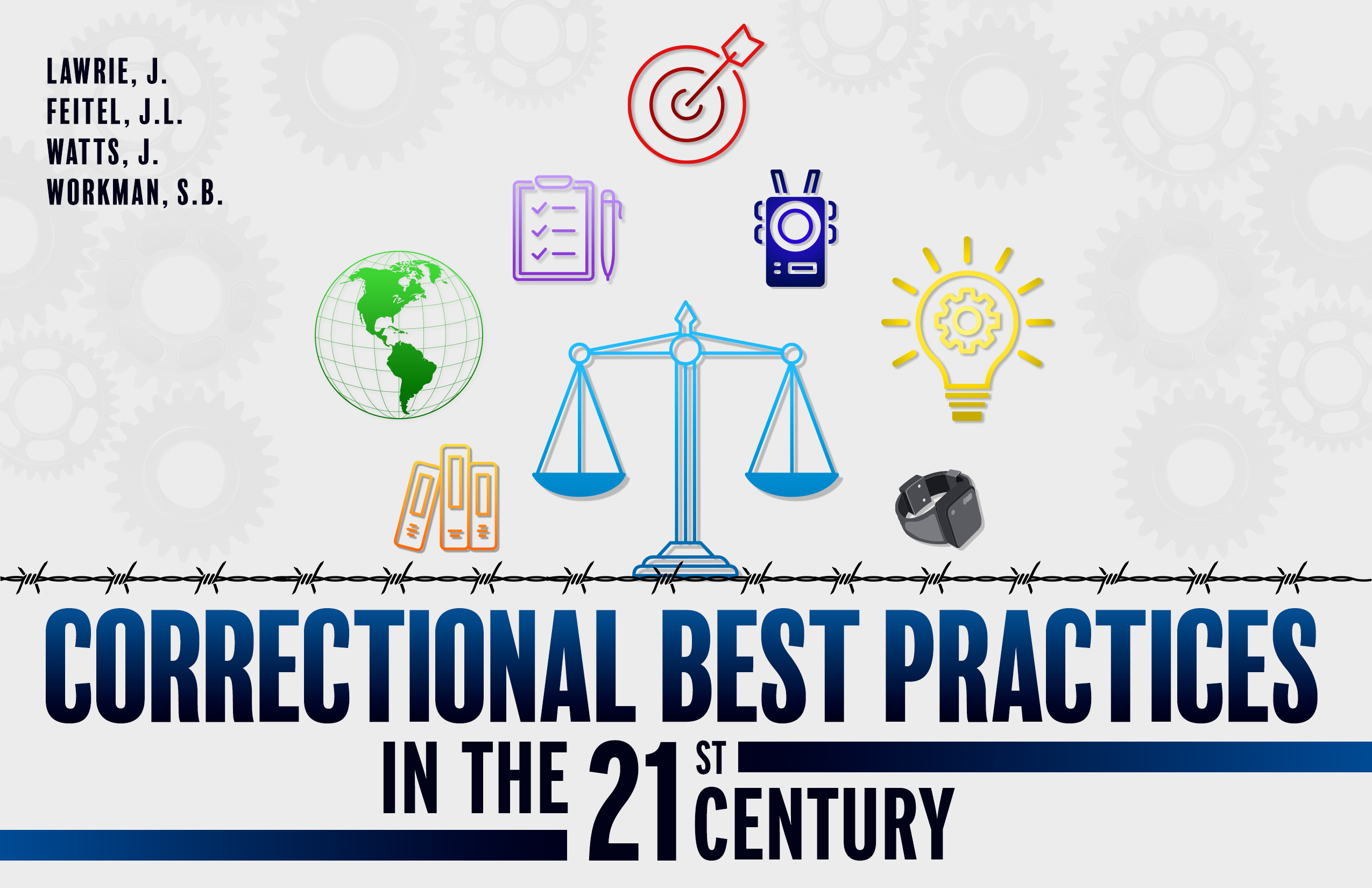
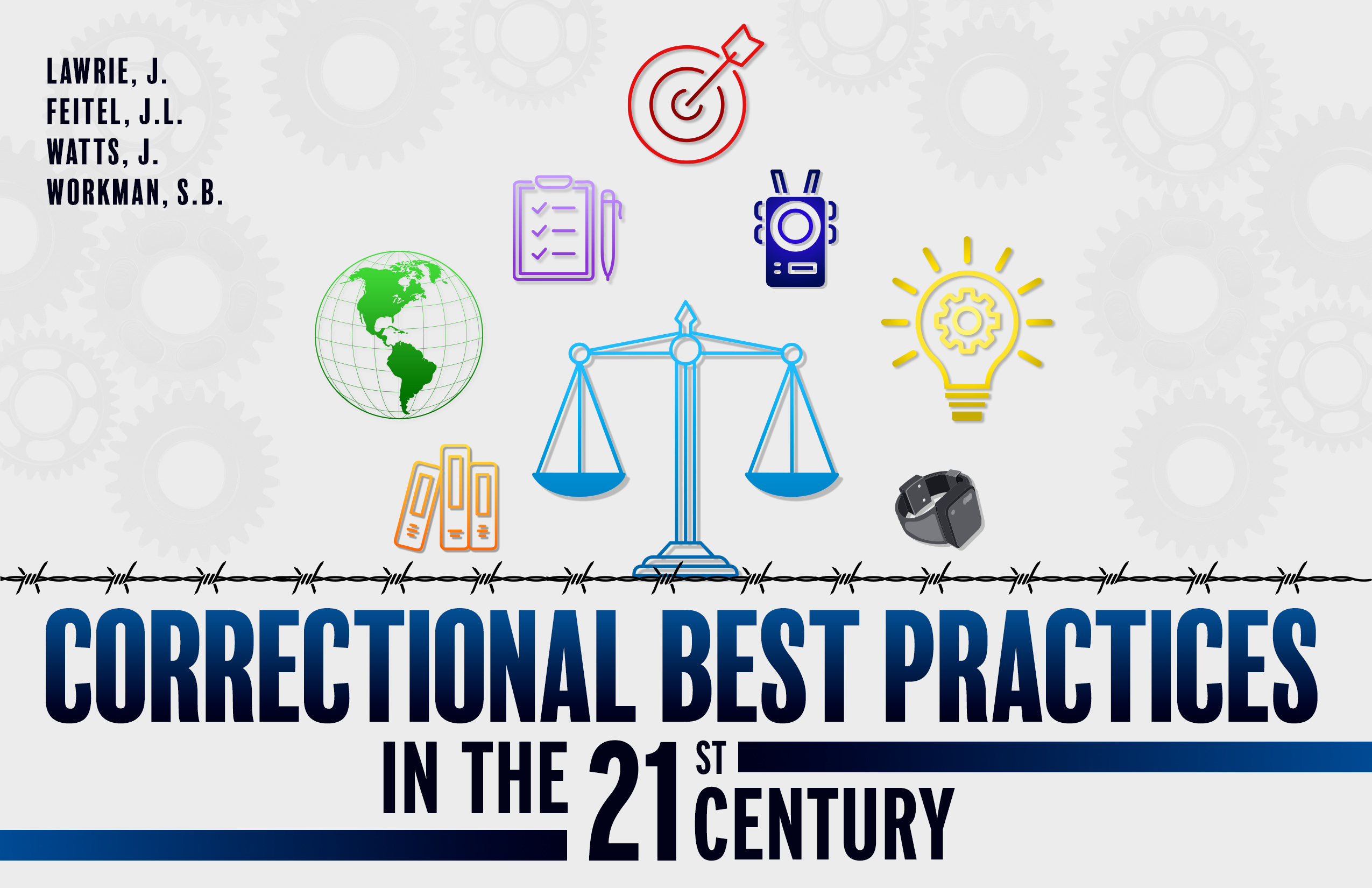
Correctional Best Practices in the 21st Century
Edition: 1
Copyright: 2025
Pages: 300
Choose Your Format
Website
$80.00 USD
Correctional Best Practices in the 21st Century delivers a panoramic, practice grounded view of corrections in the United States that no traditional text can match. Written by four practitioner-professors whose careers span from DOC management, detention, probation and parole leadership, specialty courts, to community policing, the book fuses front-line experience with contemporary scholarship. Twelve concise chapters trace the field from its historical roots to emerging challenges such as AI risk scores, climate-driven lawsuits, and staff wellness. Along the way, students meet real case files, policy memos, and data dashboards that mirror the documents practitioners use every day. Landmark cases appear side by side with “spotlight” consent decrees, and restorative justice policies, turning abstract doctrine into applied problem-solving skills.
Designed for instructor flexibility, the text pairs each chapter with learning objectives, slides, multimedia links, and in-class simulations that plug seamlessly into face-to-face, hybrid, or online courses. Critical thinking boxes invite students to weigh costs, ethics, and evidence; end-of-chapter “toolkits” provide ready-to-use checklists—whether for ADA compliance or PREA audits. From jail intake to reentry planning, from constitutional litigation to global trends, this book equips tomorrow’s professionals with the legal literacy, cultural competence, and technology trends demanded by today’s correctional agencies.
Learning Objectives:
- Trace the historical evolution of U.S. correctional practices and philosophies, identifying key legal, social, and institutional milestones that shape modern correctional systems.
- Evaluate the legal frameworks and landmark court decisions governing correctional operations, including constitutional rights, consent decrees, and compliance requirements under laws such as PREA, ADA, and PLRA.
- Analyze emerging correctional challenges, including the use of artificial intelligence in risk assessment, the impact of climate change on facility conditions, and the rising emphasis on staff wellness.
- Apply core correctional policies and procedures through the interpretation of
real-world case files, policy memos, audit checklists, and operational dashboards used by practitioners. - Assess the ethical, fiscal, and cultural implications of diverse correctional models, including restorative justice, reentry planning, and diversionary programs for special populations.
- Demonstrate legal literacy and regulatory compliance by completing in-class simulations that address key correctional audits, litigation scenarios, and emergency response protocols.
- Develop evidence-based solutions to complex correctional problems by integrating data analysis, cost-benefit reasoning, and best practices from both domestic and international contexts.
- Critically assess the role of correctional leadership in driving institutional reform, managing organizational change, and balancing security with rehabilitation goals.
- Interpret and critique the use of technology in corrections, including electronic monitoring, predictive analytics, and digital surveillance, with attention to due process and equity concerns.
- Cultivate cultural competence and communication skills necessary for engaging diverse incarcerated populations, correctional staff, and community stakeholders in ethically sound and effective ways.
Chapter 1: The History and Evolution of Corrections in America
Chapter 2: Jails/Detention Centers
Chapter 3: The Evolution of State and Federal Prison Systems in America
Chapter 4: An Overview of Community-Based Corrections
Chapter 5: Probation: The Most Utilized Sentence in the Criminal Justice System
Chapter 6: Parole: Release, Supervision and Reintegration
Chapter 7: Correctional Staff Wellness and Work–Life Balance
Chapter 8: Correctional Leadership: Challenges and Opportunities
Chapter 9: Special Populations in Corrections
Chapter 10: Constitutional Rights, Liability, and Case Law
Chapter 11: Technology in Corrections
Chapter 12: The Future of Corrections/Corrections in the Global Context

Dr. Jay Lawrie retired from the Connecticut Department of Correction in 2013, spending his entire 20-year career at the MacDougall/Walker Correctional Institution in Suffield, Connecticut. In 2014, Jay joined the faculty at Albertus Magnus College in New Haven, Ct., where he currently serves as an Associate Professor of Criminal Justice, Chair of the Department of Criminal Justice, and MSCJ Program Director. Prior to assuming this position, he was a criminal justice adjunct faculty member for 15 years at various Massachusetts colleges. He received his bachelor’s degree in political science in 1989 and master’s degree in criminal justice in 2000 from Westfield State University, as well as his doctorate in education from American International College in 2014.
Jay is also the co-founder of The Corrections Community Network an online social network exclusively for those working in the fields of corrections, parole, and probation.

Dr. Jennifer Feitel retired in 2018 as a Captain and Unit Manager for the Connecticut Department of Correction (DOC). She has built a long career in corrections, starting as a correctional officer, then becoming a treatment officer, lieutenant, and ultimately a captain. She was the first female chemical weapons operator and impact weapons operator assigned to the Correctional Emergency Response Team (C.E.R.T.) for the DOC. Toward the end of her career, she worked at the Maloney Center for Training and Staff Development, where she applied her leadership skills and passion for advanced training to both new and current correctional staff. In 2022, Dr. Feitel earned her Ed.D. in Educational Leadership from the University of Hartford and continues to teach aspiring correctional leaders in the college classroom.

Dr. John Watts is an Assistant Professor and Program Director of the Criminal Justice and Restorative Justice Program at the University of Saint Joseph. He also serves as an adjunct professor at Russell Sage College, where he teaches in the Criminal Justice and Community Corrections Program. Dr. Watts is a retired Chief Probation Officer with 20 years of experience at the State of Connecticut Judicial Branch, Court Support Services Division (CSSD).
He is a certified instructor with the Connecticut Police Officer Standards and Training (POST) Council and a nationally recognized trainer and consultant with Policy Research Associates and the Center for Effective Public Policy (CEPP). Dr. Watts is also a certified trauma trainer with the SAMHSA GAINS Center, where he supports trauma-informed care initiatives within correctional and community-based systems.
Dr. Watts earned his bachelor’s degree in Liberal Arts from Charter Oak State College, a master’s degree in Management and Organizational Leadership from Albertus Magnus College, and a doctorate in Criminal Justice from Saint Leo University.

Dr. Stacy Workman began her career in North Carolina as a deputy sheriff, serving both patrol and detention supervision, before becoming a probation and parole officer specializing in community supervision, rehabilitation, and reducing recidivism. During that time, she researched partnerships between law enforcement and community corrections agencies, trained probation and parole officers, and taught GED courses in prisons. She also worked in specialty courts addressing mental health and substance use and continues to champion reentry initiatives through simulations and community programming. Dr. Workman earned her Ph.D. in Criminal Justice from Walden University and is a certified General Instructor with the North Carolina Department of Justice. In 2022 she joined the faculty at Brevard College, where she is Assistant Professor and Department Chair of Criminal Justice. Through her dual roles in academia and active community policing, she is committed to shaping the future of corrections and improving outcomes for individuals and communities.
Correctional Best Practices in the 21st Century delivers a panoramic, practice grounded view of corrections in the United States that no traditional text can match. Written by four practitioner-professors whose careers span from DOC management, detention, probation and parole leadership, specialty courts, to community policing, the book fuses front-line experience with contemporary scholarship. Twelve concise chapters trace the field from its historical roots to emerging challenges such as AI risk scores, climate-driven lawsuits, and staff wellness. Along the way, students meet real case files, policy memos, and data dashboards that mirror the documents practitioners use every day. Landmark cases appear side by side with “spotlight” consent decrees, and restorative justice policies, turning abstract doctrine into applied problem-solving skills.
Designed for instructor flexibility, the text pairs each chapter with learning objectives, slides, multimedia links, and in-class simulations that plug seamlessly into face-to-face, hybrid, or online courses. Critical thinking boxes invite students to weigh costs, ethics, and evidence; end-of-chapter “toolkits” provide ready-to-use checklists—whether for ADA compliance or PREA audits. From jail intake to reentry planning, from constitutional litigation to global trends, this book equips tomorrow’s professionals with the legal literacy, cultural competence, and technology trends demanded by today’s correctional agencies.
Learning Objectives:
- Trace the historical evolution of U.S. correctional practices and philosophies, identifying key legal, social, and institutional milestones that shape modern correctional systems.
- Evaluate the legal frameworks and landmark court decisions governing correctional operations, including constitutional rights, consent decrees, and compliance requirements under laws such as PREA, ADA, and PLRA.
- Analyze emerging correctional challenges, including the use of artificial intelligence in risk assessment, the impact of climate change on facility conditions, and the rising emphasis on staff wellness.
- Apply core correctional policies and procedures through the interpretation of
real-world case files, policy memos, audit checklists, and operational dashboards used by practitioners. - Assess the ethical, fiscal, and cultural implications of diverse correctional models, including restorative justice, reentry planning, and diversionary programs for special populations.
- Demonstrate legal literacy and regulatory compliance by completing in-class simulations that address key correctional audits, litigation scenarios, and emergency response protocols.
- Develop evidence-based solutions to complex correctional problems by integrating data analysis, cost-benefit reasoning, and best practices from both domestic and international contexts.
- Critically assess the role of correctional leadership in driving institutional reform, managing organizational change, and balancing security with rehabilitation goals.
- Interpret and critique the use of technology in corrections, including electronic monitoring, predictive analytics, and digital surveillance, with attention to due process and equity concerns.
- Cultivate cultural competence and communication skills necessary for engaging diverse incarcerated populations, correctional staff, and community stakeholders in ethically sound and effective ways.
Chapter 1: The History and Evolution of Corrections in America
Chapter 2: Jails/Detention Centers
Chapter 3: The Evolution of State and Federal Prison Systems in America
Chapter 4: An Overview of Community-Based Corrections
Chapter 5: Probation: The Most Utilized Sentence in the Criminal Justice System
Chapter 6: Parole: Release, Supervision and Reintegration
Chapter 7: Correctional Staff Wellness and Work–Life Balance
Chapter 8: Correctional Leadership: Challenges and Opportunities
Chapter 9: Special Populations in Corrections
Chapter 10: Constitutional Rights, Liability, and Case Law
Chapter 11: Technology in Corrections
Chapter 12: The Future of Corrections/Corrections in the Global Context
Dr. Jay Lawrie retired from the Connecticut Department of Correction in 2013, spending his entire 20-year career at the MacDougall/Walker Correctional Institution in Suffield, Connecticut. In 2014, Jay joined the faculty at Albertus Magnus College in New Haven, Ct., where he currently serves as an Associate Professor of Criminal Justice, Chair of the Department of Criminal Justice, and MSCJ Program Director. Prior to assuming this position, he was a criminal justice adjunct faculty member for 15 years at various Massachusetts colleges. He received his bachelor’s degree in political science in 1989 and master’s degree in criminal justice in 2000 from Westfield State University, as well as his doctorate in education from American International College in 2014.
Jay is also the co-founder of The Corrections Community Network an online social network exclusively for those working in the fields of corrections, parole, and probation.
Dr. Jennifer Feitel retired in 2018 as a Captain and Unit Manager for the Connecticut Department of Correction (DOC). She has built a long career in corrections, starting as a correctional officer, then becoming a treatment officer, lieutenant, and ultimately a captain. She was the first female chemical weapons operator and impact weapons operator assigned to the Correctional Emergency Response Team (C.E.R.T.) for the DOC. Toward the end of her career, she worked at the Maloney Center for Training and Staff Development, where she applied her leadership skills and passion for advanced training to both new and current correctional staff. In 2022, Dr. Feitel earned her Ed.D. in Educational Leadership from the University of Hartford and continues to teach aspiring correctional leaders in the college classroom.
Dr. John Watts is an Assistant Professor and Program Director of the Criminal Justice and Restorative Justice Program at the University of Saint Joseph. He also serves as an adjunct professor at Russell Sage College, where he teaches in the Criminal Justice and Community Corrections Program. Dr. Watts is a retired Chief Probation Officer with 20 years of experience at the State of Connecticut Judicial Branch, Court Support Services Division (CSSD).
He is a certified instructor with the Connecticut Police Officer Standards and Training (POST) Council and a nationally recognized trainer and consultant with Policy Research Associates and the Center for Effective Public Policy (CEPP). Dr. Watts is also a certified trauma trainer with the SAMHSA GAINS Center, where he supports trauma-informed care initiatives within correctional and community-based systems.
Dr. Watts earned his bachelor’s degree in Liberal Arts from Charter Oak State College, a master’s degree in Management and Organizational Leadership from Albertus Magnus College, and a doctorate in Criminal Justice from Saint Leo University.
Dr. Stacy Workman began her career in North Carolina as a deputy sheriff, serving both patrol and detention supervision, before becoming a probation and parole officer specializing in community supervision, rehabilitation, and reducing recidivism. During that time, she researched partnerships between law enforcement and community corrections agencies, trained probation and parole officers, and taught GED courses in prisons. She also worked in specialty courts addressing mental health and substance use and continues to champion reentry initiatives through simulations and community programming. Dr. Workman earned her Ph.D. in Criminal Justice from Walden University and is a certified General Instructor with the North Carolina Department of Justice. In 2022 she joined the faculty at Brevard College, where she is Assistant Professor and Department Chair of Criminal Justice. Through her dual roles in academia and active community policing, she is committed to shaping the future of corrections and improving outcomes for individuals and communities.