A Dangerous World Laboratory
Edition: 2
Copyright: 2025
Pages: 250
Choose Your Format
Website
$61.00 USD
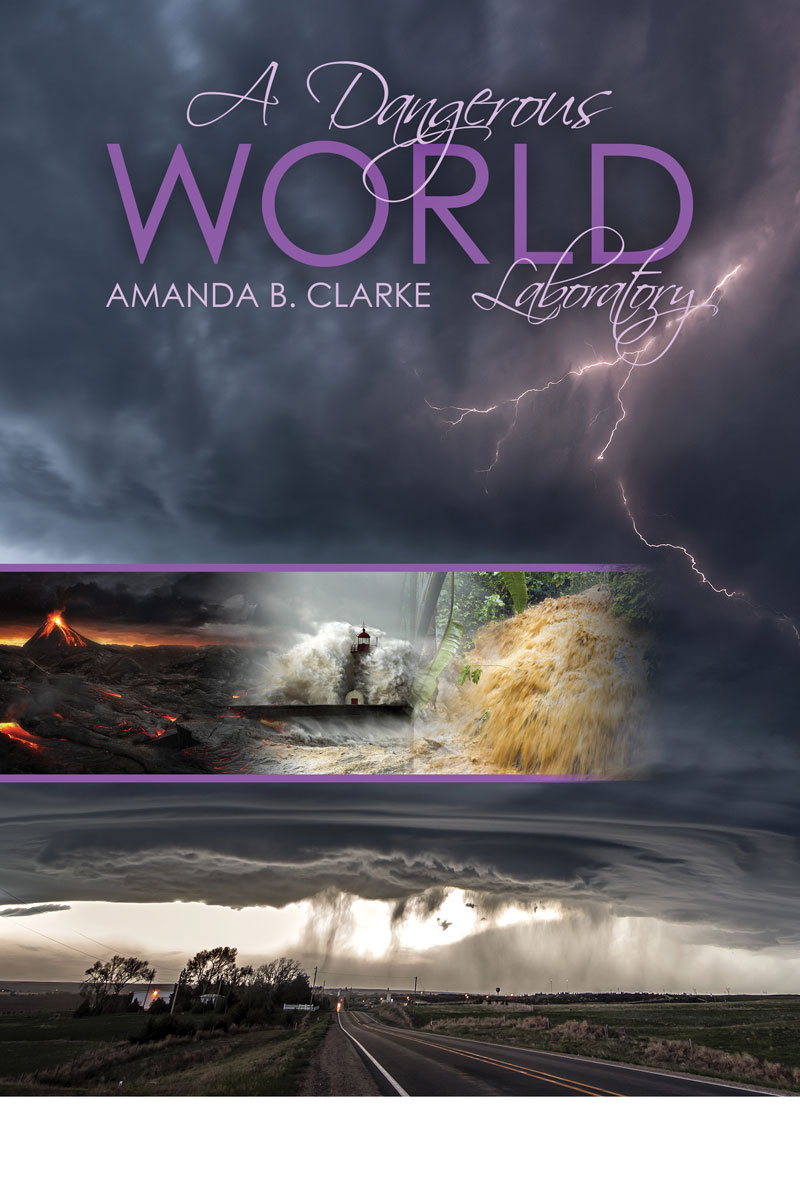
The Dangerous World Lab manual introduces students to the study of Earth's natural hazards and the geologic processes that create them. Designed as a companion to an Earth Science course, the manual provides hands-on laboratory activities that examine topics such as map reading, the rock cycle, plate tectonics, earthquakes, volcanoes, landslides, climate change, and extreme weather. By combining scientific concepts with real-world examples, students gain a practical understanding of how Earth's dynamic systems influence both the environment and human populations.
Throughout the manual, students use maps, Google Earth, data analysis, and observational activities to investigate natural disasters and Earth's changing landscapes. Each laboratory exercise encourages critical thinking, scientific inquiry, and problem-solving while exploring the causes, impacts, and hazards associated with events such as tsunamis, forest fires, hurricanes, tornadoes, and asteroid impacts. By emphasizing the interconnected nature of Earth's systems, the manual helps students develop a greater appreciation for natural processes and the importance of disaster awareness and environmental stewardship.
Lab: Introduction
Lab: Reading Maps
Lab: Natural Hazards & Google Earth
Lab: Extreme Weather: Tornadoes & Hurricanes
Lab: The Earth System and Climate Change
Lab: The Rock Cycle
Lab: Plate Tectonics
Lab: Earthquakes and Tsunamis
Lab: Volcanoes
Lab: Impactors
Lab: Landslides
Amanda Clarke is a professor whose research focuses on the physics of volcanic eruptions. Her group conducts field work to investigate deposits of recent volcanic eruptions and to make quantitative measurements at erupting volcanoes. She also invests in developing and using numerical models and laboratory experiments to understand volcanic systems. She and her group interpret volcanic rocks on Earth and Mars, investigate highly-explosive basaltic volcanism, post-caldera activity, eruption triggering, and interactions between geologic processes (e.g., earthquake-triggered volcanic activity and the interaction between volcanic plumes and Earth’s atmosphere). Key aims include reducing volcanic risk to human populations and infrastructure, as well as understanding the role volcanic eruptions have played in planetary evolution.