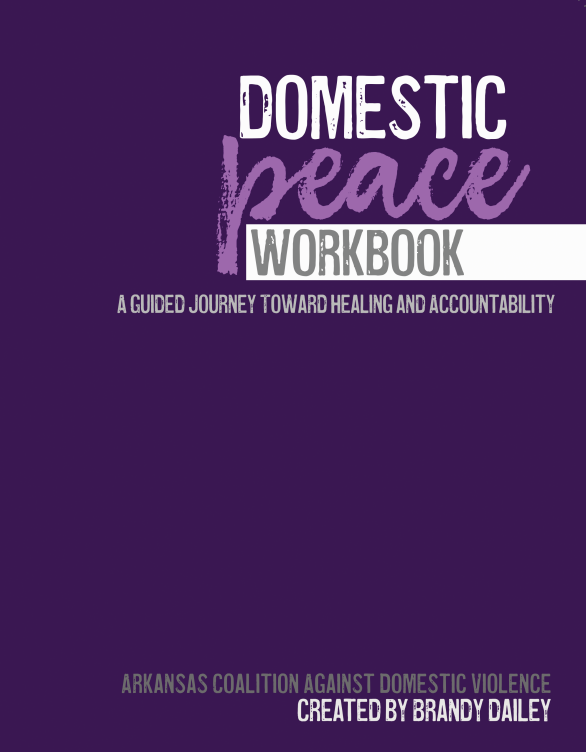
Domestic Peace Workbook: A Guided Journey Toward Healing and Accountability

Edition: 1

Copyright: 2026

Pages: 66

Choose Your Format

Choose Your Platform | Help Me Choose

Ebook

$15.00 USD

ISBN 9798385199617

Details Electronic Delivery EBOOK 180 days

The Domestic Peace Workbook: A Guided Journey Toward Healing and Accountability is a structured psycho-educational curriculum designed for individuals participating in a domestic violence intervention group. This workbook supports the work you will do during the program and is intended to help you examine your behavior, take responsibility for past actions, and develop healthier ways of relating to others.

Throughout the program, you will participate in facilitated group discussions, guided reflection, and skill-building activities. This workbook provides space for you to complete exercises, reflect on the topics discussed in group, and practice new skills related to communication, emotional regulation, and respectful relationships. The goal is to help you better understand the patterns that contribute to abusive behavior and to support meaningful, lasting change.

Topics explored in the program include:

  • understanding domestic violence and coercive control;
  • developing personal accountability;
  • recognizing the impact of abuse on partners, children, and families;
  • building healthy communication skills; and
  • learning strategies for emotional regulation.

This workbook is designed to be used alongside the Domestic Peace DVIP curriculum in a facilitator-led intervention group. Participants are expected to bring and use this workbook during group sessions to complete activities and reflections that support the learning process and personal growth throughout the program.

Course Outline 

Session 1: Recognition 
Session 1.1: Recognizing Our Choices 
Session 1.1: Handout—The ABC Model 
Handout 1.1: Emotion Wheel 
Handout 1.1: How I’ll Benefit from the ABCs 
Homework 1.1: Identifying and Understanding Your Emotions 
Handout 1.3: What are ACEs? 
Session 1.2: Handout—ACE Survey 
Handout and Homework 1.3: Cruelty Map 
Handout 1.4: Recognizing Beliefs and Values 
Handout 1.4: Core Beliefs 
Homework 1.4: Developing Personal Values 
Handout 1.5: Red Flags of Anger 
Homework 1.5: Anger Thermometer 

Session 2: Response 
Handout 2.1: Relationship Spectrum 
Handout 2.1: Power and Control Wheel 
Session 2.1: Homework—Control Log: Identifying Abusive and Controlling Behavior 
Session 2.2: Handout—Misinterpretations 
Session 2.2: Homework—Assumptions 
Session 2.3: Homework—Respectful Thinking 
Session 2.4: Handout—Urge Surfing 
Session 2.4: Homework—Countering Negative Thoughts 
Session 2.5: Homework—Parenting with Respect Survey 

Session 3: Reflection 
Session 3.1: Handout and Homework—Breaking the Cycle 
Homework 3.2: Reflecting on Relationships 
Session 3.4: Handout—Attachment Styles 
Session 3.4: Homework—Attachment Style and Love Language 

Session 4: Resilience 
Handout Session 4.1: WIBS 
Handout Session 4.1: Effective versus Ineffective Communication 
Session 4.2: Handout—Sexual Respect 
Session 4.2: Homework—The Consent Compass 
Homework 4.3: Rational Questions 
Session 4.4: Handout and Homework #1—Prevention Plan 
Session 4.5: Homework #2—Hope After Shame 

Session 5: Restoration 
Handout 5.1: Hopeless Thinking 
Handout 5.2: Active Listening 
Homework 5.2: Building Listening Skills 
Handout 5.3: The Art of Apologies 
Session 5.3: Homework—Apology Practice 
Session 5.4: Handout—Conflict Resolution 
Session 5.4: Handout—Fighting Fair 
Session 5.4: Handout—Assertiveness 
Session 5.4: Handout—Asking for Change 
Homework 5.4: Practicing Communication Skills 
Handout 5.5: Building Better Relationships 
Homework 5.5: Do I Have a Reason to Be Here

Brandy Dailey

Brandy Dailey is a passionate advocate for community empowerment and survivor safety; born in Houston, Texas, and raised in the rural landscapes of Arkansas. She earned her bachelor’s degree in politics from Hendrix College and furthered her expertise with a Master’s in Public Administration and a Graduate Certificate in Nonprofit Management from the University of Arkansas at Little Rock in 2019. During her graduate studies, she was the inaugural Wolanin Intern for the Council for Opportunity in Education in Washington, D.C., where she advocated for low-income and first-generation students as a graduate fellow on the Committee for Education and Labor

Brandy is a Certified Group Facilitator through the Arkansas Public Administration Consortium, a Certified Group Facilitator for CBT through the National Association of Cognitive Behavioral Therapists, and a Specialty Law Enforcement Instructor certified by the Arkansas Commission on Law Enforcement Standards. She holds additional certifications, training, and expertise in Forensic Experiential Trauma-Informed Interviewing (FETI), Motivational Interviewing, Acceptance & Commitment Therapy (ACT), the Duluth Model, Family Peace Initiative, Allies in Change, H.E.A.L., and the Relationship Training Institute's STOP program (Dr. David Wexler).

Throughout her career, Brandy has dedicated herself to nonprofit organizations focused on combating child abuse, domestic violence, human trafficking, and stalking. As a first-generation college graduate and a childhood survivor of domestic violence, she is deeply motivated by her personal experiences to give back to the community that has profoundly influenced her life.

Currently, Brandy serves as the Director of Accountability & Community Response for the Arkansas Coalition Against Domestic Violence, working across all 75 counties in the state. In this role, she leverages her extensive experience as a field trainer, technical assistance provider, and policy/data analyst. She also facilitates Abuse Intervention Programs (AIP), focusing on evidence-based strategies to reduce harm and promote accountability among individuals who have caused harm.

Brandy resides in central Arkansas, where she remains steadfast in her commitment to making a positive impact in her community and advocating for those in need.

Arkansas Coalition Against Domestic Violence

The Domestic Peace Workbook: A Guided Journey Toward Healing and Accountability is a structured psycho-educational curriculum designed for individuals participating in a domestic violence intervention group. This workbook supports the work you will do during the program and is intended to help you examine your behavior, take responsibility for past actions, and develop healthier ways of relating to others.

Throughout the program, you will participate in facilitated group discussions, guided reflection, and skill-building activities. This workbook provides space for you to complete exercises, reflect on the topics discussed in group, and practice new skills related to communication, emotional regulation, and respectful relationships. The goal is to help you better understand the patterns that contribute to abusive behavior and to support meaningful, lasting change.

Topics explored in the program include:

  • understanding domestic violence and coercive control;
  • developing personal accountability;
  • recognizing the impact of abuse on partners, children, and families;
  • building healthy communication skills; and
  • learning strategies for emotional regulation.

This workbook is designed to be used alongside the Domestic Peace DVIP curriculum in a facilitator-led intervention group. Participants are expected to bring and use this workbook during group sessions to complete activities and reflections that support the learning process and personal growth throughout the program.

Course Outline 

Session 1: Recognition 
Session 1.1: Recognizing Our Choices 
Session 1.1: Handout—The ABC Model 
Handout 1.1: Emotion Wheel 
Handout 1.1: How I’ll Benefit from the ABCs 
Homework 1.1: Identifying and Understanding Your Emotions 
Handout 1.3: What are ACEs? 
Session 1.2: Handout—ACE Survey 
Handout and Homework 1.3: Cruelty Map 
Handout 1.4: Recognizing Beliefs and Values 
Handout 1.4: Core Beliefs 
Homework 1.4: Developing Personal Values 
Handout 1.5: Red Flags of Anger 
Homework 1.5: Anger Thermometer 

Session 2: Response 
Handout 2.1: Relationship Spectrum 
Handout 2.1: Power and Control Wheel 
Session 2.1: Homework—Control Log: Identifying Abusive and Controlling Behavior 
Session 2.2: Handout—Misinterpretations 
Session 2.2: Homework—Assumptions 
Session 2.3: Homework—Respectful Thinking 
Session 2.4: Handout—Urge Surfing 
Session 2.4: Homework—Countering Negative Thoughts 
Session 2.5: Homework—Parenting with Respect Survey 

Session 3: Reflection 
Session 3.1: Handout and Homework—Breaking the Cycle 
Homework 3.2: Reflecting on Relationships 
Session 3.4: Handout—Attachment Styles 
Session 3.4: Homework—Attachment Style and Love Language 

Session 4: Resilience 
Handout Session 4.1: WIBS 
Handout Session 4.1: Effective versus Ineffective Communication 
Session 4.2: Handout—Sexual Respect 
Session 4.2: Homework—The Consent Compass 
Homework 4.3: Rational Questions 
Session 4.4: Handout and Homework #1—Prevention Plan 
Session 4.5: Homework #2—Hope After Shame 

Session 5: Restoration 
Handout 5.1: Hopeless Thinking 
Handout 5.2: Active Listening 
Homework 5.2: Building Listening Skills 
Handout 5.3: The Art of Apologies 
Session 5.3: Homework—Apology Practice 
Session 5.4: Handout—Conflict Resolution 
Session 5.4: Handout—Fighting Fair 
Session 5.4: Handout—Assertiveness 
Session 5.4: Handout—Asking for Change 
Homework 5.4: Practicing Communication Skills 
Handout 5.5: Building Better Relationships 
Homework 5.5: Do I Have a Reason to Be Here

Brandy Dailey

Brandy Dailey is a passionate advocate for community empowerment and survivor safety; born in Houston, Texas, and raised in the rural landscapes of Arkansas. She earned her bachelor’s degree in politics from Hendrix College and furthered her expertise with a Master’s in Public Administration and a Graduate Certificate in Nonprofit Management from the University of Arkansas at Little Rock in 2019. During her graduate studies, she was the inaugural Wolanin Intern for the Council for Opportunity in Education in Washington, D.C., where she advocated for low-income and first-generation students as a graduate fellow on the Committee for Education and Labor

Brandy is a Certified Group Facilitator through the Arkansas Public Administration Consortium, a Certified Group Facilitator for CBT through the National Association of Cognitive Behavioral Therapists, and a Specialty Law Enforcement Instructor certified by the Arkansas Commission on Law Enforcement Standards. She holds additional certifications, training, and expertise in Forensic Experiential Trauma-Informed Interviewing (FETI), Motivational Interviewing, Acceptance & Commitment Therapy (ACT), the Duluth Model, Family Peace Initiative, Allies in Change, H.E.A.L., and the Relationship Training Institute's STOP program (Dr. David Wexler).

Throughout her career, Brandy has dedicated herself to nonprofit organizations focused on combating child abuse, domestic violence, human trafficking, and stalking. As a first-generation college graduate and a childhood survivor of domestic violence, she is deeply motivated by her personal experiences to give back to the community that has profoundly influenced her life.

Currently, Brandy serves as the Director of Accountability & Community Response for the Arkansas Coalition Against Domestic Violence, working across all 75 counties in the state. In this role, she leverages her extensive experience as a field trainer, technical assistance provider, and policy/data analyst. She also facilitates Abuse Intervention Programs (AIP), focusing on evidence-based strategies to reduce harm and promote accountability among individuals who have caused harm.

Brandy resides in central Arkansas, where she remains steadfast in her commitment to making a positive impact in her community and advocating for those in need.

Arkansas Coalition Against Domestic Violence