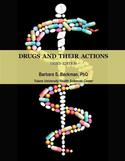
Drugs and Their Actions

Edition: 3

Copyright: 2024

Pages: 246

Choose Your Format

Choose Your Platform | Help Me Choose

Ebook

$68.69 USD

ISBN 9798385139118

Details Electronic Delivery EBOOK 180 days

"The faculty at Tulane University School of Medicine's Department of Pharmacology, along with senior graduate students, developed this text for use in their course designed to educate juniors and seniors about drugs and their mechanisms of action. Their efforts provide this general education in introductory pharmacology which has proven successful for teachers and learners.


The chapter organization is based on the experiences of the authors with regard to the rationale for presenting each drug class and principles associate with it. A glossary is provided because many terms are new to students.


Each textbook purchase includes digital e-Book access.


Please Note: the e-Book's unique digital access code is printed inside front cover of the shrink-wrapped textbook; as such, the e-Book digital access code cannot be sent separately by email in advance."
 

Chapter 1: Introduction and General Principles

Chapter 2: Molecular and Cellular Targets for Drugs

Chapter 3: Pharmacokinetics and Metabolism

Chapter 4: The Autonomic Nervous System

Chapter 5: The Parasympathetic Drugs: Cholinergic Agonists and Antagonists

Chapter 6: The Sympathetic Drugs: Adrenergic Agonists and Antagonists

Chapter 7: Analgesics and Autacoids

Chapter 8: Drugs Affecting the Respiratory System

Chapter 9: Gastrointestinal Drugs

Chapter 10: Drugs That Affect Blood

Chapter 11: Lipid Disorders

Chapter 12: Drugs and The Kidney

Chapter 13: Hypertension And Its Treatment

Chapter 14: Drugs Used to Treat Angina Pectoris and Heart Failure

Chapter 15: Antibiotics

Chapter 16: Cancer Chemotherapy and Gene Therapy

Chapter 17: Drugs And The Central Nervous System

Chapter 18: Drug Abuse and Society

Chapter 19: The Opioids

Chapter 20: Central Nervous System Stimulants

Chapter 21: Drugs for the Major Psychiatric Disorders

Chapter 22: Sedative/Hypnotic Drugs

Chapter 23: Alcohol

Chapter 24: Anesthetics 

Chapter 25: Psychedelic Drugs

Chapter 26: Introduction to Hormones Used as Drugs and Sex Hormones

Chapter 27: Hormones of the Adrenal Cortex

Chapter 28: Insulin and Drugs for Diabetes

Chapter 29: Thyroid and Anti-Thyroid Drugs

Chapter 30: Poisonings and Their Treatment

Chapter 31: Cannabinoids


Barbara S. Beckman

Barbara S. Beckman, Ph.D. is Professor of Pharmacology and Associate Dean of Admissions at the Tulane University School of Medicine. A graduate of Newcomb College, she began her academic career at Tulane as a postdoctoral fellow before joining the faculty, where she built a distinguished career in pharmacology and cancer-related research. In addition to her contributions to teaching and biomedical research, Dr. Beckman has been a strong advocate for diversity in the sciences. 

Tricia H. Smith

Tricia Hardt Smith, Ph.D. is an Associate Professor at Virginia Commonwealth University whose research focuses on cellular and molecular pharmacology. She earned her Ph.D. in Pharmacology from the Medical College of Virginia in 2009 and her M.S. in Pharmacology from the Tulane University School of Medicine in 2001. Her research investigates cell signaling, electrophysiology, G-protein coupled receptor function, and the pharmacological mechanisms underlying drugs of abuse, advancing the understanding of cellular processes that influence health and disease.

"The faculty at Tulane University School of Medicine's Department of Pharmacology, along with senior graduate students, developed this text for use in their course designed to educate juniors and seniors about drugs and their mechanisms of action. Their efforts provide this general education in introductory pharmacology which has proven successful for teachers and learners.


The chapter organization is based on the experiences of the authors with regard to the rationale for presenting each drug class and principles associate with it. A glossary is provided because many terms are new to students.


Each textbook purchase includes digital e-Book access.


Please Note: the e-Book's unique digital access code is printed inside front cover of the shrink-wrapped textbook; as such, the e-Book digital access code cannot be sent separately by email in advance."
 

Chapter 1: Introduction and General Principles

Chapter 2: Molecular and Cellular Targets for Drugs

Chapter 3: Pharmacokinetics and Metabolism

Chapter 4: The Autonomic Nervous System

Chapter 5: The Parasympathetic Drugs: Cholinergic Agonists and Antagonists

Chapter 6: The Sympathetic Drugs: Adrenergic Agonists and Antagonists

Chapter 7: Analgesics and Autacoids

Chapter 8: Drugs Affecting the Respiratory System

Chapter 9: Gastrointestinal Drugs

Chapter 10: Drugs That Affect Blood

Chapter 11: Lipid Disorders

Chapter 12: Drugs and The Kidney

Chapter 13: Hypertension And Its Treatment

Chapter 14: Drugs Used to Treat Angina Pectoris and Heart Failure

Chapter 15: Antibiotics

Chapter 16: Cancer Chemotherapy and Gene Therapy

Chapter 17: Drugs And The Central Nervous System

Chapter 18: Drug Abuse and Society

Chapter 19: The Opioids

Chapter 20: Central Nervous System Stimulants

Chapter 21: Drugs for the Major Psychiatric Disorders

Chapter 22: Sedative/Hypnotic Drugs

Chapter 23: Alcohol

Chapter 24: Anesthetics 

Chapter 25: Psychedelic Drugs

Chapter 26: Introduction to Hormones Used as Drugs and Sex Hormones

Chapter 27: Hormones of the Adrenal Cortex

Chapter 28: Insulin and Drugs for Diabetes

Chapter 29: Thyroid and Anti-Thyroid Drugs

Chapter 30: Poisonings and Their Treatment

Chapter 31: Cannabinoids


Barbara S. Beckman

Barbara S. Beckman, Ph.D. is Professor of Pharmacology and Associate Dean of Admissions at the Tulane University School of Medicine. A graduate of Newcomb College, she began her academic career at Tulane as a postdoctoral fellow before joining the faculty, where she built a distinguished career in pharmacology and cancer-related research. In addition to her contributions to teaching and biomedical research, Dr. Beckman has been a strong advocate for diversity in the sciences. 

Tricia H. Smith

Tricia Hardt Smith, Ph.D. is an Associate Professor at Virginia Commonwealth University whose research focuses on cellular and molecular pharmacology. She earned her Ph.D. in Pharmacology from the Medical College of Virginia in 2009 and her M.S. in Pharmacology from the Tulane University School of Medicine in 2001. Her research investigates cell signaling, electrophysiology, G-protein coupled receptor function, and the pharmacological mechanisms underlying drugs of abuse, advancing the understanding of cellular processes that influence health and disease.
