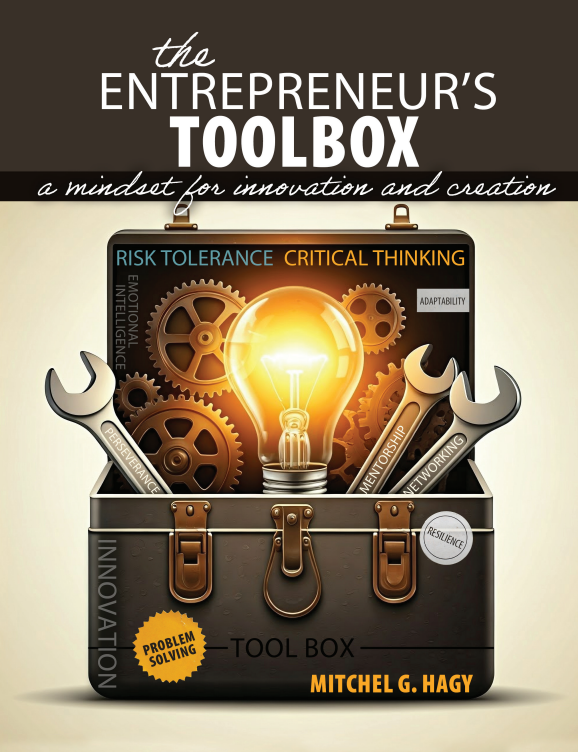
Entrepreneur's Toolbox: A Mindset for Innovation and Creation
Edition: 1
Copyright: 2026
Pages: 172
Edition: 1
Copyright: 2026
Pages: 120
Choose Your Format
Choose Your Platform | Help Me Choose


$99.00 USD
Ebook
$62.00 USD
INTRODUCTION
PROLOGUE: YOU HAVE BEEN CREATED TO CREATE
CHAPTER 1: The Importance of an Entrepreneurial Mindset
Section 1: Defining the Entrepreneurial Mindset
Section 2: Building an Entrepreneurial Mindset
CHAPTER 2: The Foundations of an Entrepreneurial Mindset
Section 1: Fixed Versus Growth Mindset: The First Step
Section 2: Value Creation: The Heart of Entrepreneurship
Section 3: Passion and Purpose: Your “Why”
Section 4: Habits, Curiosity, and Creativity
CHAPTER 3: Critical Thinking and Problem-Solving
CHAPTER 4: Emotional Intelligence and Resilience
Section 1: Self-Awareness and Self-Management
Section 2: Empathy and Social Awareness
Section 3: Conflict Management
Section 4: Effective Communication
Section 5: Coaching and Developing Others
Section 6: Professionalism and Emotional Intelligence
Section 7: Leading Teams
Section 8: Crisis Leadership
Section 9: Why Emotional Intelligence Is Superior
Section 10: Summary Reflection—The Inner Strength of Entrepreneurs
CHAPTER 5: Adaptability and Risk Tolerance
Section 1: The Value of Flexibility in a Changing Market
Section 2: Assessing and Managing Business Risks
Section 3: Pivoting a Business Model During Economic Downturns
Section 4: Dimensions of Adaptability in Business
CHAPTER 6: Strategic Thinking and Decision Making
Section 1: Developing a Strategic Mindset
Section 2: Making High-Impact Decisions Under Uncertainty
Section 3: Failing Fast and the Minimum Viable Product
Section 4: Tools for Prioritization and Focus
Section 5: Strategic Alignment—People, Process, and Priorities
Section 6: The Power of Focused Strategy
CHAPTER 7: Communication and Public Speaking
Section 1: Crafting Clear and Compelling Messages
Section 2: Mastering Public Speaking for Pitches and Presentations
Section 3: Winning Over Investors With a Powerful Pitch
Section 4: Common Communication Pitfalls Entrepreneurs Face
CHAPTER 8: Networking and Mentorship
Section 1: The Power of Building Strategic Relationships
Section 2: Finding and Learning From a Mentor
Section 3: How Networking and Mentorship Create Game-Changing Opportunities
Section 4: Common Pitfalls in Networking and Mentorship
Section 5: The Different Types of Networks Entrepreneurs Need
Section 6: The Give-and-Take of Mentorship
CHAPTER 9: Conflict Resolution and Team Dynamics
Section 1: Resolving Disputes Effectively
Section 2: Building and Leading High-Performing Teams
Section 3: Overcoming Internal Conflicts in a Growing Company
CHAPTER 10: Time Management and Productivity
Section 1: Prioritizing Tasks and Setting Goals
Section 2: Tools and Techniques for Enhanced Productivity
Section 3: How Time Management Saved a Business From Missing Deadlines
Section 4: Avoiding Burnout—Balancing Work and Life
CHAPTER 11: Building Your Entrepreneurial Toolkit
Section 1: A Checklist for Developing the Entrepreneurial Mindset
Section 2: Resources and Tools for Continuous Learning
Section 3: Building Your Physical and Digital Toolkit
Section 4: The Role of Self-Awareness in Choosing Tools
Section 5: Integrating Faith, Values, and Character Into Your Toolkit
CHAPTER 12: Conclusion