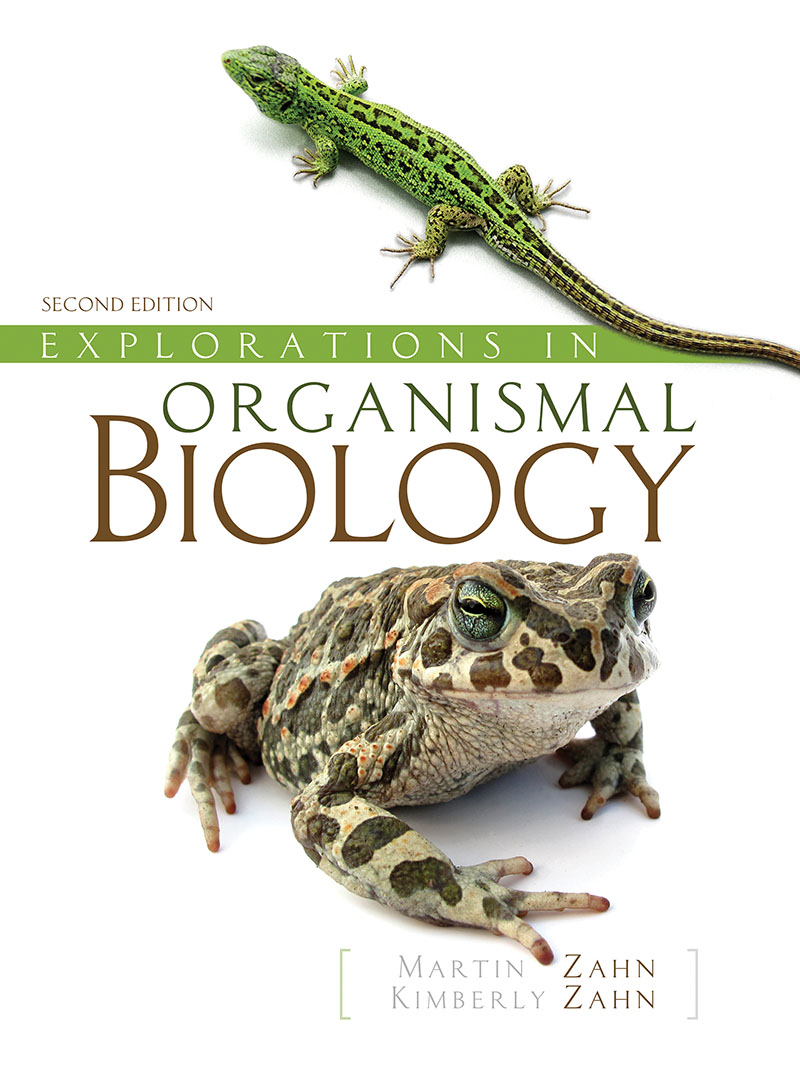
Explorations in Organismal Biology
Edition: 2
Copyright: 2014
Pages: 150
Edition: 2
Copyright: 2014
Pages: 150
Choose Your Format
$92.38 USD
Ebook
$66.85 USD
This book is a laboratory-based biology manual designed to introduce students to the diversity of life and foundational concepts in organismal and environmental biology. It begins with the classification of living things and progresses through major groups of organisms, including bacteria, protists, plants, fungi, invertebrates, and chordates. The text also includes plant anatomy and physiology to support understanding of structure and function in vascular plants. Students then apply comparative anatomy through fetal pig dissection exercises, reinforcing vertebrate body organization. The final sections shift toward ecology, examining population dynamics, species diversity in plant communities, and local environmental issues, helping students connect biological concepts to real-world ecological systems and environmental
Preface
Acknowledgments
Core Concepts Associated with Each Lab
Classification of Living Things
Bacteria Diversity
Protist Diversity
Plant Diversity
Fungi Diversity
Invertebrate Animal Diversity
Chordate Diversity
Plant Anatomy and Physiology
Fetal Pig Dissection I
Fetal Pig Dissection II
Introduction to Local Environmental Issues
Population Dynamics
Species Diversity of Plant Communities
Martin Zahn is a professor of Biology in the Science Department at Virginia Peninsula Community College. In this role, he teaches biology courses and supports student learning in foundational life science concepts, including cellular biology, organismal biology, and related scientific principles.