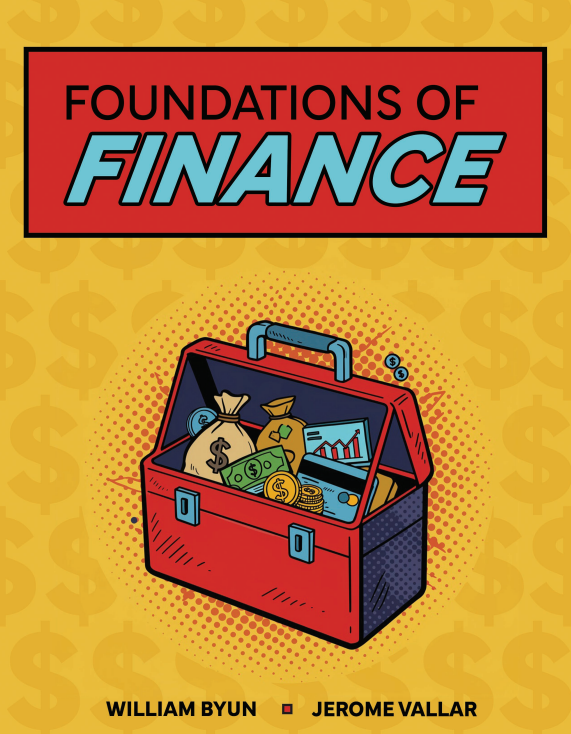
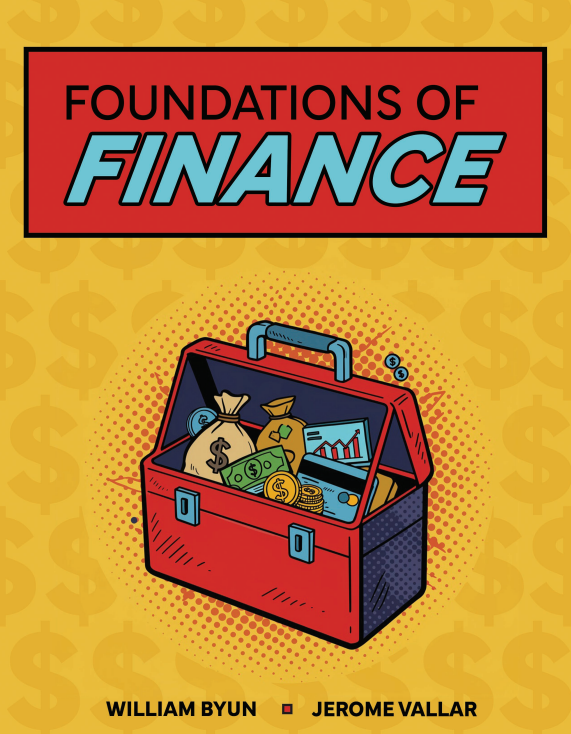
Foundations of Finance
Edition: 1
Copyright: 2025
Pages: 101
Choose Your Format
Choose Your Platform | Help Me Choose


Ebook
$25.00 USD
1. Overview: Financial Purpose and Landscape
a. Introduction to structure of finance
b. Principles of intermediation, regulatory philosophy (rules of the game)
c. landscape of entities and players (example focus on banks and what they do)
d. Introduction to company establishment and “citizenship”
e. Special Purpose Vehicles
2. Time Value of Money
a. Concept of cash flows for business and time periods. Velocity of money circulation, cash flows management.
b. TVM Concept
c. Explanation of formula and its centrality to finance,
d. Examination of its elements and how they interact with each other (r, t, PV, FV).
e. Example illustrations such as lotteries, savings bonds, etc.
3. New Ventures and Illiquid Valuations
a. Valuing closed or private companies
b. Financing of new startups and businesses (scalability and multiples)
c. Perspective of Investors (and structure of PE/VC funds)
d. Forms of exits
e. Walkthrough of a valuation exercise
f. Walkthrough of dilution
g. The venture capital industry, crowdfunding, angels (similarity bias)
h. Illustration: Shark Tank-like look at some opportunities
4. Investment Decisions: Capital Budgeting
a. Tools and techniques
b. Payback
c. NPV
d. IRR
e. Scenario and sensitivity analysis
f. Illustration: Woodlands Real Estate
g. Red flags
5. Banking Sector and its Evolution
a. Current “theory” of banking
b. Erosion of traditional banking
c. Concept of size
d. Types of businesses banks do
6. Capital Markets
a. Landscape of capital markets – why companies look to publicly finance, walk through landscape of exchanges, stocks, bonds
b. Evolution of Role of securities markets
c. Cross-border securities
d. Extraterritoriality and Insider Trading
e. IPOs and Dutch Auctions
f. Introduction of securitization
g. Illustration of derivatives
h. Asset management industry & types of investment advisory
i. Appropriateness of investments?
7. Cost of Capital
a. Cost of Debt
b. Cost of equity
c. WACC
d. Intro to capital structure
e. Thoughts on optimal capital, leverage
8. Risk, Diversification, Portfolios
a. Institutional vs Retail
b. Risk – Systemic and non-systemic
c. Concept of beta
d. Diversification and construction of Portfolios
e. Intro to portfolio management and personal finance
9. Doing Deals; Paying for Stuff: Leverage
a. Sources of financing and institutional investors/private equity funds; syndications
b. Mezzanine structures
c. “Juice” (Leverage)
d. Portfolio vs FDI
e. Characteristics of FDI
f. Chevron and CNOOC
10. International Finance Introduction
a. Forex and rationale; Big Max Index
b. International Trade rationale and primacy of policy
c. Trade financing; Letters of Credit
d. Export credits (ECAs and their distortionary impact)
e. Anti-dumping
f. Forex and flow of funds
g. Eco-currencies and Libor
11. OFCs and Structure
a. Tax
b. Transfer Pricing
c. Tax arbitrage
d. Trade Unions
e. Example: Double Irish
12. Distressed Sectors
a. Rules of the game – laws and bankruptcy (monopoly and Big Boy rules)
b. Debt/equity swaps and control and trading
c. Vulture funds
d. International sovereign debt means of pressure
e. Inheritance of obligations
f. Illustration: Badebtstan; Argentina; Orange County
13. Intro to Frontiers of New Finance Sectors
a. Microfinance
b. UBI and new development aid structure
c. Sustainability and performance
d. New ecosystem and players
e. Climate Change Finance – Carbon credits
f. Description of evolution in carbon credit ecosystem
g. Islamic finance
h. Cryptocurrencies and ICOs
i. Data finance
14. Dark Arts?
a. Accounting arbitrage, tax havens
b. International funds transfers & private banking
c. Transnational insurance and ownership

William has been a leading global expert in finance for energy, sustainability and carbon, and strategic management, with a focus on emerging markets Asia.
William is the Chief Executive Officer of New ASEAN Energy, Inc., and General Counsel for the Foresight Capital Group. William is also an advisor to several enterprises and NGOs including in Hong Kong, Malaysia, Philippines, Kazakhstan, and others, for sustainability, A.I., university tech transfer, and economic empowerment in under-represented communities. He is also a juror on the International Awards Committee for the Global Energy Prize, the premier international award for scientific achievement in energy, and as an adjunct professor of finance and management at California State University. He is also a regular contributor and speaker in broadcast and print media globally.
A New York attorney, William has also practiced in structured finance and capital markets financing in New York, Tokyo and Seoul. He was a US Fulbright Scholar to the Ministry of Finance of Korea and has degrees from the University of Chicago (Economics), University of Michigan (Law), and the University of London (Finance – SOAS), and the London School of Economics (Sociology).

Jerome Vallar is a specialist in project management and data analytics focused on the structuring and planning of projects and their financing. He has an MA, MBA, BSBA from Columbia University and California State University.
1. Overview: Financial Purpose and Landscape
a. Introduction to structure of finance
b. Principles of intermediation, regulatory philosophy (rules of the game)
c. landscape of entities and players (example focus on banks and what they do)
d. Introduction to company establishment and “citizenship”
e. Special Purpose Vehicles
2. Time Value of Money
a. Concept of cash flows for business and time periods. Velocity of money circulation, cash flows management.
b. TVM Concept
c. Explanation of formula and its centrality to finance,
d. Examination of its elements and how they interact with each other (r, t, PV, FV).
e. Example illustrations such as lotteries, savings bonds, etc.
3. New Ventures and Illiquid Valuations
a. Valuing closed or private companies
b. Financing of new startups and businesses (scalability and multiples)
c. Perspective of Investors (and structure of PE/VC funds)
d. Forms of exits
e. Walkthrough of a valuation exercise
f. Walkthrough of dilution
g. The venture capital industry, crowdfunding, angels (similarity bias)
h. Illustration: Shark Tank-like look at some opportunities
4. Investment Decisions: Capital Budgeting
a. Tools and techniques
b. Payback
c. NPV
d. IRR
e. Scenario and sensitivity analysis
f. Illustration: Woodlands Real Estate
g. Red flags
5. Banking Sector and its Evolution
a. Current “theory” of banking
b. Erosion of traditional banking
c. Concept of size
d. Types of businesses banks do
6. Capital Markets
a. Landscape of capital markets – why companies look to publicly finance, walk through landscape of exchanges, stocks, bonds
b. Evolution of Role of securities markets
c. Cross-border securities
d. Extraterritoriality and Insider Trading
e. IPOs and Dutch Auctions
f. Introduction of securitization
g. Illustration of derivatives
h. Asset management industry & types of investment advisory
i. Appropriateness of investments?
7. Cost of Capital
a. Cost of Debt
b. Cost of equity
c. WACC
d. Intro to capital structure
e. Thoughts on optimal capital, leverage
8. Risk, Diversification, Portfolios
a. Institutional vs Retail
b. Risk – Systemic and non-systemic
c. Concept of beta
d. Diversification and construction of Portfolios
e. Intro to portfolio management and personal finance
9. Doing Deals; Paying for Stuff: Leverage
a. Sources of financing and institutional investors/private equity funds; syndications
b. Mezzanine structures
c. “Juice” (Leverage)
d. Portfolio vs FDI
e. Characteristics of FDI
f. Chevron and CNOOC
10. International Finance Introduction
a. Forex and rationale; Big Max Index
b. International Trade rationale and primacy of policy
c. Trade financing; Letters of Credit
d. Export credits (ECAs and their distortionary impact)
e. Anti-dumping
f. Forex and flow of funds
g. Eco-currencies and Libor
11. OFCs and Structure
a. Tax
b. Transfer Pricing
c. Tax arbitrage
d. Trade Unions
e. Example: Double Irish
12. Distressed Sectors
a. Rules of the game – laws and bankruptcy (monopoly and Big Boy rules)
b. Debt/equity swaps and control and trading
c. Vulture funds
d. International sovereign debt means of pressure
e. Inheritance of obligations
f. Illustration: Badebtstan; Argentina; Orange County
13. Intro to Frontiers of New Finance Sectors
a. Microfinance
b. UBI and new development aid structure
c. Sustainability and performance
d. New ecosystem and players
e. Climate Change Finance – Carbon credits
f. Description of evolution in carbon credit ecosystem
g. Islamic finance
h. Cryptocurrencies and ICOs
i. Data finance
14. Dark Arts?
a. Accounting arbitrage, tax havens
b. International funds transfers & private banking
c. Transnational insurance and ownership
William has been a leading global expert in finance for energy, sustainability and carbon, and strategic management, with a focus on emerging markets Asia.
William is the Chief Executive Officer of New ASEAN Energy, Inc., and General Counsel for the Foresight Capital Group. William is also an advisor to several enterprises and NGOs including in Hong Kong, Malaysia, Philippines, Kazakhstan, and others, for sustainability, A.I., university tech transfer, and economic empowerment in under-represented communities. He is also a juror on the International Awards Committee for the Global Energy Prize, the premier international award for scientific achievement in energy, and as an adjunct professor of finance and management at California State University. He is also a regular contributor and speaker in broadcast and print media globally.
A New York attorney, William has also practiced in structured finance and capital markets financing in New York, Tokyo and Seoul. He was a US Fulbright Scholar to the Ministry of Finance of Korea and has degrees from the University of Chicago (Economics), University of Michigan (Law), and the University of London (Finance – SOAS), and the London School of Economics (Sociology).
Jerome Vallar is a specialist in project management and data analytics focused on the structuring and planning of projects and their financing. He has an MA, MBA, BSBA from Columbia University and California State University.