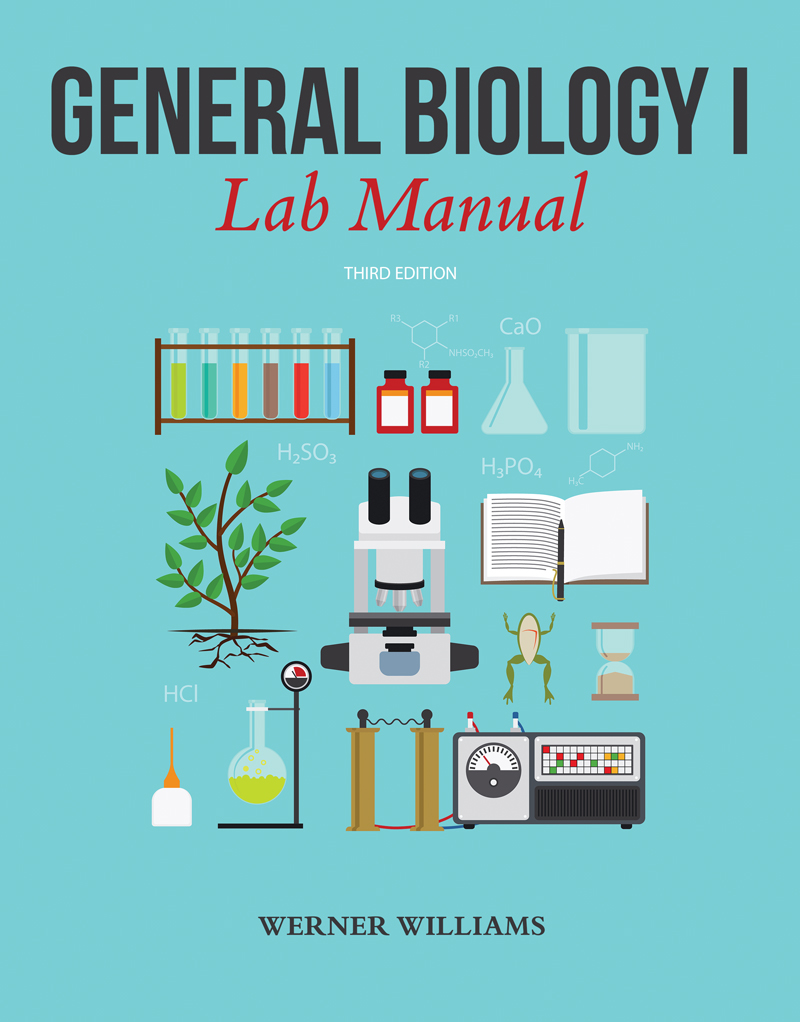
General Biology I Lab Manual
Edition: 3
Copyright: 2019
Pages: 148. LSI page count does not change
Edition: 3
Copyright: 2019
Pages: 148
Choose Your Format
$43.75 USD
Ebook
$30.10 USD
General Biology I Lab Manual introduces students to the fundamental principles and experimental techniques used in the biological sciences. Through a sequence of laboratory investigations, students explore the foundations of scientific inquiry, including the scientific method, measurement, data collection, and laboratory tools. Early experiments focus on the chemical basis of life, examining atoms, molecules, solutions, pH, and organic compounds while developing essential laboratory skills such as microscopy and observation.
The manual continues with investigations into core biological processes, including membrane transport, enzyme activity, cellular respiration, photosynthesis, cell division, embryonic development, and human genetics. Each laboratory activity connects hands-on experimentation with important biological concepts, helping students develop critical thinking, analytical skills, and a deeper understanding of how living systems function. Designed for introductory biology courses, General Biology I Lab Manual provides students with practical experience in scientific investigation and prepares them for further study in the life sciences.
Lab 1: Tools for Scientific Investigation
Lab 2: Use of the Scientific Method
Lab 3: Atoms and Molecules
Lab 4: Solutions and pH
Lab 5: Detecting Organic Molecules
Lab 6: The Use and Care of the Microscope
Lab 7: Movement of Materials Across cell Membranes
Lab 8: Enzymes
Lab 9: The Use of the Spectrophotometer
Lab 10: Cell Respiration and Photosynthesis
Lab 11: Cell Division and Embryonic Development
Lab 12: Human Genetics