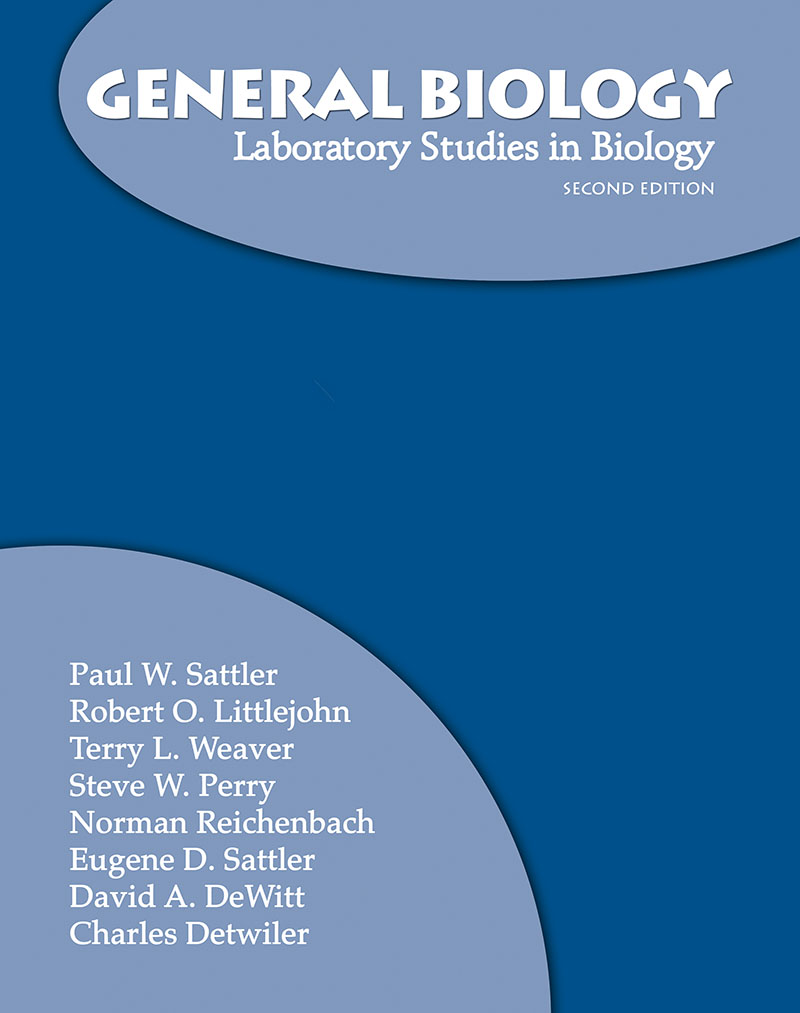
GENERAL BIOLOGY LABORATORY STUDIES IN BIOLOGY
Author(s): Paul W Sattler , David A Dewitt , Charles Detwiler , Eugene D Sattler , Norman G Reichenbach , Steve W Perry , Terry L Weaver , Robert O Littlejohn
Edition: 2
Copyright: 2006
Pages: 140
This course provides a foundational overview of biology, moving from cellular structure and fundamental biochemical processes to the organization and function of living organisms. It begins with core concepts such as the microscope and basic cell structure, followed by essential life processes including diffusion, osmosis, and enzyme function. Students then explore how organisms obtain and use energy through photosynthesis, fermentation, and cellular respiration. The course continues into biological diversity and classification, examining the major kingdoms of life. Building on organismal biology, it introduces ecology and the interactions between organisms and their environments. The final section focuses on animal systems and behavior, including the circulatory and respiratory systems, special senses, and the biological basis of animal behavior.
Diffusion and Osmosis
Enzymes
Photosynthesis
Fermentation and Respiration
Kingdoms Prokaryotae and Protista
Kingdoms Fungi and Plantae
Kingdom Animalia
Ecology
The Circulatory System
The Respiratory System
The Special Senses
Animal Behavior
Paul Sattler, Ph.D. is a Professor of Biology at Liberty University’s Center for Natural Sciences. He earned his B.S. in Biology from the University of Toledo, an M.S. in Zoology from Miami University, and a Ph.D. in Biology from Texas Tech University. Dr. Sattler’s research focuses on amphibian biology, particularly salamanders and frogs, with an emphasis on species identification, hybridization, and distribution. Using molecular techniques such as DNA sequencing and protein electrophoresis, he studies amphibian diversity in Virginia and contributes to broader understanding of vertebrate natural history. He is also engaged in documenting regional biodiversity, including work toward a book on the amphibians of Virginia.
David DeWitt is a faculty member in the College of Arts & Sciences at Liberty University. He contributes to academic programs within the college, supporting instruction and learning across disciplines in the liberal arts and sciences.
Charles Detwiler, Ph.D. is a Professor of Biology at Liberty University. He earned his Doctor of Philosophy in Molecular Genetics from Cornell University. Dr. Detwiler’s academic background in molecular genetics supports his teaching and scholarly work in the biological sciences, with an emphasis on genetic principles and molecular-level processes that underpin modern biology.
Gene Sattler is a Professor of Biology in the School of Health Sciences at Liberty University. He has worked as a summer naturalist and as a zookeeper at the Toledo and Cincinnati Zoos. His doctoral research at the Smithsonian Institution used molecular markers to examine the genetics, behavior, morphology, and ecology of hybridizing Black-capped and Carolina chickadees. In the fall he spends time on the “Bald Spot” documenting local hawk migration, and also bands migrating Northern Saw-whet Owls in the area.
Norman Reichenbach, Ph.D. is a Professor of Biology and Director of General and Organismal Biology in the School of Health Sciences at Liberty University. He has been a member of the biology faculty since 1990, with a period of international community development work between 1991 and 1997. Dr. Reichenbach’s research focuses on herpetology, including studies of the Peaks of Otter salamander and the timber rattlesnake. His work supports both teaching and field-based biological research in organismal biology and wildlife ecology.
This course provides a foundational overview of biology, moving from cellular structure and fundamental biochemical processes to the organization and function of living organisms. It begins with core concepts such as the microscope and basic cell structure, followed by essential life processes including diffusion, osmosis, and enzyme function. Students then explore how organisms obtain and use energy through photosynthesis, fermentation, and cellular respiration. The course continues into biological diversity and classification, examining the major kingdoms of life. Building on organismal biology, it introduces ecology and the interactions between organisms and their environments. The final section focuses on animal systems and behavior, including the circulatory and respiratory systems, special senses, and the biological basis of animal behavior.
Diffusion and Osmosis
Enzymes
Photosynthesis
Fermentation and Respiration
Kingdoms Prokaryotae and Protista
Kingdoms Fungi and Plantae
Kingdom Animalia
Ecology
The Circulatory System
The Respiratory System
The Special Senses
Animal Behavior
Paul Sattler, Ph.D. is a Professor of Biology at Liberty University’s Center for Natural Sciences. He earned his B.S. in Biology from the University of Toledo, an M.S. in Zoology from Miami University, and a Ph.D. in Biology from Texas Tech University. Dr. Sattler’s research focuses on amphibian biology, particularly salamanders and frogs, with an emphasis on species identification, hybridization, and distribution. Using molecular techniques such as DNA sequencing and protein electrophoresis, he studies amphibian diversity in Virginia and contributes to broader understanding of vertebrate natural history. He is also engaged in documenting regional biodiversity, including work toward a book on the amphibians of Virginia.
David DeWitt is a faculty member in the College of Arts & Sciences at Liberty University. He contributes to academic programs within the college, supporting instruction and learning across disciplines in the liberal arts and sciences.
Charles Detwiler, Ph.D. is a Professor of Biology at Liberty University. He earned his Doctor of Philosophy in Molecular Genetics from Cornell University. Dr. Detwiler’s academic background in molecular genetics supports his teaching and scholarly work in the biological sciences, with an emphasis on genetic principles and molecular-level processes that underpin modern biology.
Gene Sattler is a Professor of Biology in the School of Health Sciences at Liberty University. He has worked as a summer naturalist and as a zookeeper at the Toledo and Cincinnati Zoos. His doctoral research at the Smithsonian Institution used molecular markers to examine the genetics, behavior, morphology, and ecology of hybridizing Black-capped and Carolina chickadees. In the fall he spends time on the “Bald Spot” documenting local hawk migration, and also bands migrating Northern Saw-whet Owls in the area.
Norman Reichenbach, Ph.D. is a Professor of Biology and Director of General and Organismal Biology in the School of Health Sciences at Liberty University. He has been a member of the biology faculty since 1990, with a period of international community development work between 1991 and 1997. Dr. Reichenbach’s research focuses on herpetology, including studies of the Peaks of Otter salamander and the timber rattlesnake. His work supports both teaching and field-based biological research in organismal biology and wildlife ecology.