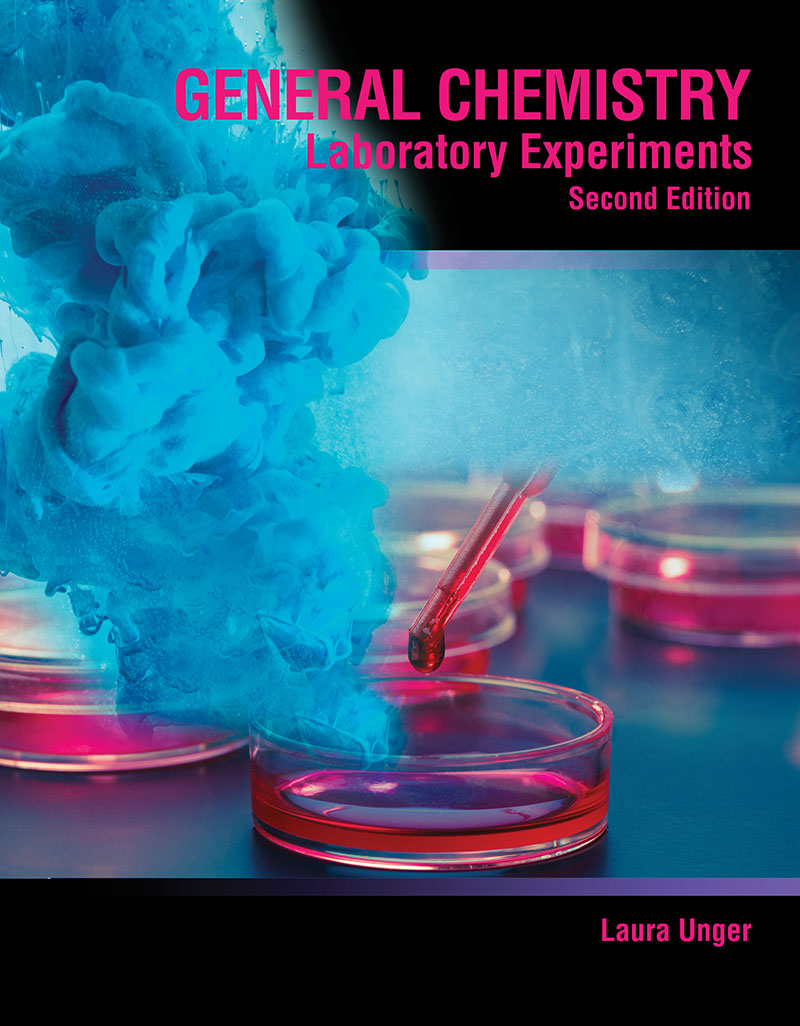
General Chemistry Laboratory Experiments
Edition: 2
Copyright: 2013
Pages: 517
Edition: 2
Copyright: 2013
Pages: 516
Choose Your Format
Ebook
$47.99 USD
$59.99 USD
The majority of the lab activities this edition is "traditional" format, with introduction, clear experimental procedures, prelab assignment, report sheets for data tables and observations, and questions. A major purpose of these activities is to acquaint you with basic techniques, including gravimetric and volumetric measurements and spectroscopy, the care and use of lab equipment, accurate recording and manipulation of data, and the safe use, handling, and disposal of chemicals. A second purpose is to provide empirical verification of chemical concepts on a qualitative and quantitative fashion.
Some of the activities are designed to be done in a team, including submission of team report in place of individual lab reports.
Some activities are in project format with no clear procedure given. In these activities, you will be given a problem to solve. You must develop and test procedure for solving the problem, gather the data, evaluate the results, adjust your procedure as needed, and report you finding
Experiment 1 Measurements and Density
Experiment 2 Elements, Compounds, and Mixtures
Experiment 3 Separation and Analysis of a Mixture
Experiment 4 Chemical Reactions: Activity Series
Experiment 5 Stoichiometry: Determination of the Formula of a Hydrate
Experiment 6 Stoichiometry: Investigation of a Precipitation Reaction
Experiment 7 Calorimetry: Enthalpies of Reactions
Experiment 8 Molecular Bonding and Shape
Experiment 9 Crystal Structures of Metals and Ionic Solids
Experiment 10 Solutions and Solubility
Experiment 11 Acid-Base Titrations
Experiment 12 Determination of Molar Mass Using Freezing Pt. Depression
Experiment 13 Determination of the Ionization Constant of a Weak Acid
Experiment 14 Preparation and Properties of Buffers
Experiment 15 Entropy and Probability
Experiment 16 Thermodynamics of Urea Dissolution
Experiment 17 Chemical Kinetics: An Iodine Clock Reaction
Experiment 18 Modeling Half-Lives and Radioactive Decay
Experiment 19 Basic Spectroscopy of Colored Solutions
Experiment 20 Applied Spectroscopy
Experiment 21 Oxidation-Reduction Titration: Bleach Analysis
Experiment 22 Electrochemistry: Voltaic Cells
Experiment 23 Chromatography
Experiment 24 Gas Laws: Gas Stoichiometry
Experiment 25 Structure and Isomerism of Organic Compounds
Experiment 26 Synthesis and Analysis of Aspirin and Methyl Salicylate
Experiment 27 Qualitative Analysis of Cations
Experiment 28 Qualitative Analysis of Anions
Experiment 29 Identification of an Unknown Ionic Compound
Appendix A Error Analysis
Appendix B Graphs and Graphing
Appendix C Ion Nomenclature and Periodic Table of Elements

Professor Emerita of Chemistry at Purdue University Northwest
The majority of the lab activities this edition is "traditional" format, with introduction, clear experimental procedures, prelab assignment, report sheets for data tables and observations, and questions. A major purpose of these activities is to acquaint you with basic techniques, including gravimetric and volumetric measurements and spectroscopy, the care and use of lab equipment, accurate recording and manipulation of data, and the safe use, handling, and disposal of chemicals. A second purpose is to provide empirical verification of chemical concepts on a qualitative and quantitative fashion.
Some of the activities are designed to be done in a team, including submission of team report in place of individual lab reports.
Some activities are in project format with no clear procedure given. In these activities, you will be given a problem to solve. You must develop and test procedure for solving the problem, gather the data, evaluate the results, adjust your procedure as needed, and report you finding
Experiment 1 Measurements and Density
Experiment 2 Elements, Compounds, and Mixtures
Experiment 3 Separation and Analysis of a Mixture
Experiment 4 Chemical Reactions: Activity Series
Experiment 5 Stoichiometry: Determination of the Formula of a Hydrate
Experiment 6 Stoichiometry: Investigation of a Precipitation Reaction
Experiment 7 Calorimetry: Enthalpies of Reactions
Experiment 8 Molecular Bonding and Shape
Experiment 9 Crystal Structures of Metals and Ionic Solids
Experiment 10 Solutions and Solubility
Experiment 11 Acid-Base Titrations
Experiment 12 Determination of Molar Mass Using Freezing Pt. Depression
Experiment 13 Determination of the Ionization Constant of a Weak Acid
Experiment 14 Preparation and Properties of Buffers
Experiment 15 Entropy and Probability
Experiment 16 Thermodynamics of Urea Dissolution
Experiment 17 Chemical Kinetics: An Iodine Clock Reaction
Experiment 18 Modeling Half-Lives and Radioactive Decay
Experiment 19 Basic Spectroscopy of Colored Solutions
Experiment 20 Applied Spectroscopy
Experiment 21 Oxidation-Reduction Titration: Bleach Analysis
Experiment 22 Electrochemistry: Voltaic Cells
Experiment 23 Chromatography
Experiment 24 Gas Laws: Gas Stoichiometry
Experiment 25 Structure and Isomerism of Organic Compounds
Experiment 26 Synthesis and Analysis of Aspirin and Methyl Salicylate
Experiment 27 Qualitative Analysis of Cations
Experiment 28 Qualitative Analysis of Anions
Experiment 29 Identification of an Unknown Ionic Compound
Appendix A Error Analysis
Appendix B Graphs and Graphing
Appendix C Ion Nomenclature and Periodic Table of Elements
Professor Emerita of Chemistry at Purdue University Northwest