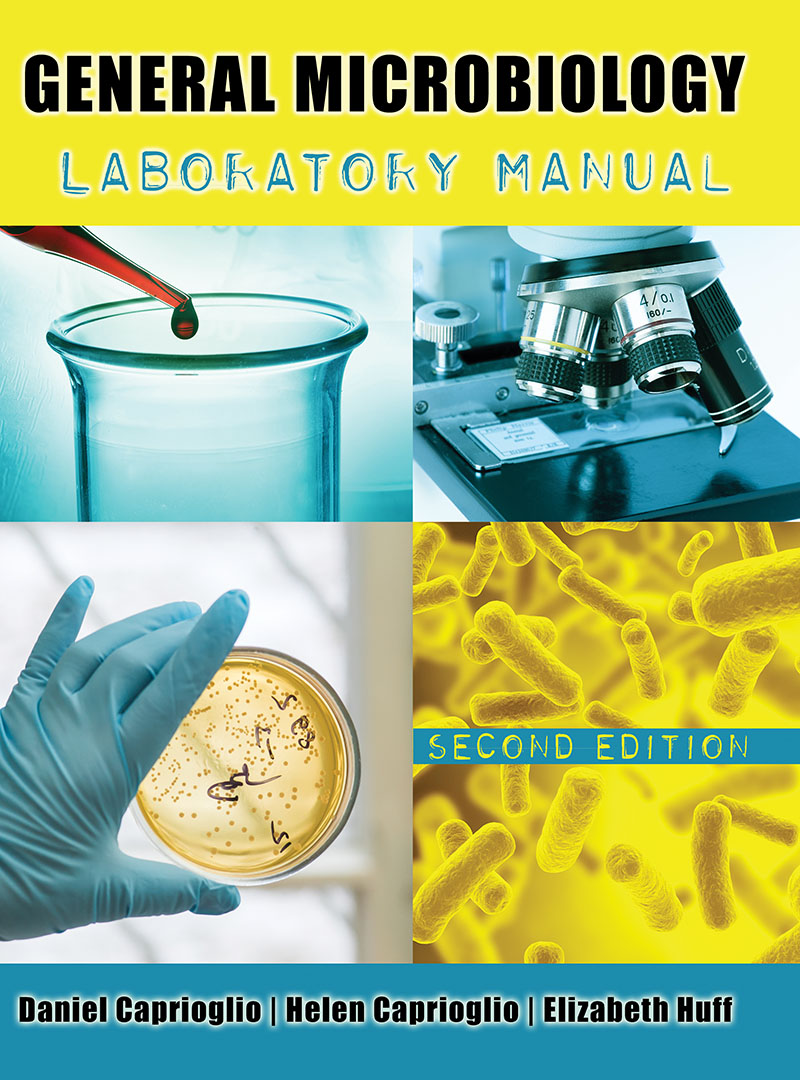
General Microbiology Laboratory Manual

Edition: 2

Copyright: 2015

Pages: 106

Choose Your Format

Ebook

$33.69 USD

ISBN 9781465286345

Details Electronic Delivery EBOOK 180 days

This General Microbiology Laboratory Manual introduces fundamental microbiology laboratory skills and techniques, beginning with laboratory safety, microscopy, staining methods, aseptic technique, and culture preparation. It progresses to bacterial identification using morphology, biochemical tests, growth media, DNA isolation, PCR, and unknown identification. The manual also covers microbial growth, control of microbes, fungi, parasites, algae, bacteriophages, and environmental and applied microbiology through plant, food, dairy, water, and wine fermentation laboratories. A microbes list is included as a reference for organisms used throughout the course.
 

LABORATORY 1- Introduction and Safety

LABORATORY 2- Microscope and Simple Stain 

LABORATORY 3- Aseptic Technique and Pure Cultures 

LABORATORY 4- Gram Stain  

LABORATORY 5- Pipetting and Dilutions 

LABORATORY 6- Special Stains 

LABORATORY 7- Bacterial Types and Morphology 

LABORATORY 8- DNA Isolation and PCR Identification of Species 

LABORATORY 9- Growth Curve and Viable Plate Count 

LABORATORY 10- Control of Microbes 

LABORATORY 11- Eukaryotes: Fungi 

LABORATORY 12- Eukaryotes: Parasites and Algae 

LABORATORY 13- Growth Media and Conditions 

LABORATORY 14- Culture Media for Bacterial Identification  

LABORATORY 15- Fermentations and Growth Substrates 

LABORATORY 16- Enzymes 

LABORATORY 17- Bacteriophage Titer 

LABORATORY 18- Bacteriophage Burst 

LABORATORY 19- Identification of Unknowns

LABORATORY 20- Isolation of Plant-Associated Bacteria

LABORATORY 21- Food or Dairy Plate Count 

LABORATORY 22- Dairy Food preparation 

LABORATORY 23- Water Analysis 

LABORATORY 24- Wine fermentation

Microbes List

Elizabeth Huff
Helen M Caprioglio
Daniel Caprioglio