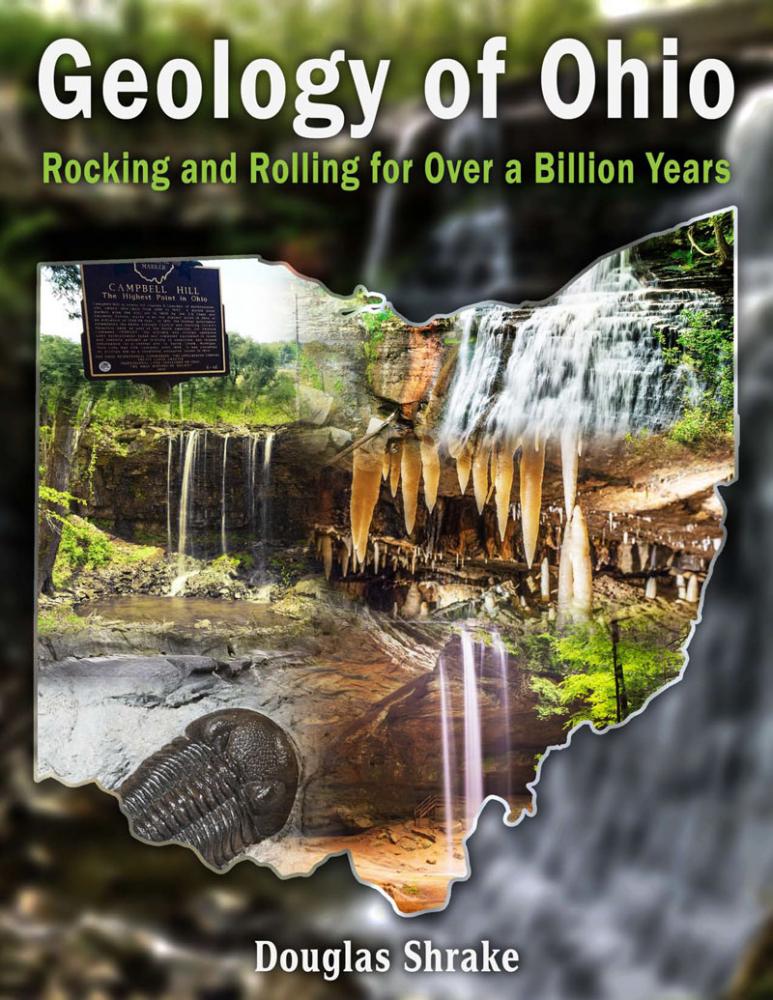
Geology of Ohio: Rocking and Rolling for Over a Billion Years
Edition: 1
Copyright: 2020
Pages: 121
Choose Your Format
Ebook
$35.00 USD
Geology of Ohio: Rocking and Rolling for Over a Billion Years provides a comprehensive exploration of Ohio's remarkable geologic story, tracing more than a billion years of Earth history from the formation of ancient continental crust to the landscapes seen today. The book examines the state's evolving geology through each major geologic era, highlighting significant features such as the Grenville Mountains, the Cincinnati Arch, the Teays River Valley, Serpent Mound impact structure, and the profound effects of repeated glaciations. Along the way, readers are introduced to Ohio's rich fossil record, including iconic organisms such as Isotelus and Dunkleosteus, offering insight into the diverse environments that once covered the region.
Beyond Earth's history, the book demonstrates how geology has shaped Ohio's natural resources, economy, and cultural development. Chapters explore the state's valuable mineral and energy resources, the industries they supported, and the role geology played in building the nation's iron, steel, glass, ceramics, rubber, transportation, and agricultural sectors. The volume also addresses modern geologic hazards, celebrates the contributions of notable Ohio geologists, presents an extensive collection of geologic and topographic maps, and concludes with a guide to additional resources for readers interested in further exploring Ohio's fascinating geologic heritage. Written for students, educators, rock and fossil enthusiasts, and anyone curious about the Buckeye State, the book serves as both an accessible introduction and a detailed reference to Ohio's dynamic geologic past and present.
Chapter 1: Introduction to Ohio Geology Rocking and Rolling for Over a Billion Years
Chapter 2: Ohio’s Geologic History
East Continent Rift Basin
Grenville Mountains
Cincinnati Arch
Kankakee Arch and Findlay Arch
Bowling Green Fault
Teays River Valley
Events of Each Geologic Period—A Series of Intertwined Novels
Precambrian Time
Precambrian
Paleozoic Era
Cambrian
Ordovician
Silurian
Devonian
Mississippian
Pennsylvanian
Permian
Mesozoic Era
Cenozoic Era
Serpent Mound Meteor Crater.
Glacial History
Chapter 3: Ohio’s Paleontology
Isotelus
Dunkleosteus
Cincinnati Ohio Tri-State Region
Dayton, Ohio Area
Northwest Ohio Area—Silica Shale
Linton, Ohio Material
Ice Age Fauna of Ohio
Fossil Collecting in Ohio
Chapter 4: Ohio’s Minerals and Economic Geology
Ohio’s Minerals
Flint—Ohio’s Gemstone
Limestone and Dolostone
Salt
Gypsum
Sand and Gravel
Shale and Clay
Sandstone and Conglomerate
Gold
Tourism
Chapter 5: Ohio’s Energy Resources
Coal
Oil and Natural Gas
Alternative Gas Resources in Ohio
Hydropower—Water Mills
Chapter 6: Ohio’s Geology Helped Build the Nation
Iron and Steel
Glass Industry
Ceramics and Pottery Industry
Steel Industry
Rubber Industry
Planes
Blimps
Cars
Canals
Agriculture
Miscellaneous
Chapter 7: Ohio’s Geologic Hazards
Earthquakes
Mass Wasting or Landslides
Rock Falls
Floods
Contents v Radon Gas
Karst or Sinkholes and Mine Subsidence
Shore Line Erosion
Volcanoes in Ohio
Chapter 8: Ohio’s Famous Geologists
Edward Orton, Sr
Edward Orton, Jr
Charles F. Richter
Chapter 9: Ohio’s Geologic Maps
Geology Maps
Bedrock Geology 2006 Edition
Bedrock Geology 1920s Version
Ohio’s Stratigraphic Units
Ohio’s Surface or Exposed Rocks and Sediments
Glacial Map
Shaded Bedrock Topography Map
Drift-Thickness Map
Shaded Elevation Map—Earth Tones
106 Shaded Elevation Map—Bright Colors
Physiographic Provinces and Soils
Physiographic Provinces
Soils of Ohio
Ohio’s State Soil
Ohio Boundary Maps
Ohio County Outlines
Ohio County and Township Map
Ohio’s Original Land Subdivisions Map
Ohio’s Various Coordinate Systems
Educational Leaflet 16: Ohio Topographic Maps
Chapter 10: Books That Feature Ohio’s Geology
Ohio Rocks!—A Guide to the Geologic Sites in Ohio
Roadside Geology of Ohio
Under Ohio—The Story of Ohio’s Rocks and Fossils
A Sea without Fish—Life in the Ordovician Sea of the Cincinnati Region
Rainbows of Rock, Tables of Stone
Great Lakes Rocks—4 Billion Years of Geologic History in the Great Lakes Region

Douglas Shrake is a geologist and educator with more than three decades of experience teaching Earth and environmental sciences at colleges and universities throughout Ohio. He serves as an adjunct faculty member at Capital University, Ohio Dominican University, and Columbus State Community College, where he has developed and taught courses in physical geology, historical geology, environmental geology, Earth science, natural disasters, soils, and the relationship between science, technology, and society. His teaching emphasizes geologic processes, natural resources, field and laboratory investigations, and the application of critical thinking to understanding Earth's dynamic systems.
Shrake earned a Bachelor of Science in Geology from Ohio University, where he founded and served as the first president of the university's Sigma Gamma Epsilon chapter, and a Master of Science in Geology from Wright State University. His graduate research examined the paleoecology of an Upper Ordovician bryozoan-trilobite association, and he gained additional experience as both a teaching and research assistant in geology, paleontology, sedimentology, and geochemistry. He also served as Associate Editor and later Editor of The Ohio Journal of Science, overseeing peer review and publication while contributing to the journal's executive, finance, and publications committees. His career has been dedicated to advancing geologic education and promoting a greater understanding of Ohio's rich geologic heritage.
Geology of Ohio: Rocking and Rolling for Over a Billion Years provides a comprehensive exploration of Ohio's remarkable geologic story, tracing more than a billion years of Earth history from the formation of ancient continental crust to the landscapes seen today. The book examines the state's evolving geology through each major geologic era, highlighting significant features such as the Grenville Mountains, the Cincinnati Arch, the Teays River Valley, Serpent Mound impact structure, and the profound effects of repeated glaciations. Along the way, readers are introduced to Ohio's rich fossil record, including iconic organisms such as Isotelus and Dunkleosteus, offering insight into the diverse environments that once covered the region.
Beyond Earth's history, the book demonstrates how geology has shaped Ohio's natural resources, economy, and cultural development. Chapters explore the state's valuable mineral and energy resources, the industries they supported, and the role geology played in building the nation's iron, steel, glass, ceramics, rubber, transportation, and agricultural sectors. The volume also addresses modern geologic hazards, celebrates the contributions of notable Ohio geologists, presents an extensive collection of geologic and topographic maps, and concludes with a guide to additional resources for readers interested in further exploring Ohio's fascinating geologic heritage. Written for students, educators, rock and fossil enthusiasts, and anyone curious about the Buckeye State, the book serves as both an accessible introduction and a detailed reference to Ohio's dynamic geologic past and present.
Chapter 1: Introduction to Ohio Geology Rocking and Rolling for Over a Billion Years
Chapter 2: Ohio’s Geologic History
East Continent Rift Basin
Grenville Mountains
Cincinnati Arch
Kankakee Arch and Findlay Arch
Bowling Green Fault
Teays River Valley
Events of Each Geologic Period—A Series of Intertwined Novels
Precambrian Time
Precambrian
Paleozoic Era
Cambrian
Ordovician
Silurian
Devonian
Mississippian
Pennsylvanian
Permian
Mesozoic Era
Cenozoic Era
Serpent Mound Meteor Crater.
Glacial History
Chapter 3: Ohio’s Paleontology
Isotelus
Dunkleosteus
Cincinnati Ohio Tri-State Region
Dayton, Ohio Area
Northwest Ohio Area—Silica Shale
Linton, Ohio Material
Ice Age Fauna of Ohio
Fossil Collecting in Ohio
Chapter 4: Ohio’s Minerals and Economic Geology
Ohio’s Minerals
Flint—Ohio’s Gemstone
Limestone and Dolostone
Salt
Gypsum
Sand and Gravel
Shale and Clay
Sandstone and Conglomerate
Gold
Tourism
Chapter 5: Ohio’s Energy Resources
Coal
Oil and Natural Gas
Alternative Gas Resources in Ohio
Hydropower—Water Mills
Chapter 6: Ohio’s Geology Helped Build the Nation
Iron and Steel
Glass Industry
Ceramics and Pottery Industry
Steel Industry
Rubber Industry
Planes
Blimps
Cars
Canals
Agriculture
Miscellaneous
Chapter 7: Ohio’s Geologic Hazards
Earthquakes
Mass Wasting or Landslides
Rock Falls
Floods
Contents v Radon Gas
Karst or Sinkholes and Mine Subsidence
Shore Line Erosion
Volcanoes in Ohio
Chapter 8: Ohio’s Famous Geologists
Edward Orton, Sr
Edward Orton, Jr
Charles F. Richter
Chapter 9: Ohio’s Geologic Maps
Geology Maps
Bedrock Geology 2006 Edition
Bedrock Geology 1920s Version
Ohio’s Stratigraphic Units
Ohio’s Surface or Exposed Rocks and Sediments
Glacial Map
Shaded Bedrock Topography Map
Drift-Thickness Map
Shaded Elevation Map—Earth Tones
106 Shaded Elevation Map—Bright Colors
Physiographic Provinces and Soils
Physiographic Provinces
Soils of Ohio
Ohio’s State Soil
Ohio Boundary Maps
Ohio County Outlines
Ohio County and Township Map
Ohio’s Original Land Subdivisions Map
Ohio’s Various Coordinate Systems
Educational Leaflet 16: Ohio Topographic Maps
Chapter 10: Books That Feature Ohio’s Geology
Ohio Rocks!—A Guide to the Geologic Sites in Ohio
Roadside Geology of Ohio
Under Ohio—The Story of Ohio’s Rocks and Fossils
A Sea without Fish—Life in the Ordovician Sea of the Cincinnati Region
Rainbows of Rock, Tables of Stone
Great Lakes Rocks—4 Billion Years of Geologic History in the Great Lakes Region
Douglas Shrake is a geologist and educator with more than three decades of experience teaching Earth and environmental sciences at colleges and universities throughout Ohio. He serves as an adjunct faculty member at Capital University, Ohio Dominican University, and Columbus State Community College, where he has developed and taught courses in physical geology, historical geology, environmental geology, Earth science, natural disasters, soils, and the relationship between science, technology, and society. His teaching emphasizes geologic processes, natural resources, field and laboratory investigations, and the application of critical thinking to understanding Earth's dynamic systems.
Shrake earned a Bachelor of Science in Geology from Ohio University, where he founded and served as the first president of the university's Sigma Gamma Epsilon chapter, and a Master of Science in Geology from Wright State University. His graduate research examined the paleoecology of an Upper Ordovician bryozoan-trilobite association, and he gained additional experience as both a teaching and research assistant in geology, paleontology, sedimentology, and geochemistry. He also served as Associate Editor and later Editor of The Ohio Journal of Science, overseeing peer review and publication while contributing to the journal's executive, finance, and publications committees. His career has been dedicated to advancing geologic education and promoting a greater understanding of Ohio's rich geologic heritage.