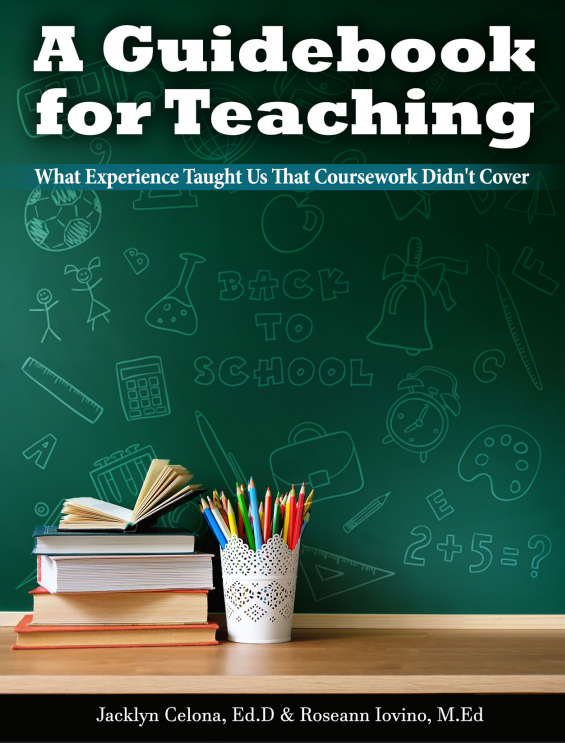
A Guidebook for Teaching: What Experience Taught Us That Coursework Didn't Cover

Edition: 1

Copyright: 2026

Pages: 100

Choose Your Format

Choose Your Platform | Help Me Choose

Ebook

$58.99 USD

ISBN 9798385198597

Details Electronic Delivery EBOOK 180 days

Teaching is a profession many feel called to, rooted in a desire to make an impact, leave a mark, and help shape the next generation. Yet even after the rigorous training, the endless coursework, and the intense certification requirements, most new educators still find themselves walking into their first classrooms armed mainly with theory. And theory alone doesn’t hold up long when you’re suddenly facing real students, real classroom dynamics, and the very real demands of the teaching world.

A Guidebook for Teaching: What Experience Taught Us That Coursework Didn’t Cover steps in to bridge that gap, offering the kind of clarity, candor, and hard-earned insight that only decades in New York City public schools can provide. Written by veteran educators Jacklyn Celona, Ed.D., and Roseann Iovino, M.Ed., this guide pulls back the curtain on what teaching actually looks and feels like, from those first hopeful moments students walk through the door to the last drained-but-determined weeks of June.

Grounded in lived experience rather than abstract principles, it shares practical strategies for everything teacher-prep programs don’t always cover: setting the tone on day one, building trust with families, designing lessons that work in real classrooms (not idealized ones), managing behavior with compassion, gathering meaningful data without drowning in it, and working collaboratively to support multilingual learners and students with disabilities. While the book stands on its own, it’s written to complement the foundational knowledge teacher-preparation coursework provides, adding the practical layer that helps theory come alive with real students.

But this book isn’t just about logistics. It leans into the human side of teaching, the emotional weight no one warns you about, the complicated relationships, the school politics, the heartbreak of watching students struggle, and the resilience it takes to keep going when the job feels heavier than you imagined. With honesty and warmth, the authors share the missteps that taught them the most, the lessons their students handed them in unexpected moments, and the mindsets that helped them stay grounded.

Whether you’re a pre-service teacher, a new educator finding your footing, or a seasoned teacher looking to reconnect with your purpose, this guidebook is both a companion and a compass. It doesn’t sugarcoat the profession, but it will remind you why the work matters, and equip you with the stories, tools, and hard-earned wisdom to navigate the classroom with confidence, empathy, and strength.

Introduction

Section 1 Starting Strong: Building a Foundation that Works 
The first day is never just the first day
Setting the tone 
Breaking the ice to establish presence 
What students notice 
Essential “back to school” supplies 
Sample student supply lists
       Elementary School (Grades K–5)
       Middle School (Grades 6–8)
       High School (Grades 9–12)
Teacher essentials checklist
       Bulletin Board and Classroom Décor 
       Organization and Storage
       Office Tools
       Planning and Classroom Management
       Technology and Tools
       Comfort and Practical Items 
       Optional but Helpful 
Relationships before rigor 
Building trust with families
Build partnerships with families
Communicating data with families 
Navigating difficult conversations
Best practices for navigating difficult conversations
       Classroom Management Isn’t One Size Fits All
What actually works
       From the Perspective of Dr. Celona 
       From the Perspective of Ms. Iovino
Managing chaos without losing heart
The physical environment
Desk arrangements and flexible seating 
Setting up a space students want to return to
Celebrating students work 

Section 2 Teaching in Practice
Lesson planning for real life
How to look rigorous without burning yourself out 
In summary
Components of a useful plan 
Lesson plan components
       Focus
       Instruction: Motivation
       Instruction: Modeling
The evaluation/lesson plan connection
When the curriculum doesn’t fit (or exist)
Teaching with constraints
Making mandated material meaningful
Infusing student voice and creativity
Using technology to enhance engagement 
Supporting multilingual learners
Special education is everyone’s responsibility 
Understanding the basics without getting lost in acronyms
Acronym guide 
Navigating the referral process
Collaborating to design individualized education plans
Feedback that helps 
       Grading Strategies That Save Time 
Providing feedback that encourages growth
How to avoid data overload 
       Collecting Relevant Data 
Formative assessments and checklists
Quick checks
Self-check tool: Students’ perceived understanding
Checklist/Observations
Self-assessment and reflections
“Real-time” conference notes 
Behavior notes: A more focused approach 
Examples of objective behavior notes
Examples of subjective behavior notes to avoid
Collaboration and conquering small groups 
Homework that is manageable for everyone 

Section 3 The Human Side of Teaching 
The emotional toll no one warned you about 
Grieving students’ struggles
Compassion fatigue 
When you want to quit
Colleagues, admin, and politics
Working with difficult people
In summary
Finding your people
Advocating for yourself without burning bridges 
Taking care of yourself while caring for everyone else
Mental health and boundaries
Stress triage: Sustaining mental health for the long haul 
Staying grounded in purpose 
When you make mistakes (Because you will)
Mistakes and safety 
Ending each year stronger than the next
What our students have taught us? 
       From the Perspective of Dr. Celona 
       From the Perspective of Ms. Iovino
Advice to our younger selves 
       From the Perspective of Dr. Celona 
       From the Perspective of Ms. Iovino
       From the Perspective of Dr. Celona and Ms. Iovino

References

Jacklyn Celona

Dr. Jacklyn Celona has dedicated nearly two decades to the field of education. She began her career in New York City Public Schools as part of the NYC Teaching Fellows program in 2007, an alternative pathway into the profession that shaped her early teaching and leadership. Over the years, she has served as a special education teacher, instructional coach, and Assistant Principal. She currently works as the MTSS Coordinator for two New York City public schools and as a school-based Restorative Justice Coordinator.


Dr. Celona holds a Doctorate of Education with a specialization in Reading and Literacy from Capella University. She earned a master’s degree in Progressive Leadership from Bank Street College through NYC LEAP, Leaders in Education Apprenticeship Program, a selective pathway for emerging NYC school leaders that requires nomination for consideration. She also completed a master’s degree in Urban Education at Mercy College through the NYC Teaching Fellows program. In addition to her graduate studies, Dr. Celona holds a bachelor’s degree in Psychology from Manhattan College. She also holds her School Building Leader (SBL) license and has completed all coursework for the School District Leader (SDL) credential, with plans to sit for the examination in 2026.


In addition to her work in public education, Dr. Celona has also contributed at the university level. She joined the University of Mount Saint Vincent in 2022 as a course designer for asynchronous graduate classes and later expanded her role to teaching in the School of Education. She also serves on the university’s advisory board, supporting program planning and educator preparation efforts.


Her dedication to supporting students and communities reaches beyond her formal roles. In partnership with Tasha Marbury and the Faded Tears Project, she helped coordinate birthday and other celebrations for more than 600 underprivileged children in New York City public schools, supporting social-emotional learning efforts by fostering belonging, recognition, and joy for students.


Across all roles, Dr. Celona is guided by a belief in equity, strong instructional systems, and the importance of cultivating supportive, responsive school communities where every child can thrive. Dr. Celona’s passion for teacher training continues to guide her work, providing avenues for her to share her expertise, support developing educators, and contribute to instructional practices that strengthen school communities.

Roseann Iovino

Roseann Iovino is a dedicated educator who began her teaching career in 2013 with the New York City Department of Education. Over the years, she has taught 4th and 5th grade students in all subjects, fostering a classroom environment where curiosity and confidence thrive. Her journey in education is rooted in a deep commitment to helping every child develop the tools they need for a successful and fulfilling life.

Roseann earned her undergraduate degree in Psychology in 2009 and a Master’s in Elementary Education in 2010 from Quinnipiac University. To further her leadership skills, she completed a second Master’s degree in Educational Administration at Grand Canyon University in 2016.

Beyond the classroom, Roseann has served as a grade leader, written curriculum, and facilitated numerous professional development sessions for educators. She has led diversity-focused book studies, piloted digital student data collection systems, and championed technology initiatives such as Google Classroom and Imagine Learning software. Her expertise includes curriculum development, best practices in pedagogy, academic data analysis, and integrating social-emotional learning and project-based learning into instruction. Roseann also led a summer enrichment creative-writing program and actively participates in professional learning communities to promote collaboration and innovation in education.

Her passion for teaching stems from a lifelong dream to inspire students and encourage others to strive for their best, both inside and outside the classroom. Her mission is to empower students and educators alike, ensuring that learning is meaningful, inclusive and transformative for all.

Teaching is a profession many feel called to, rooted in a desire to make an impact, leave a mark, and help shape the next generation. Yet even after the rigorous training, the endless coursework, and the intense certification requirements, most new educators still find themselves walking into their first classrooms armed mainly with theory. And theory alone doesn’t hold up long when you’re suddenly facing real students, real classroom dynamics, and the very real demands of the teaching world.

A Guidebook for Teaching: What Experience Taught Us That Coursework Didn’t Cover steps in to bridge that gap, offering the kind of clarity, candor, and hard-earned insight that only decades in New York City public schools can provide. Written by veteran educators Jacklyn Celona, Ed.D., and Roseann Iovino, M.Ed., this guide pulls back the curtain on what teaching actually looks and feels like, from those first hopeful moments students walk through the door to the last drained-but-determined weeks of June.

Grounded in lived experience rather than abstract principles, it shares practical strategies for everything teacher-prep programs don’t always cover: setting the tone on day one, building trust with families, designing lessons that work in real classrooms (not idealized ones), managing behavior with compassion, gathering meaningful data without drowning in it, and working collaboratively to support multilingual learners and students with disabilities. While the book stands on its own, it’s written to complement the foundational knowledge teacher-preparation coursework provides, adding the practical layer that helps theory come alive with real students.

But this book isn’t just about logistics. It leans into the human side of teaching, the emotional weight no one warns you about, the complicated relationships, the school politics, the heartbreak of watching students struggle, and the resilience it takes to keep going when the job feels heavier than you imagined. With honesty and warmth, the authors share the missteps that taught them the most, the lessons their students handed them in unexpected moments, and the mindsets that helped them stay grounded.

Whether you’re a pre-service teacher, a new educator finding your footing, or a seasoned teacher looking to reconnect with your purpose, this guidebook is both a companion and a compass. It doesn’t sugarcoat the profession, but it will remind you why the work matters, and equip you with the stories, tools, and hard-earned wisdom to navigate the classroom with confidence, empathy, and strength.

Introduction

Section 1 Starting Strong: Building a Foundation that Works 
The first day is never just the first day
Setting the tone 
Breaking the ice to establish presence 
What students notice 
Essential “back to school” supplies 
Sample student supply lists
       Elementary School (Grades K–5)
       Middle School (Grades 6–8)
       High School (Grades 9–12)
Teacher essentials checklist
       Bulletin Board and Classroom Décor 
       Organization and Storage
       Office Tools
       Planning and Classroom Management
       Technology and Tools
       Comfort and Practical Items 
       Optional but Helpful 
Relationships before rigor 
Building trust with families
Build partnerships with families
Communicating data with families 
Navigating difficult conversations
Best practices for navigating difficult conversations
       Classroom Management Isn’t One Size Fits All
What actually works
       From the Perspective of Dr. Celona 
       From the Perspective of Ms. Iovino
Managing chaos without losing heart
The physical environment
Desk arrangements and flexible seating 
Setting up a space students want to return to
Celebrating students work 

Section 2 Teaching in Practice
Lesson planning for real life
How to look rigorous without burning yourself out 
In summary
Components of a useful plan 
Lesson plan components
       Focus
       Instruction: Motivation
       Instruction: Modeling
The evaluation/lesson plan connection
When the curriculum doesn’t fit (or exist)
Teaching with constraints
Making mandated material meaningful
Infusing student voice and creativity
Using technology to enhance engagement 
Supporting multilingual learners
Special education is everyone’s responsibility 
Understanding the basics without getting lost in acronyms
Acronym guide 
Navigating the referral process
Collaborating to design individualized education plans
Feedback that helps 
       Grading Strategies That Save Time 
Providing feedback that encourages growth
How to avoid data overload 
       Collecting Relevant Data 
Formative assessments and checklists
Quick checks
Self-check tool: Students’ perceived understanding
Checklist/Observations
Self-assessment and reflections
“Real-time” conference notes 
Behavior notes: A more focused approach 
Examples of objective behavior notes
Examples of subjective behavior notes to avoid
Collaboration and conquering small groups 
Homework that is manageable for everyone 

Section 3 The Human Side of Teaching 
The emotional toll no one warned you about 
Grieving students’ struggles
Compassion fatigue 
When you want to quit
Colleagues, admin, and politics
Working with difficult people
In summary
Finding your people
Advocating for yourself without burning bridges 
Taking care of yourself while caring for everyone else
Mental health and boundaries
Stress triage: Sustaining mental health for the long haul 
Staying grounded in purpose 
When you make mistakes (Because you will)
Mistakes and safety 
Ending each year stronger than the next
What our students have taught us? 
       From the Perspective of Dr. Celona 
       From the Perspective of Ms. Iovino
Advice to our younger selves 
       From the Perspective of Dr. Celona 
       From the Perspective of Ms. Iovino
       From the Perspective of Dr. Celona and Ms. Iovino

References

Jacklyn Celona

Dr. Jacklyn Celona has dedicated nearly two decades to the field of education. She began her career in New York City Public Schools as part of the NYC Teaching Fellows program in 2007, an alternative pathway into the profession that shaped her early teaching and leadership. Over the years, she has served as a special education teacher, instructional coach, and Assistant Principal. She currently works as the MTSS Coordinator for two New York City public schools and as a school-based Restorative Justice Coordinator.


Dr. Celona holds a Doctorate of Education with a specialization in Reading and Literacy from Capella University. She earned a master’s degree in Progressive Leadership from Bank Street College through NYC LEAP, Leaders in Education Apprenticeship Program, a selective pathway for emerging NYC school leaders that requires nomination for consideration. She also completed a master’s degree in Urban Education at Mercy College through the NYC Teaching Fellows program. In addition to her graduate studies, Dr. Celona holds a bachelor’s degree in Psychology from Manhattan College. She also holds her School Building Leader (SBL) license and has completed all coursework for the School District Leader (SDL) credential, with plans to sit for the examination in 2026.


In addition to her work in public education, Dr. Celona has also contributed at the university level. She joined the University of Mount Saint Vincent in 2022 as a course designer for asynchronous graduate classes and later expanded her role to teaching in the School of Education. She also serves on the university’s advisory board, supporting program planning and educator preparation efforts.


Her dedication to supporting students and communities reaches beyond her formal roles. In partnership with Tasha Marbury and the Faded Tears Project, she helped coordinate birthday and other celebrations for more than 600 underprivileged children in New York City public schools, supporting social-emotional learning efforts by fostering belonging, recognition, and joy for students.


Across all roles, Dr. Celona is guided by a belief in equity, strong instructional systems, and the importance of cultivating supportive, responsive school communities where every child can thrive. Dr. Celona’s passion for teacher training continues to guide her work, providing avenues for her to share her expertise, support developing educators, and contribute to instructional practices that strengthen school communities.

Roseann Iovino

Roseann Iovino is a dedicated educator who began her teaching career in 2013 with the New York City Department of Education. Over the years, she has taught 4th and 5th grade students in all subjects, fostering a classroom environment where curiosity and confidence thrive. Her journey in education is rooted in a deep commitment to helping every child develop the tools they need for a successful and fulfilling life.

Roseann earned her undergraduate degree in Psychology in 2009 and a Master’s in Elementary Education in 2010 from Quinnipiac University. To further her leadership skills, she completed a second Master’s degree in Educational Administration at Grand Canyon University in 2016.

Beyond the classroom, Roseann has served as a grade leader, written curriculum, and facilitated numerous professional development sessions for educators. She has led diversity-focused book studies, piloted digital student data collection systems, and championed technology initiatives such as Google Classroom and Imagine Learning software. Her expertise includes curriculum development, best practices in pedagogy, academic data analysis, and integrating social-emotional learning and project-based learning into instruction. Roseann also led a summer enrichment creative-writing program and actively participates in professional learning communities to promote collaboration and innovation in education.

Her passion for teaching stems from a lifelong dream to inspire students and encourage others to strive for their best, both inside and outside the classroom. Her mission is to empower students and educators alike, ensuring that learning is meaningful, inclusive and transformative for all.
