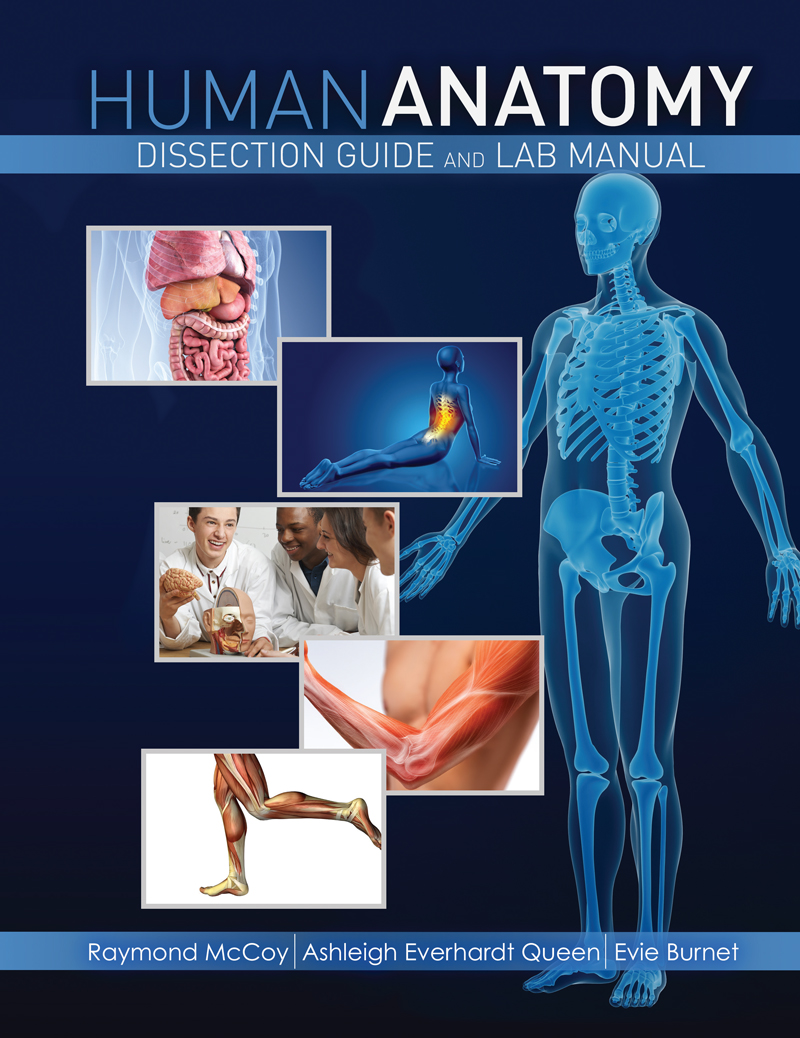
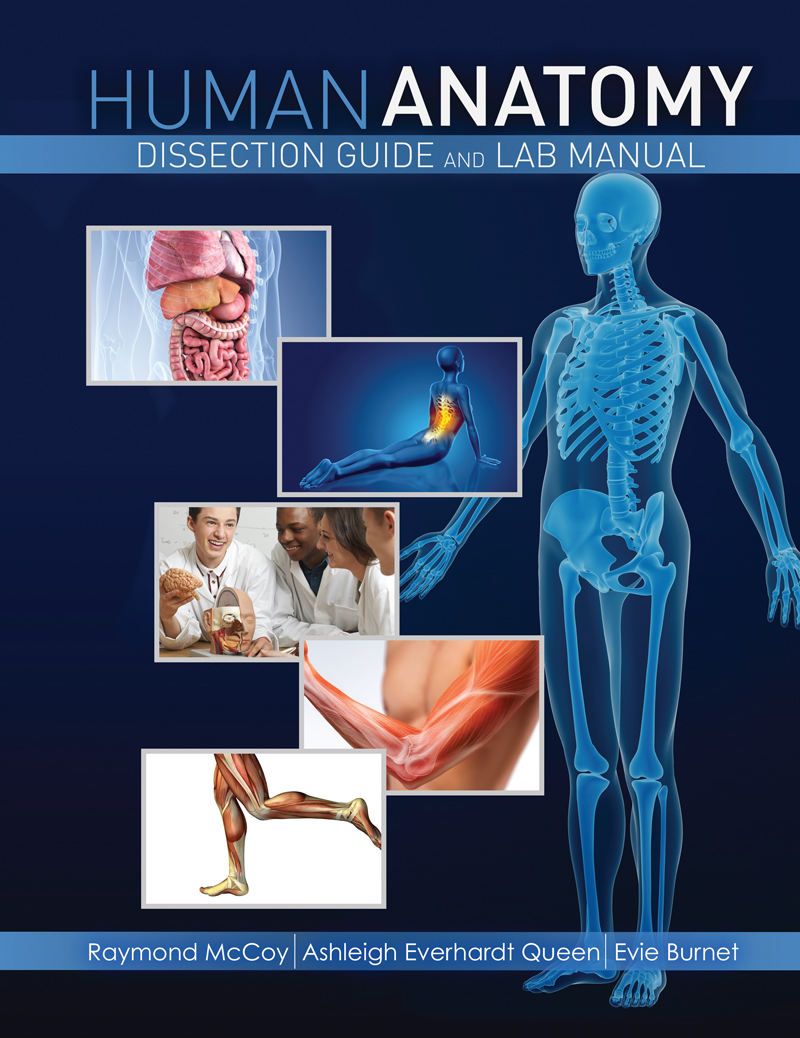
Human Anatomy Dissection Guide and Lab Manual
Edition: 1
Copyright: 2019
Pages: 128
Edition: 1
Copyright: 2019
Pages: 128
Choose Your Format
$95.72 USD
Ebook
$57.42 USD
This human anatomy laboratory course provides a comprehensive, hands-on study of the structure and organization of the human body through regional anatomy. Beginning with an introduction to laboratory procedures and anatomical terminology, students examine the muscles, bones, joints, nerves, blood vessels, and major anatomical landmarks of the lower and upper extremities, including the thigh, gluteal region, lower leg, foot, shoulder, arm, forearm, and hand. The course also explores the anatomy of the thorax, abdomen, and pelvis, with detailed study of the cardiovascular, respiratory, urinary, digestive, reproductive, and central nervous systems. Review appendices reinforce major anatomical concepts and regional relationships, helping students integrate structural knowledge essential for careers in the health sciences.
Chapter 1 Human Anatomy Laboratory Introduction
Chapter 2 Anterior Thigh and Femoral Triangle Regions
Chapter 3 Posterior Thigh and Gluteal Regions
Chapter 4 Popliteal and Lower Leg Regions
Chapter 5 Foot and Lower Extremity Joints
Chapter 6 Chest, Shoulder, Axilla, And Back Regions
Chapter 7 Upper Arm
Chapter 8 Forearm
Chapter 9 Hand and Upper Extremity Joints
Chapter 10 Abdominal Muscles, Heart, Respiratory System, Urinary System
Chapter 11 Digestive System and Abdominal Arteries
Chapter 12 Reproductive and Central Nervous Systems
Appendix A Review of The Lower Extremity
Appendix B Review of The Upper Extremity
Appendix C Review of The Abdominal Muscles; Circulatory, Respiratory, Urinary, Digestive, Reproductive, And Central Nervous Systems
Raymond McCoy, Ph.D. is Professor Emeritus at William & Mary, where he specialized in biomechanics and human anatomy. He earned his Ph.D. from the University of Southern California, an M.S. from the University of California, Los Angeles, and a B.S. from The Pennsylvania State University. Dr. McCoy taught courses in human anatomy, biomechanics of human movement, kinesiology research, and independent study while advising students preparing for careers in physical therapy, occupational therapy, physician assistant studies, and nursing. His teaching and research emphasized the anatomical and mechanical principles underlying human movement and their applications in the health professions.
Ashleigh Everhardt Queen, Teaching Professor of Kinesiology, has an educational background in Biology and Higher Education Administration. Ashleigh earned a Bachelor of Science in Biology and a Master of Science in Biology from the University of North Carolina at Charlotte. Her research in her master’s program was centered around understanding differential immune responses in male and female mice when exposed to a bacterial challenge. Ashleigh also holds a doctoral degree in Higher Education Administration from the William & Mary School of Education. Her research in her doctoral program investigated the perceptions that STEM transfer student have about the impact of academic advising within their declared major. Ashleigh currently teaches courses that relate to human physiology and also serves as a Pre-Health advisor to Pre-Nursing and Pre-PA students at William & Mary.
Evie Burnet earned both her Doctor of Physical Therapy and Ph.D. in Rehabilitation and Movement Science with a concentration in Neuromusculoskeletal Dynamics from Virginia Commonwealth University. Her doctoral thesis entitled “Frontal Plane Pelvic Drop: Cause and Clinical Implications” investigated pelvic motion and muscle activity while running. She is a Virginia licensed physical therapist and member of the American Physical Therapy Association. Dr. Burnet serves as a Pre-Health advisor to Pre-Physical Therapy and Pre-Occupational Therapy students at William & Mary. Her research interest is in gait analysis, and she currently serves as the Director for the Center for Balance and Aging Studies (CBAS), which includes a collaborative fall prevention program with the Williamsburg Landing Retirement Community.