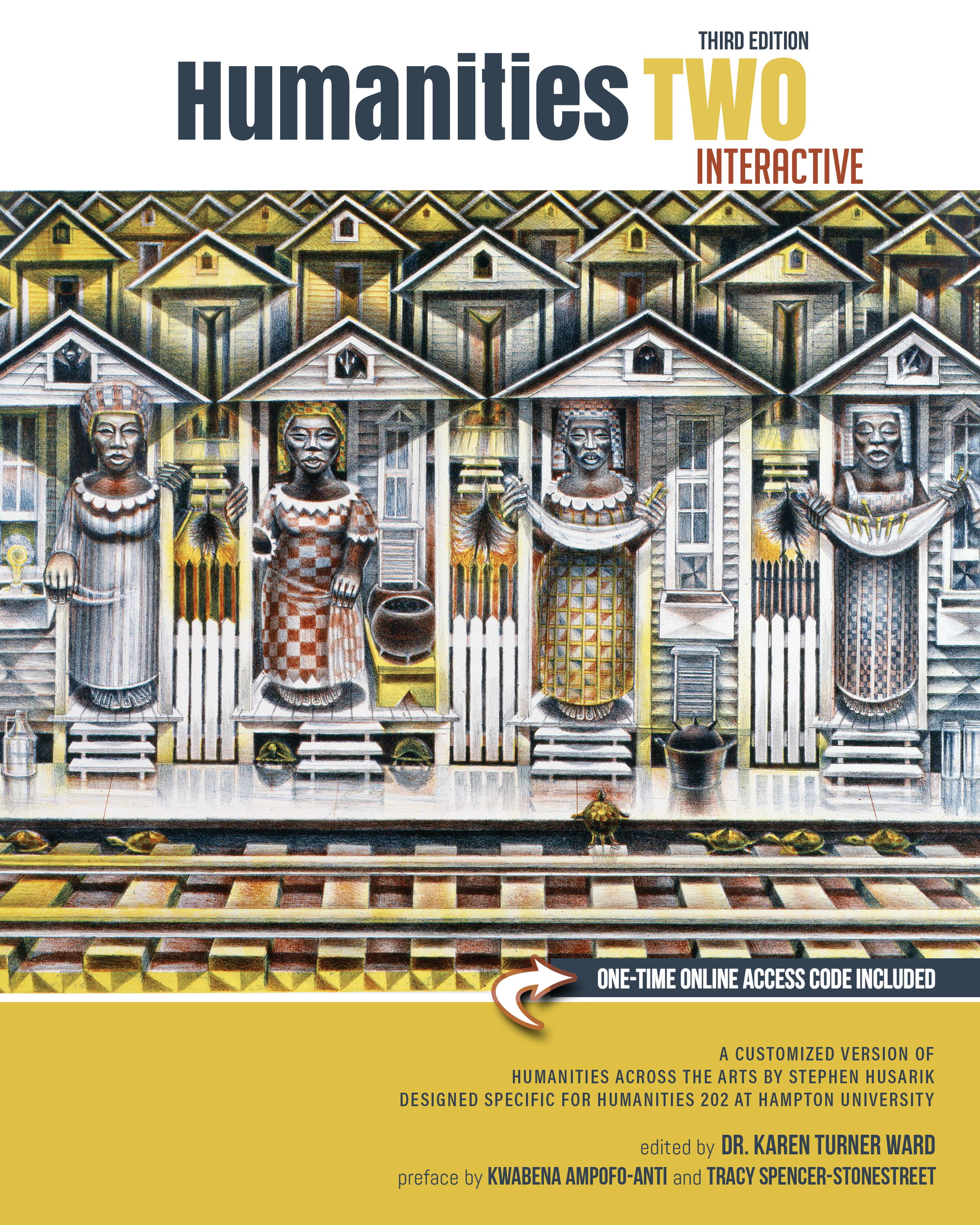
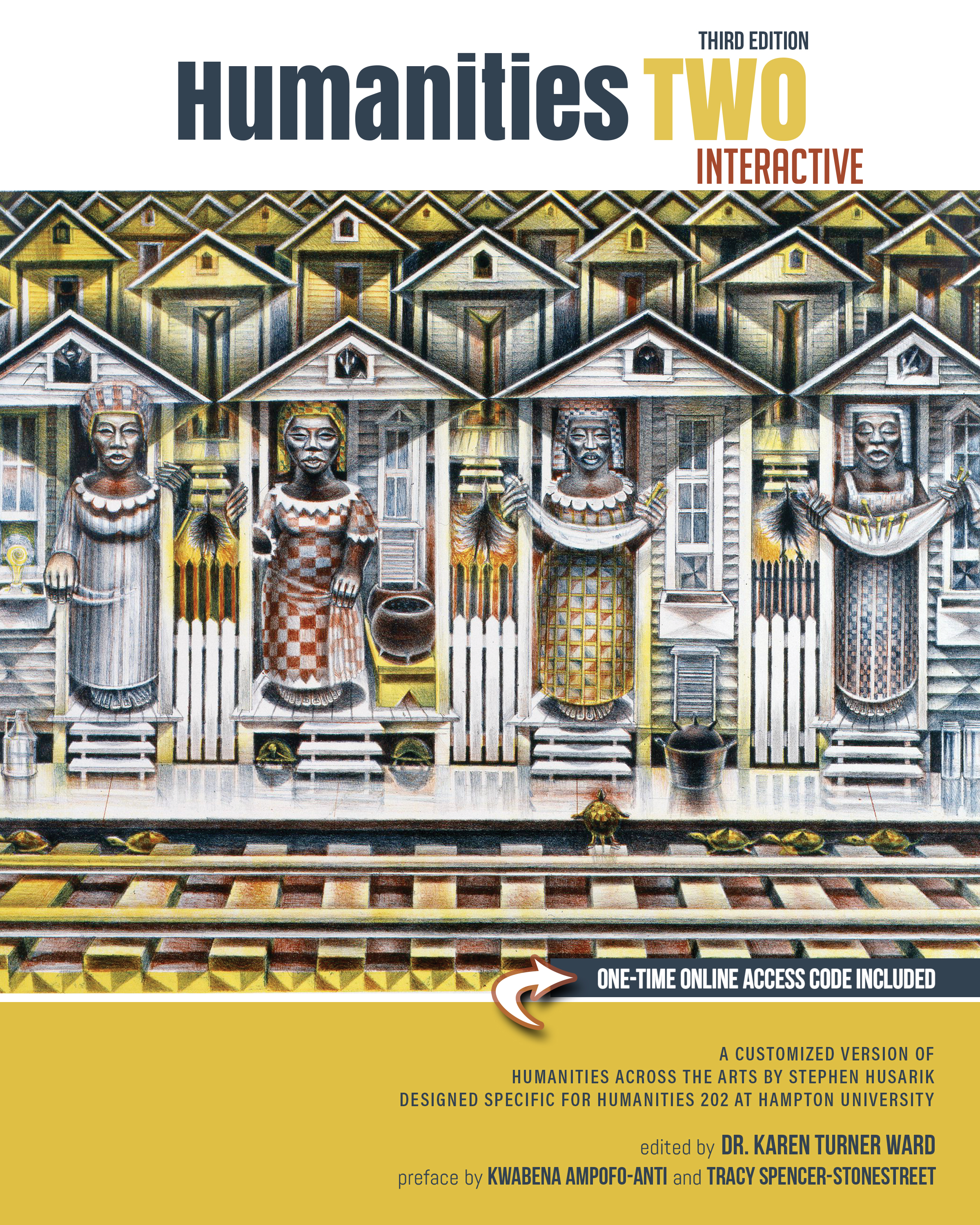
Humanities 2 Interactive: A Customized Version of Humanities Across the Arts by Stephen Husarik, Designed Specifically for Humanities 202 at Hampton University
Edition: 3
Copyright: 2023
Choose Your Format
Choose Your Platform | Help Me Choose


Ebook Package
$100.00 USD
This text introduces students to the humanities through a structured approach to analyzing and appreciating the visual, literary, and performing arts. Beginning with the foundations of critical analysis and the defining characteristics of the humanities, it examines painting, sculpture, architecture, music, literature, drama, dance, and film by exploring their essential elements, principles, techniques, and artistic forms. Each chapter applies a consistent critical method, introduces key terminology, and provides opportunities for analysis and review.
Preface
Illustrations and Sound Files
Chapter 1: Humanities: Structural Approach
Introduction
Critical Method Steps
Critical Method Application
Art: An Operational Definition
Humanities: An Operational Definition
Folk Art vs. Urban Art
Chapter 2: Painting
Introduction
Elements of Design
Principles of Design
Analyzing Designs
Critical Method Application
Critical Terms
Review Question
Chapter 3: Sculpture
Introduction
Types of Sculpture
Six Sculptural Methods
Elements of Design
Principles of Design
Critical Method Application
Critical Terms
Review Question
Chapter 4: Architecture
Introduction
Types of Architecture
Elements of Architecture
Six Architectural Techniques
Critical Method Application
Critical Terms
Review Question
Commentary
Chapter 5: Music
Introduction
Elements of Music
Critical Method Application
Critical Terms
Review Question
Commentary
Chapter 6: Literature: Lyric / Epic
Types of Poetry
Critical Method Application
Critical Terms
Review Question
Commentary
Chapter 7: Drama: A Compound Art Form
Introduction
Origins of Drama
Elements of Drama
Structure of Plot
Oedipus Rex (Who Am I?)
Critical Method Application
Critical Terms
Review Question
Commentary
Chapter 8: Dance: A Compound Art Form
Introduction
Types of Dance
Elements of Dance
Ballet
Critical Method Application
Critical Terms
Review Question
Commentary
Chapter 9: Film: A Compound Art Form
Introduction
Types of Film
Elements of Film
Critical Method Application
Critical Terms
Review Question
Commentary
Karen Turner Ward holds a doctoral degree in Criticism and Public Address from Regent University. Dr. Ward has the distinction of being the first student to earn a Ph.D. from the University. Dr. Ward currently serves as Chair of the Department of Fine and Performing Arts at Hampton University where she teaches communication and theatre courses. She serves on the School of Liberal Arts and Education University 101 (First-Year Experience) Advisory Committee and assists in the development of the course curriculum. She also helped prepare the course’s interactive textbook, The Individual and Life: Your Pathway to Success. She has served as a national consultant on recruitment, assessment, and retention of African American students.
To meet student needs, Dr. Ward has incorporated innovative approaches to instruction and introduced technology into traditional instructional programming. It was this search for innovative approaches to instruct “today’s students” that inspired her to write the communication textbook, Communication for Today’s Student, now in its fourth edition. The textbook, published by Kendall Hunt Publishing, is accompanied by an interactive program, which enables students to submit assignments online, sit for digital exams, take practice tests and post-tests, and absorb the material through interactive games and flash cards. This program enables students as well as instructors to obtain immediate assessment results. The overwhelming success of this program inspired Dr. Ward to develop both the Humanities One Interactive and Humanities Two Interactive textbooks.
Dr. Ward has received numerous awards for her commitment to innovative teaching, including the coveted, E. L. Hamm Distinguished Teaching Award presented each academic year by the University President.