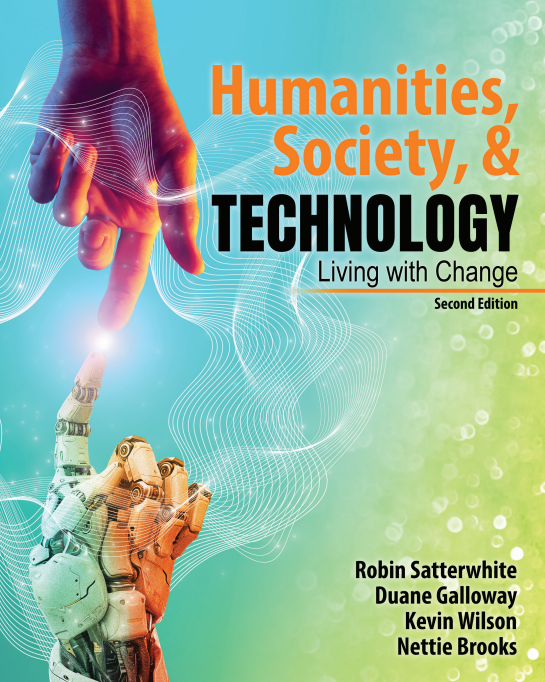
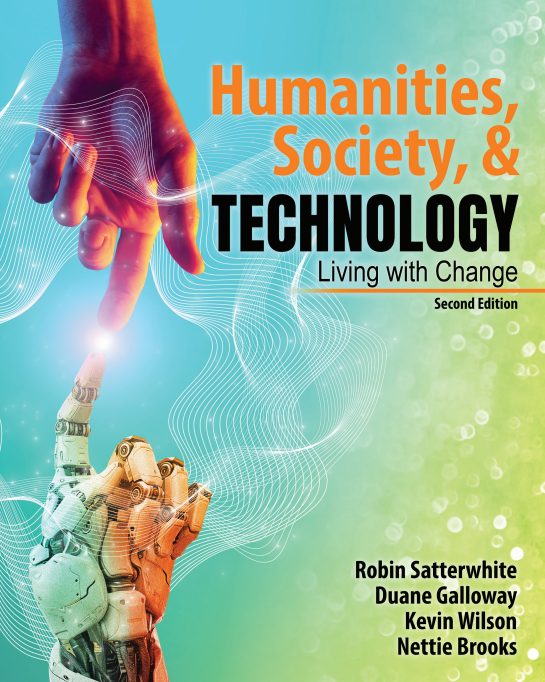
Humanities, Society and Technology: Living with Change

Edition: 2

Copyright: 2026

Pages: 372

Choose Your Format

Choose Your Platform | Help Me Choose

Ebook

$85.00 USD

ISBN 9798385196807

Details Electronic Delivery EBOOK 180 days

Unique in its selection of essays, song lyrics, and fiction excerpts, Humanities, Society and Technology: Living with Change explores the impact of technology on humans and society by written expression. From the days of the Cuneiform tablets, to the Industrial Revolution, through today and even a look beyond, this text encourages readers to analyze and think critically about technology’s impact on society. Ethical questions regarding science and medicine are explored as are the perils of technological advancements. The influence of the Industrial Revolution on human society is probed through the writings of Dickens, Wordsworth and more. Learning about the history and future of weapons will leave readers questioning if these advancements should be feared or encouraged. A look at the changes in communication through various mediums like print, radio, television, and social media reminds the reader of how far society has advanced and questions how far society will go. Anyone who is interested in where society has been and where it is going in regards to technology will enjoy this reader.

Introduction 

Section 1 What Are Humanities? What Is Technology? What Is Society? 
1. When I Heard the Learn’d Astronomer by Walt Whitman 

Section 2 The Industrial Revolution 
1. Excerpt from Hard Times by Charles Dickens 
2. The Apostate by Jack London 
3. Excerpt from The Excursion by William Wordsworth 
4. John Henry by Author Unknown 
5. Joe Magarac by Randy Sparks 
6. Honest Work by Todd Rundgren 
7. Youngstown by Bruce Springsteen 
8. Excerpt from The World is Flat by Thomas L. Friedman 
9. Plastic: A Personal History poem by Elizabeth Bradfield 
10. Contemporary Environmental Issues by Michael Slattery 
11. The Diesel Era by Duane Galloway 

Section 3 Communication: The Transfer of Information over Space and Time 
1. The Pencil by Henry Petroski 
2. The 95 Theses by Martin Luther 
3. The Telephone by Anwar F. Accawi 
4. Radio by Brent D. Ruben, Paul Reis, Barbara Iverson, and Genelle I. Belmas 
5. Thunderstuck by Erik Larson 
6. Television, Cable, and the Future by Brent D. Ruben, Paul Reis, Barbara K. Iverson and Genelle Belmas 
7. Great-Grandad’s Last Battle by Robert Froman 
8. “Jitterbugs” and “Crack pots”: Letters to the FCC about the ‘War of the Worlds’ Broadcast by Lee Ann Potter 

Section 4 Weapons 
1. Excerpt from The Red Badge of Courage: An Episode of the American Civil War by Stephen Crane 
2. Overview of World War I and World War II Weapons by Hubert P. van Tuyll 
3. Dulce et decorum Est by Wilfred Owen 
4. Inside the Messy Ethics of Making War with Machines by Arthur Holland Michel 
5. Artificial Intelligence and Future Warfare by Koichiro Takagi 
6. Addressing Ethical Questions of Modern AI Warfare by Hartwig von Schubert 

Section 5 Science and Medicine 
1. Excerpt from Frankenstein by Mary Shelley 
2. The Case Against Perfection by Michael J. Sandel 
3. The Exact Location of the Soul by Richard Selzer 
4. 23-Year Old Kim Suozzi Undergoes Cryonic Preservation After Successful Fundraising Campaign by George Dvorsky 
5. Emily Dickinson and Medical Ethics: The “Belle of Amherst” as Ethicist by Bonnie Salomon 

Section 6 The Perils of Technology and What the Future Holds 
1. The Unknown Citizen by W. H. Auden 
2. The Veldt by Ray Bradbury 
3. There Will Come Soft Rains by Ray Bradbury
4. Eternity is 20 Seconds Long by Paul Trembling 2
5. 3 Reasons Why I’ll Never Ask for My Children’s Password by Kim Dale 
6. Emotional Robots by Donald Norman 
7. But Who Can Replace a Man? by Brian Aldiss 
8. Tideline by Elizabeth Bear 
9. AI Writes About Itself (And Fish Eggs!) by Duane Galloway 

Suggested Films for Each Section 

Biographies

Robin Satterwhite

Robin is a full-time faculty member in the Humanities at Rowan Cabarrus Community College. She received her undergraduate bachelor’s degree in business administration from Mars Hill University and a Master of Arts in the Humanities, with a concentration in History, from California State University, Dominguez Hills. She served as Rowan Cabarrus’ Department Chair of Humanities from 2010-2023. She has been employed by the college in various capacities since 1993. She enjoys spending time with her two grown daughters, as well as various pets on her North Carolina farm. In her spare time Robin enjoys reading historical fiction, gardening, coastal fishing and traveling. She also coauthored Critical Thinking: Understanding Yourself, Analyzing Others published by Kendall Hunt.

Duane Galloway

Duane holds an undergraduate degree from the University of North Carolina at Chapel Hill and an MA from University of North Carolina at Greensboro, both in History. He has been employed at Rowan Cabarrus Community College since 1994. While there, he has been the Humanities Department Chair and a full time instructor. His first book, Southern Railways Spencer Shops: 1896–1996, was published in 1998. He enjoys spending time with his wife, three children, and various animals. His hobbies include reading and storytelling.

Kevin Wilson

Kevin spent 25 years as an enlisted member of the United States Air Force, serving in Europe during the last years of the Cold War and in the Air National Guard through the Global War on Terrorism and beyond. As a Security Forces Defender, he protected an array of aircraft, weapons systems, and personnel at a variety of locations in the United States, Europe, and the Middle East, ultimately retiring as a Senior Master Sergeant. He also spent many years as an employee of the North Carolina Department of Correction, working at close, medium, and minimum-security prison facilities. While doing all of this, he toiled away as a part-time student, eventually earning advanced degrees in ancient and classical history and world religions. He currently serves as an adjunct instructor of History and Humanities at Rowan-Cabarrus Community College in North Carolina. Outside the classroom, Kevin enjoys spending time with his wife and family, which include a son, daughter, and three granddaughters. He loves running and staying fit, and recently published his first book, Military
Aviation Museums in the United States: Best of the Best (via Innovative Ink, a Kendall Hunt imprint).

Janet Brooks

Nettie holds an undergraduate degree in English and an MA in English Literature from University of North Carolina at Charlotte. She is currently an English and Humanities instructor and the Academic Director of Humanities at Spartanburg Community College. She is the author of Mythology and Human Culture: From Ancient Civilization to Contemporary Society and co-author of Critical Thinking: Analyzing Yourself, Understanding Others. In her spare time, she enjoys spending time with her husband, Donovan, and her three children, William, Parker, and Henry.

Unique in its selection of essays, song lyrics, and fiction excerpts, Humanities, Society and Technology: Living with Change explores the impact of technology on humans and society by written expression. From the days of the Cuneiform tablets, to the Industrial Revolution, through today and even a look beyond, this text encourages readers to analyze and think critically about technology’s impact on society. Ethical questions regarding science and medicine are explored as are the perils of technological advancements. The influence of the Industrial Revolution on human society is probed through the writings of Dickens, Wordsworth and more. Learning about the history and future of weapons will leave readers questioning if these advancements should be feared or encouraged. A look at the changes in communication through various mediums like print, radio, television, and social media reminds the reader of how far society has advanced and questions how far society will go. Anyone who is interested in where society has been and where it is going in regards to technology will enjoy this reader.

Introduction 

Section 1 What Are Humanities? What Is Technology? What Is Society? 
1. When I Heard the Learn’d Astronomer by Walt Whitman 

Section 2 The Industrial Revolution 
1. Excerpt from Hard Times by Charles Dickens 
2. The Apostate by Jack London 
3. Excerpt from The Excursion by William Wordsworth 
4. John Henry by Author Unknown 
5. Joe Magarac by Randy Sparks 
6. Honest Work by Todd Rundgren 
7. Youngstown by Bruce Springsteen 
8. Excerpt from The World is Flat by Thomas L. Friedman 
9. Plastic: A Personal History poem by Elizabeth Bradfield 
10. Contemporary Environmental Issues by Michael Slattery 
11. The Diesel Era by Duane Galloway 

Section 3 Communication: The Transfer of Information over Space and Time 
1. The Pencil by Henry Petroski 
2. The 95 Theses by Martin Luther 
3. The Telephone by Anwar F. Accawi 
4. Radio by Brent D. Ruben, Paul Reis, Barbara Iverson, and Genelle I. Belmas 
5. Thunderstuck by Erik Larson 
6. Television, Cable, and the Future by Brent D. Ruben, Paul Reis, Barbara K. Iverson and Genelle Belmas 
7. Great-Grandad’s Last Battle by Robert Froman 
8. “Jitterbugs” and “Crack pots”: Letters to the FCC about the ‘War of the Worlds’ Broadcast by Lee Ann Potter 

Section 4 Weapons 
1. Excerpt from The Red Badge of Courage: An Episode of the American Civil War by Stephen Crane 
2. Overview of World War I and World War II Weapons by Hubert P. van Tuyll 
3. Dulce et decorum Est by Wilfred Owen 
4. Inside the Messy Ethics of Making War with Machines by Arthur Holland Michel 
5. Artificial Intelligence and Future Warfare by Koichiro Takagi 
6. Addressing Ethical Questions of Modern AI Warfare by Hartwig von Schubert 

Section 5 Science and Medicine 
1. Excerpt from Frankenstein by Mary Shelley 
2. The Case Against Perfection by Michael J. Sandel 
3. The Exact Location of the Soul by Richard Selzer 
4. 23-Year Old Kim Suozzi Undergoes Cryonic Preservation After Successful Fundraising Campaign by George Dvorsky 
5. Emily Dickinson and Medical Ethics: The “Belle of Amherst” as Ethicist by Bonnie Salomon 

Section 6 The Perils of Technology and What the Future Holds 
1. The Unknown Citizen by W. H. Auden 
2. The Veldt by Ray Bradbury 
3. There Will Come Soft Rains by Ray Bradbury
4. Eternity is 20 Seconds Long by Paul Trembling 2
5. 3 Reasons Why I’ll Never Ask for My Children’s Password by Kim Dale 
6. Emotional Robots by Donald Norman 
7. But Who Can Replace a Man? by Brian Aldiss 
8. Tideline by Elizabeth Bear 
9. AI Writes About Itself (And Fish Eggs!) by Duane Galloway 

Suggested Films for Each Section 

Biographies

Robin Satterwhite

Robin is a full-time faculty member in the Humanities at Rowan Cabarrus Community College. She received her undergraduate bachelor’s degree in business administration from Mars Hill University and a Master of Arts in the Humanities, with a concentration in History, from California State University, Dominguez Hills. She served as Rowan Cabarrus’ Department Chair of Humanities from 2010-2023. She has been employed by the college in various capacities since 1993. She enjoys spending time with her two grown daughters, as well as various pets on her North Carolina farm. In her spare time Robin enjoys reading historical fiction, gardening, coastal fishing and traveling. She also coauthored Critical Thinking: Understanding Yourself, Analyzing Others published by Kendall Hunt.

Duane Galloway

Duane holds an undergraduate degree from the University of North Carolina at Chapel Hill and an MA from University of North Carolina at Greensboro, both in History. He has been employed at Rowan Cabarrus Community College since 1994. While there, he has been the Humanities Department Chair and a full time instructor. His first book, Southern Railways Spencer Shops: 1896–1996, was published in 1998. He enjoys spending time with his wife, three children, and various animals. His hobbies include reading and storytelling.

Kevin Wilson

Kevin spent 25 years as an enlisted member of the United States Air Force, serving in Europe during the last years of the Cold War and in the Air National Guard through the Global War on Terrorism and beyond. As a Security Forces Defender, he protected an array of aircraft, weapons systems, and personnel at a variety of locations in the United States, Europe, and the Middle East, ultimately retiring as a Senior Master Sergeant. He also spent many years as an employee of the North Carolina Department of Correction, working at close, medium, and minimum-security prison facilities. While doing all of this, he toiled away as a part-time student, eventually earning advanced degrees in ancient and classical history and world religions. He currently serves as an adjunct instructor of History and Humanities at Rowan-Cabarrus Community College in North Carolina. Outside the classroom, Kevin enjoys spending time with his wife and family, which include a son, daughter, and three granddaughters. He loves running and staying fit, and recently published his first book, Military
Aviation Museums in the United States: Best of the Best (via Innovative Ink, a Kendall Hunt imprint).

Janet Brooks

Nettie holds an undergraduate degree in English and an MA in English Literature from University of North Carolina at Charlotte. She is currently an English and Humanities instructor and the Academic Director of Humanities at Spartanburg Community College. She is the author of Mythology and Human Culture: From Ancient Civilization to Contemporary Society and co-author of Critical Thinking: Analyzing Yourself, Understanding Others. In her spare time, she enjoys spending time with her husband, Donovan, and her three children, William, Parker, and Henry.
