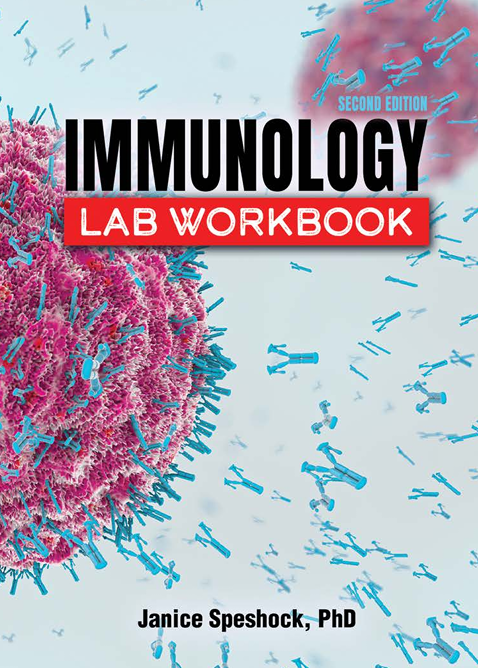
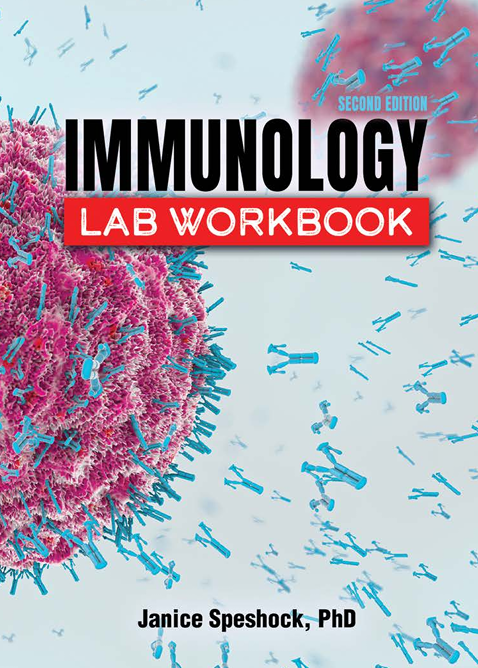
Immunology Lab Workbook
Edition: 1
Copyright: 2024
Edition: 1
Copyright: 2024
Pages: 26
Choose Your Format
Ebook
$80.00 USD
$84.99 USD
This immunology lab workbook introduces students to laboratory techniques used to study the immune system, blood cells, and responses to infection. Experiments cover fever, macrophage activity, bacterial degradation, immune responses in mice, immune cell separation, spleen tissue analysis, protein detection and quantification, and blood typing.
Prefix I General Laboratory Rules & Safety
Prefix II Bloodborne Pathogen Safety and Training
Lab 1 Why Do We Make a Fever?
Lab 2 What Cells Are in Your Blood?
Lab 3 How Long Does It Take for Macrophages to Uptake Bacteria?
Lab 4 How Long Does It Take for Bacteria to Degrade Bacteria?
Lab 5 How Does a Mouse Respond to Infection?
Lab 6 How Can We Separate Immune Cells in a Blood Sample?
Lab 7 How Can We Find the White Pulp in a Spleen Sample?
Lab 8 How Can We Detect the Approximate Size of a Specific Protein in Serum?
Lab 9 How Can We Detect the Concentration of a Specific Protein in Serum?
Lab 10 What Is My Blood Type?
Appendix: Buffers and Media Preparation

Dr. Janice Speshock earned her Ph.D. from the Wayne State University School of Medicine in 2007 and completed a Postdoctoral Fellowship with the National Research Council/Defense Threat Reduction Agency. She teaches courses in Microbiology, Pathogenic Microbiology, and Immunology. Her research focuses on understanding how the host immune system responds to foreign entities. Her laboratory investigates the effects of engineered nanomaterials on immune system function while developing an in vivo model to study nanomaterial toxicity and biolocalization. She also studies how bacteria regulate virulence factor production to influence host colonization and disease, as well as the role of the host immune system in bacterial pathogenesis. Through her teaching and research, Dr. Speshock is committed to advancing knowledge in microbiology, immunology, and host–pathogen interactions.
This immunology lab workbook introduces students to laboratory techniques used to study the immune system, blood cells, and responses to infection. Experiments cover fever, macrophage activity, bacterial degradation, immune responses in mice, immune cell separation, spleen tissue analysis, protein detection and quantification, and blood typing.
Prefix I General Laboratory Rules & Safety
Prefix II Bloodborne Pathogen Safety and Training
Lab 1 Why Do We Make a Fever?
Lab 2 What Cells Are in Your Blood?
Lab 3 How Long Does It Take for Macrophages to Uptake Bacteria?
Lab 4 How Long Does It Take for Bacteria to Degrade Bacteria?
Lab 5 How Does a Mouse Respond to Infection?
Lab 6 How Can We Separate Immune Cells in a Blood Sample?
Lab 7 How Can We Find the White Pulp in a Spleen Sample?
Lab 8 How Can We Detect the Approximate Size of a Specific Protein in Serum?
Lab 9 How Can We Detect the Concentration of a Specific Protein in Serum?
Lab 10 What Is My Blood Type?
Appendix: Buffers and Media Preparation
Dr. Janice Speshock earned her Ph.D. from the Wayne State University School of Medicine in 2007 and completed a Postdoctoral Fellowship with the National Research Council/Defense Threat Reduction Agency. She teaches courses in Microbiology, Pathogenic Microbiology, and Immunology. Her research focuses on understanding how the host immune system responds to foreign entities. Her laboratory investigates the effects of engineered nanomaterials on immune system function while developing an in vivo model to study nanomaterial toxicity and biolocalization. She also studies how bacteria regulate virulence factor production to influence host colonization and disease, as well as the role of the host immune system in bacterial pathogenesis. Through her teaching and research, Dr. Speshock is committed to advancing knowledge in microbiology, immunology, and host–pathogen interactions.