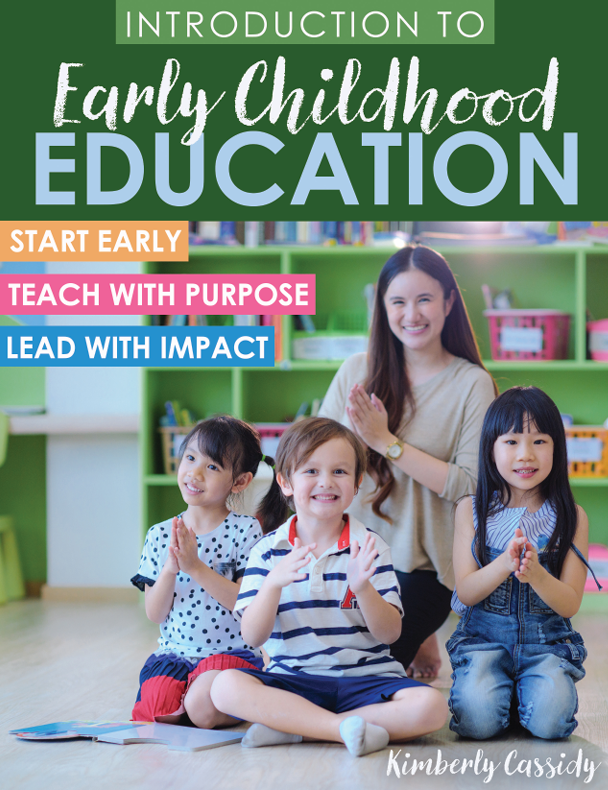
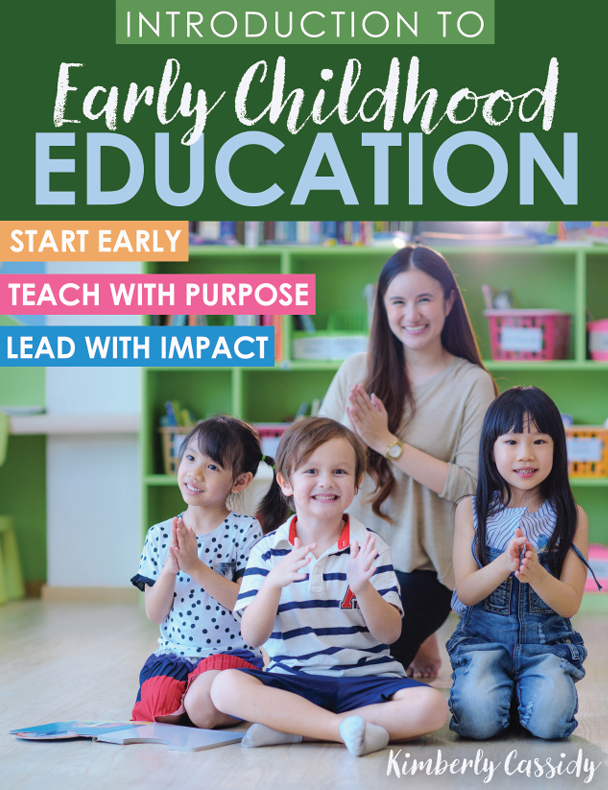
Introduction to Early Childhood Education
Edition: 1
Copyright: 2026
Pages: 255
Choose Your Format
Ebook
$58.00 USD
Throughout this text, you will encounter opportunities to pause, think critically, and reflect on your experiences and developing professional identity. These moments are intentional. They are grounded in the belief that effective educators are reflective practitioners who continually examine how their values, experiences, and decisions influence the children and families they serve.
To support this process, this book incorporates the SEED Reflection Progression Model™ (Cassidy, 2026). Developed by Dr. Kimberly Cassidy, the author of this book, the model is designed to guide future educators through the often-complex process of developing equitable, culturally responsive, and inclusive practices. Rather than viewing reflection as a one-time assignment or isolated activity, the SEED Reflection Progression Model presents professional growth as an ongoing journey.
The model synthesizes principles from several foundational bodies of scholarship, It draws upon the work of Derman-Sparks and Edwards (2020) and their emphasis on anti-bias education and identity development, Mezirow’s (1997) theory of transformative learning, which recognizes that meaningful growth often occurs when existing assumptions are challenged, and Freire’s (1970) concept of critical consciousness, which encourages individuals to recognize and respond to inequities within society and educational systems. The model also aligns closely with the NAEYC Professional Standards and Competencies, which emphasize reflective practice, ethical responsibility, cultural responsiveness, and advocacy on behalf of young children and families.
The SEED Reflection Progression Model identifies four common stages of professional growth:
Awareness → Discomfort → Reflection → Practice
Introduction
Chapter 1 Why Early Childhood Education Matters
Chapter 2 History and Foundations of Early Childhood Education
Chapter 3 Current Trends and Issues in Early Childhood Education
Chapter 4 Types of Early Childhood Programs and Career Pathways
Chapter 5 The Early Childhood Professional
Chapter 6 Ethics and Professional Decision-Making
Chapter 7 Understanding the Young Child (Typical Development)
Chapter 8 Understanding the Young Child (Special Needs)
Chapter 9 Families and Teachers as Partners
Chapter 10 Diversity, Culture, and Equity
Chapter 11 Developmentally Appropriate Practice (DAP)
Chapter 12 Environments and Standards of Quality
Chapter 13 Curriculum Models in Early Childhood
Chapter 14 Curriculum and Play-Based Learning
Chapter 15 Technology in Early Childhood Education
Dr. Kimberly Cassidy is an Assistant Professor of Early Childhood Education and head of the Early Childhood Education program at Walters State Community College. She previously served as Director of Early Childhood programs at Hawkins County School System for 19 years and as an associate professor and director of graduate programs at Shawnee State University. She is the author of educational texts and book chapters focused on teacher preparation, disability, and rural education. Dr. Cassidy holds a doctorate in Early Childhood Education from East Tennessee State University, an educational specialist degree in Leadership and Administration from Lincoln Memorial University, and degrees in Early Childhood Development and Business Management from Carson-Newman University.