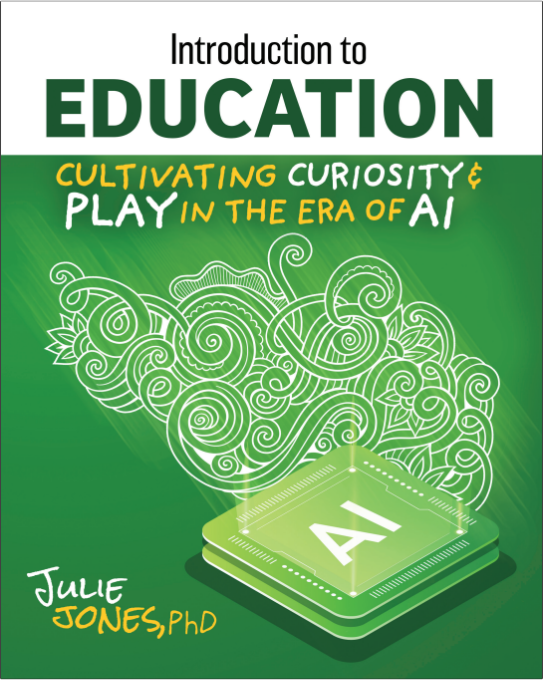
Introduction to Education: Cultivating Curiosity & Play in the Era of AI
Edition: 1
Copyright: 2026
Pages: 544
Edition: 1
Copyright: 2026
Pages: 544
Choose Your Format
$90.00 USD
Ebook
$45.00 USD
In today's rapidly evolving educational landscape, the role of educators has become more nuanced than ever. Educator preparation programs play a pivotal role in preparing students for a future shaped by artificial intelligence (AI) while fostering curiosity, creativity, and a sense of equity. Written in an engaging, friendly style, this introductory textbook aims to provide aspiring educators with a holistic framework that combines pedagogical theory, practical teaching strategies, and insights into fostering meaningful classroom relationships while nurturing curiosity in students. This comprehensive exploration of the art and science of teaching integrates the transformative power of play alongside strategies for promoting diversity and equity in educational settings.
Unique Features:
- Integration of Play in Learning: Emphasizing the transformative power of play in developing cognitive, social, and emotional skills in learners
- Curiosity-Driven Education: Equipping educators to nurture curiosity as a foundational skill for lifelong learning and adaptability.
- Practical and Applied Strategies: Providing actionable insights and play-based strategies that educators can implement to create engaging and inclusive learning environments.
- Holistic Approach: Balancing theoretical frameworks with practical applications and recognizing the importance of emotional intelligence in educational practices.
- Integration of AI in Education: This textbook will address the implications of AI on teaching and learning, preparing educators to navigate a tech-infused classroom.
About the Author
Introduction
Section I: Foundations of Education
Chapter 1: Tracing the Evolution of Educational Philosophies
Chapter 2: Understanding the Evolving Roles and Responsibilities of Educators in a Digital Era
Chapter 3: Ethical Considerations and the Impact of Technological Advancements on Equity
Section II: The Art of Teaching
Chapter 4: Developing a Personal Teaching Philosophy Rooted in Creativity and Empathy
Chapter 5: Harnessing the Power of Play to Stimulate Imagination and Problem-Solving Skills
Chapter 6: Integrating Storytelling and Narrative Techniques to Engage Learners from a Wide Variety of Backgrounds
Section III: The Science of Teaching
Chapter 7: Neuroscience that Supports Learning, Including Psychological Principles Influencing Motivation and Behavior in Learners
Chapter 8: Integrated approaches to Teaching and Learning
Chapter 9: Types of Assessment and Traditional Models of Instruction
Section IV: Classroom Relationships, Emotional Intelligence, and Play
Chapter 10: Building Trust and Fostering Positive Classroom Dynamics Through Culturally Relevant, Play-Based Activities
Chapter 11: Classroom Culture: Connection Over Compliance
Chapter 12: Utilizing Emotional Intelligence to Support Student Well-Being and Academic Success
Section V: Curiosity, Inquiry-Based Learning, and Play
Chapter 13: Cultivating Curiosity in the AI Era: Balancing Technological Fluency with Critical Thinking
Chapter 14: Implementing Inquiry-Based Learning Approaches that Encourage Exploration and Discovery
Chapter 15: Leveraging Play as a Catalyst for Innovation and Lifelong Learning
Index
Dr. Julie Jones is an associate professor in Converse University’s Department of Social Sciences. She maintains an active research agenda with interests ranging from urban planning to curriculum and pedagogy, always with a mix of creativity and play. She published her first book, The Playful Classroom, in June, 2020. Her second book, The Playful Life, was published in October, 2022. Follow her on social media @JuliePJones_author, and view her full curriculum vitae at www.juliepjones.com.