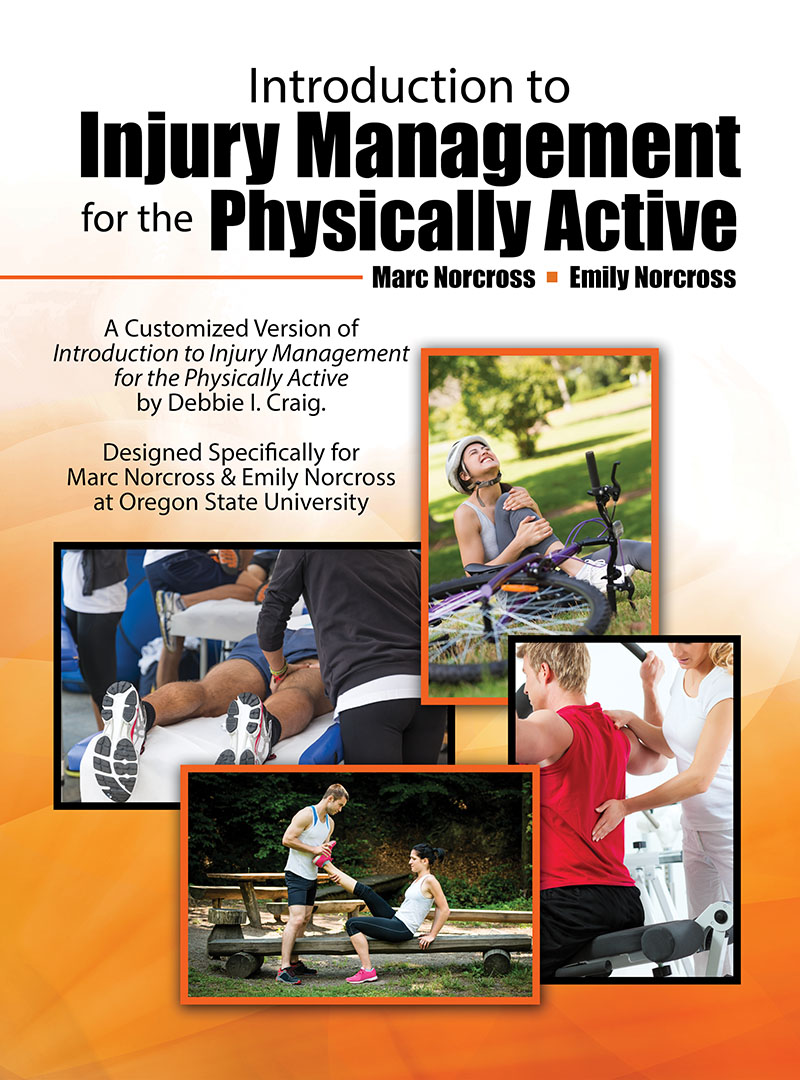
Introduction to Injury Management for the Physically Active
Edition: 1
Copyright: 2015
Pages: 100
Edition: 1
Copyright: 2015
Pages: 100
Choose Your Format
Ebook
$50.03 USD
$100.07 USD
Introduction to Injury Management for the Physically Active provides a comprehensive foundation for understanding the prevention, evaluation, treatment, and management of injuries and illnesses associated with physical activity. Designed for students and professionals in sports medicine, athletic training, fitness, and related fields, the text explores essential topics such as legal considerations, pre-participation evaluations, emergency planning, common injuries, medical conditions, rehabilitation, environmental risks, and injury prevention strategies.
Through practical discussions of assessment techniques, emergency response procedures, rehabilitation principles, and safe return-to-activity guidelines, this book equips readers with the knowledge needed to support physically active individuals. Emphasizing evidence-based practices and real-world applications, it highlights the importance of preparation, risk management, and collaboration among health and fitness professionals to promote safety, recovery, and long-term participation in physical activity.
1 Legal Issues for Physical Activity Professionals
Legal Terms
Good Samaritan Law
Athlete’s Assumption of Risk
Record Keeping and HIPAA
Professional Liability Insurance
Protecting Yourself against Legal Accusations
Workplace Ergonomics
Summary
Sources Cited & Must Read List
2 Pre-Participation Physical Examinations
Introduction
Requirements of the Pre-Participation Physical Examination
Organizational Considerations for Team PPEs
Involvement of the Sports Medicine Team
Results: What Do They Mean?
Medical Disqualification of an Athlete
Special Populations
Summary
Sources Cited & Must Read List
3 Emergency Planning
Introduction
Emergency Action Plan Components
OSHA Standards
Bloodborne Pathogens
Universal Precautions
Wound Care Techniques
Summary
Sources Cited & Must Read List
4 Common Injuries in the Physically Active
Introduction
Types of Tissues Injured
Loads That Produce Tissue Injury
Degrees of Injury
Tissue Response to Injury
Treatment Options
Splinting/Bracing Techniques
Transporting Techniques
Ambulatory Aids
Summary
5 Common Illnesses in the Physically Active
Introduction
Shock
Seizures
Diabetic Emergencies
Cardiac Emergencies
Summary
Sources Cited & Must Read List
6 Return to Activity Considerations
Introduction
Rehabilitation Components
Rehabilitation Phases
Rehabilitation Phase Progressions
Decision Making and Return to Activity Considerations
Summary
Sources Cited & Must Read List
7 Environmental Conditions
Introduction
The Body’s Cooling Methods
Heat Illnesses and Treatment
Prevention of Heat Illnesses
Cold Illnesses and Treatment
Lightening Management
Altitude Illnesses and Treatment
Summary
Sources Cited & Must Read List
8 Injury Prevention Considerations
Introduction
Strength Conditioning
Endurance Conditioning
Flexibility
Cardiovascular Conditioning
Activity-Specific Training
Nutrition Considerations
Purpose of Protective Equipment
Legal Issues
Common Protective Equipment Types
Fitting Football Helmets
Fitting Football Shoulder Pads
Summary
Sources Cited & Must Read List
Glossary
Ad
Emily C. Norcross is a Senior Instructor in the College of Health at Oregon State University, serving as the Pre-Therapy and Allied Health Coordinator and teaching multiple courses in kinesiology and athletic training. She holds a Master of Arts in Exercise and Sport Science from the University of North Carolina at Chapel Hill and a Bachelor of Science in Kinesiology from Sonoma State University. She is also a Certified Athletic Trainer (ATC) through the National Athletic Trainers’ Association Board of Certification (NATABOC).
Norcross has over 14 years of experience in athletic training and experiential education. At Oregon State University, she coordinates clinical experiences for students in the Pre-Therapy and Allied Health option within the Kinesiology program and teaches undergraduate kinesiology and athletic training courses. She has also worked as an Assistant Athletic Trainer at Duke University and the University of Southern California, as well as an Industrial Sports Medicine Professional at InSite Health, LLC, where she provided on-site injury management, rehabilitation, and preventative injury programs.
Dr. Norcross earned his doctorate in Human Movement Science with a Biomechanics concentration at the University of North Carolina at Chapel Hill in 2011. He earned his undergraduate degree in Athletic Training from Boston University in 2001 and completed a Master's degree in Exercise and Sport Science (Athletic Training Specialization) from UNC-Chapel Hill in 2003. He then worked clinically as an Assistant Athletic Trainer at UCLA from 2003-2007. He resides in Corvallis with his wife, Emily, and daughters, Kendal and Kate.