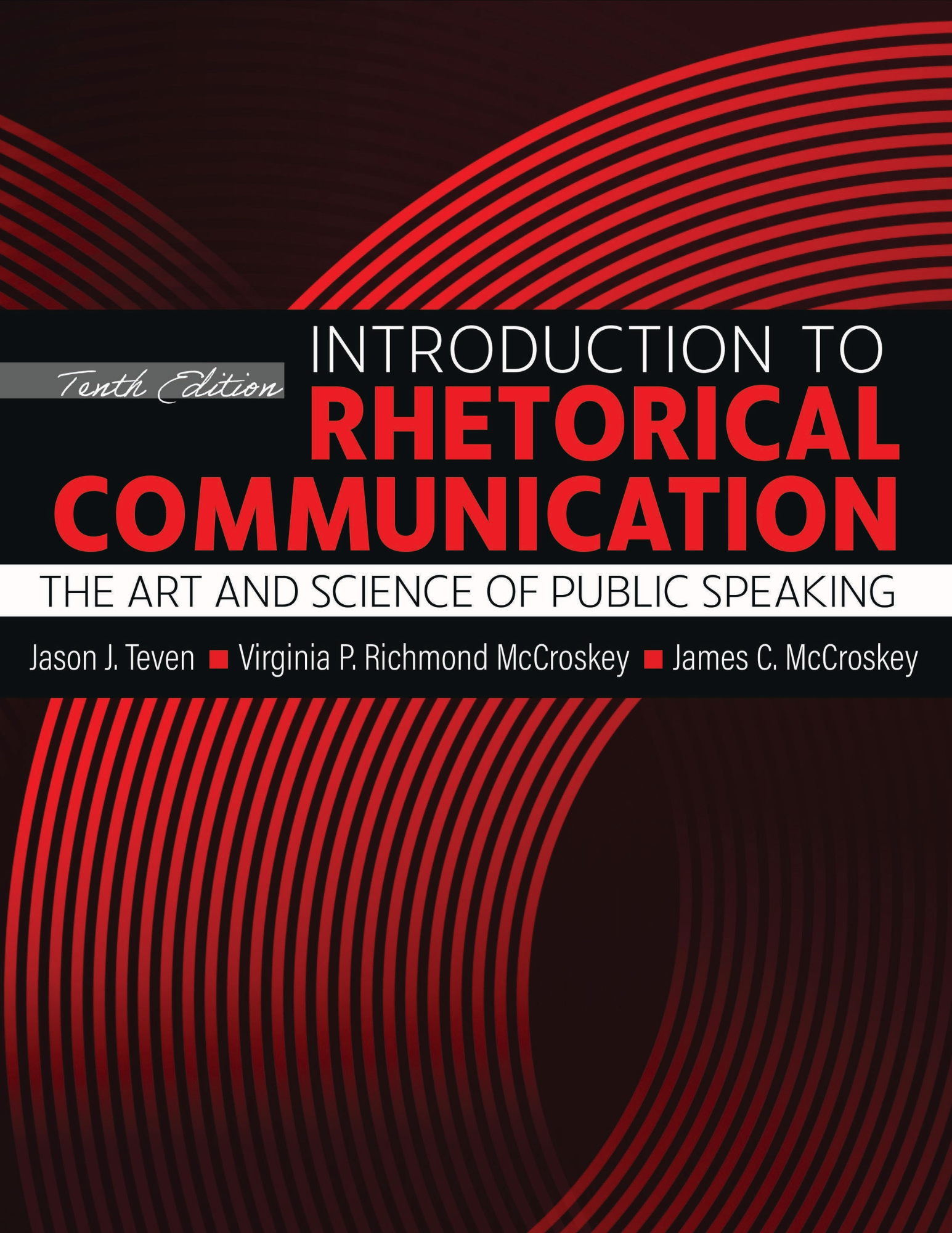
Introduction to Rhetorical Communication: The Theory and Practice of Public Speaking
Edition: 10
Copyright: 2026
Pages: 396
Edition: 10
Copyright: 2026
Pages: 396
Choose Your Format
Choose Your Platform | Help Me Choose


$80.00 USD
Ebook
$40.00 USD
The new tenth edition of An Introduction to Rhetorical Communication focuses exclusively on the rhetorical communication typical of Western cultures, with primary emphasis on the United States. Western rhetorical communication serves as the foundation on which the new field of communication has been built. Drawing on classical rhetorical theory and contemporary social science research, the textbook continues its purpose to provide a coherent introduction to rhetorical communication while addressing the challenges of an increasingly global, multicultural, and technologically connected world.
The book is organized into four sections: an introduction to rhetorical history, concepts, and communication apprehension; basic theory concerning audiences, speakers, messages, and context; practical guidance for developing and delivering messages; and a concluding discussion of ethics in rhetorical communication. New to this edition is the inclusion of artificial intelligence, with discussions of its role in brainstorming and outlining, as well as careful consideration of the benefits, challenges, and ethical implications of using AI in the preparation of messages and speeches. Together, these sections are designed to help students develop effective, ethical, and responsible rhetorical skills in today’s complex communication environment.
Part I: Getting Started
Chapter 1: A Rhetorical Tradition
Chapter 2: The Nature of Rhetorical Communication
Chapter 3: Stage Fright: A Normal Problem
Part II: Basic Theory
Chapter 4: Nature of the Receiver: Attitude Formation and Change
Chapter 5: Ethos: A Dominant Factor in Rhetorical Communication
Chapter 6: Nature of Persuasive Argument
Chapter 7: Nonverbal Communication
Chapter 8: Diversity and Culture
Part III: Message Preparation and Presentation
Chapter 9: Message Preparation: Preliminary Considerations
Chapter 10: Informative Messages
Chapter 11: Message Preparation: Invention
Chapter 12: Message Preparation: Disposition
Chapter 13: Message Preparation: Style
Chapter 14: Introducing and Concluding Messages in Rhetorical Communication
Chapter 15: Message Presentation: Oral Delivery
Part IV: Rhetorical Communication and Society
Chapter 16: Ethics and Rhetorical Communication
Appendix: Sample Speeches
Declaration of War Address, Franklin Delano Roosevely
Inaugural Address, John F. Kennedy
Ronald Reagan, “Remarks at a Ceremony Commemorating the 40th Anniversary of the Normandy Invasion, D-Day,” Pointe du Hoc, France (6 June 1984)
President Obama’s Remarks about the School Shoot at Sandy Hook Elementary School in Newtown, Conn., on Dec. 14, 2012
Freedom of Speech & Political Correctness, Jordan B. Peterson
The Proposed Basketball Rule Changes, Anonymous
Billy Crystal’s eulogy for Muhammad Ali
Kara Lawson’s Handle Hard Better Speech (2022)
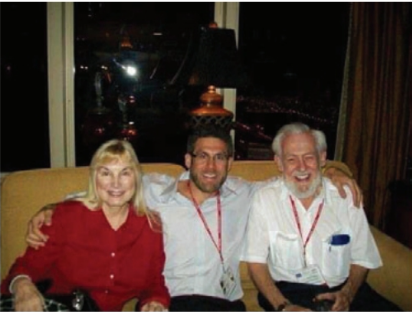
Jason J. Teven (EdD, West Virginia University) is professor of communication at California State University—Fullerton, where he teaches courses in persuasion, instructional communication, family communication, research methods, and communication theory. Professor Teven has published widely in the academic journals of Communication Education, Communication Monographs, Communication Quarterly, and Communication Research Reports. The Communication Institute for Online Scholarship lists him as a leading scholar in communication education, cognition and communication, personality and psychology, and interpersonal and nonverbal communication. He is one of the authors of Real Communication (now in its sixth edition) with Macmillan. Dr. Teven is the founder and director of the undergraduate lab director program for the basic course in human communication, now in its 17th year.
Virginia P. Richmond McCroskey (University of Nebraska, Lincoln) is one of the most prolific writers and teachers in the field of human communication and speech. Her first publication was on CA. She has many publications in speech, nonverbal, interpersonal, organizational, and instructional communication. She is recognized as a distinguished professor WVU and UAB. She received many teaching and research awards throughout her career.
James C. McCroskey (Pennsylvania State University) was a distinguished professor, leader, mentor, and empirical and qualitative researcher in field of communication studies for over 60 years. His most famous work was this very book (first published 1968). It still carries the prestige of being a primary book on rhetorical communication and early writings on speech. Dr. McCroskey is also known as one of the most published scholars in speech and human communication. He was department chair at West Virginia University and distinguished professor at University of Alabama, Birmingham. He is one of the most published persons in the field of CA, speech anxiety, and other distinguished areas in human communication. He received many teaching and research awards for his vast knowledge. Students said that even if they did not agree with his thinking, he would always listen and talk with them about their own scholarly interests.
The new tenth edition of An Introduction to Rhetorical Communication focuses exclusively on the rhetorical communication typical of Western cultures, with primary emphasis on the United States. Western rhetorical communication serves as the foundation on which the new field of communication has been built. Drawing on classical rhetorical theory and contemporary social science research, the textbook continues its purpose to provide a coherent introduction to rhetorical communication while addressing the challenges of an increasingly global, multicultural, and technologically connected world.
The book is organized into four sections: an introduction to rhetorical history, concepts, and communication apprehension; basic theory concerning audiences, speakers, messages, and context; practical guidance for developing and delivering messages; and a concluding discussion of ethics in rhetorical communication. New to this edition is the inclusion of artificial intelligence, with discussions of its role in brainstorming and outlining, as well as careful consideration of the benefits, challenges, and ethical implications of using AI in the preparation of messages and speeches. Together, these sections are designed to help students develop effective, ethical, and responsible rhetorical skills in today’s complex communication environment.
Part I: Getting Started
Chapter 1: A Rhetorical Tradition
Chapter 2: The Nature of Rhetorical Communication
Chapter 3: Stage Fright: A Normal Problem
Part II: Basic Theory
Chapter 4: Nature of the Receiver: Attitude Formation and Change
Chapter 5: Ethos: A Dominant Factor in Rhetorical Communication
Chapter 6: Nature of Persuasive Argument
Chapter 7: Nonverbal Communication
Chapter 8: Diversity and Culture
Part III: Message Preparation and Presentation
Chapter 9: Message Preparation: Preliminary Considerations
Chapter 10: Informative Messages
Chapter 11: Message Preparation: Invention
Chapter 12: Message Preparation: Disposition
Chapter 13: Message Preparation: Style
Chapter 14: Introducing and Concluding Messages in Rhetorical Communication
Chapter 15: Message Presentation: Oral Delivery
Part IV: Rhetorical Communication and Society
Chapter 16: Ethics and Rhetorical Communication
Appendix: Sample Speeches
Declaration of War Address, Franklin Delano Roosevely
Inaugural Address, John F. Kennedy
Ronald Reagan, “Remarks at a Ceremony Commemorating the 40th Anniversary of the Normandy Invasion, D-Day,” Pointe du Hoc, France (6 June 1984)
President Obama’s Remarks about the School Shoot at Sandy Hook Elementary School in Newtown, Conn., on Dec. 14, 2012
Freedom of Speech & Political Correctness, Jordan B. Peterson
The Proposed Basketball Rule Changes, Anonymous
Billy Crystal’s eulogy for Muhammad Ali
Kara Lawson’s Handle Hard Better Speech (2022)
Jason J. Teven (EdD, West Virginia University) is professor of communication at California State University—Fullerton, where he teaches courses in persuasion, instructional communication, family communication, research methods, and communication theory. Professor Teven has published widely in the academic journals of Communication Education, Communication Monographs, Communication Quarterly, and Communication Research Reports. The Communication Institute for Online Scholarship lists him as a leading scholar in communication education, cognition and communication, personality and psychology, and interpersonal and nonverbal communication. He is one of the authors of Real Communication (now in its sixth edition) with Macmillan. Dr. Teven is the founder and director of the undergraduate lab director program for the basic course in human communication, now in its 17th year.
Virginia P. Richmond McCroskey (University of Nebraska, Lincoln) is one of the most prolific writers and teachers in the field of human communication and speech. Her first publication was on CA. She has many publications in speech, nonverbal, interpersonal, organizational, and instructional communication. She is recognized as a distinguished professor WVU and UAB. She received many teaching and research awards throughout her career.
James C. McCroskey (Pennsylvania State University) was a distinguished professor, leader, mentor, and empirical and qualitative researcher in field of communication studies for over 60 years. His most famous work was this very book (first published 1968). It still carries the prestige of being a primary book on rhetorical communication and early writings on speech. Dr. McCroskey is also known as one of the most published scholars in speech and human communication. He was department chair at West Virginia University and distinguished professor at University of Alabama, Birmingham. He is one of the most published persons in the field of CA, speech anxiety, and other distinguished areas in human communication. He received many teaching and research awards for his vast knowledge. Students said that even if they did not agree with his thinking, he would always listen and talk with them about their own scholarly interests.