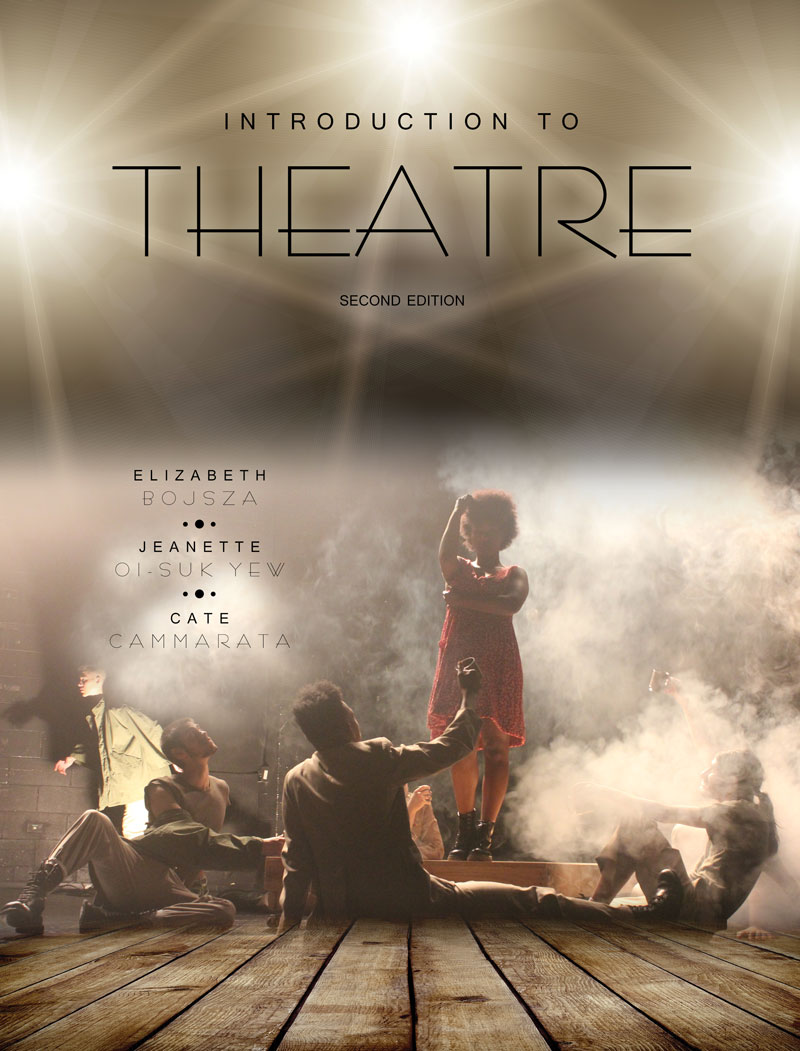
Introduction to Theatre
Edition: 2
Copyright: 2017
Pages: 152
Edition: 2
Copyright: 2017
Pages: 152
Choose Your Format
$85.04 USD
Ebook
$42.53 USD
In the following chapters of this book, you will study and develop your own aesthetic experiences with the specific art form of theatre. To that end, we will be introducing you to a diverse set of examples of theatre—ones that differ in the nature of their performances and also in the way theatre artists created them.
This book is designed to meet you where you are, whether you are someone who has had extensive theatre experience as an audience member or a participant, or if you have never seen a play before. Because we don’t assume any prior experience or want to discount it, we have made every effort to keep this book as jargon-free as possible without watering down any concepts. We also have made every effort to activate and validate your critical thinking as a capable investigator of this art form.
This textbook and the course of study it accompanies do not endorse any type of theatre as superior over any others. Admittedly, our case study examples are subjective; we chose them because of our prior familiarity with them, but every attempt has been made to present the diversity of theatre without ranking or value judgment. We start with examples of narrative theatre with strong conflicts and move to examples unified by theme or other more abstract forms as you gain proficiency in the objectives of the course—not because narrative theatre is “easier” than other forms, but because most people will find the storytelling accessible and therefore can more readily move beyond comprehension of content into analysis of form. Complexity should not be conflated with difficulty. Instead of thinking of the case studies in this book as analogous to “reading levels,” we prefer to frame them as a “buffet” of sorts. We want you to experience different tastes and to broaden your palate—to experience new things and then to decide for yourself what types of theatre you prefer.
This is more of a workbook than a conventional reference textbook. We have included case studies, interviews, and skill building pages alongside worksheets and extra white space for you to populate with your own notes and reflections. Engage with this book as you complete your assigned reading for class, answering the questions posed to you as you go along. If there is an unfamiliar word to you, look it up and jot down the definition in the margin. If you are having trouble understanding a concept, “google” it and see if it helps you with your understanding, and keep a record of what you have learned. Move at your own pace and use the text in tandem with multimedia examples and any other supplemental reading and viewing assignments. Please make sure to bring your book with you to every class, as you will be able to take notes right in the book itself for class lectures and activities.
Introduction
CHAPTER ONE Theatre and the Aesthetic Experience
What Is Art?
What Is Theatre?
Theatre vs. Film and the Movie in Our Minds
The Empty Stage
The Relationship between the Audience and the Play
“The Fourth Wall”
Suggested Activities
CHAPTER TWO Theatre and Storytelling
Narrative
Conflict
The Dollar Bill Exercise
Plot
CASE STUDY: Doubt by John Patrick Shanley
CRITICAL Questions
SKILLS FOCUS: Creating Effective Interview Questions
Suggested Activities
RECOMMENDED READING
CHAPTER THREE The Theatrical Environment
Theatrical Environment
The Relationship of an Audience to the Action
Theatrical Environment as World
Stage Directions
Representation and Imagination 37
Suggested Activity
INTERVIEW: Joe Silovsky, Set Designer & Performance Artist
SKILLS FOCUS: Research and Annotated Bibliographies
Suggested Activity
RECOMMENDED READING and viewing
CHAPTER FOUR Creating Theatre
Creative Collaboration
Concept
Production Models
Ensemble Theatre
Non-Narrative and/or Non-Text Based Work
Work Requiring Special Training
Devised Theatre
Commercial vs. Non-Profit Theatre
Broadway vs. Off-Broadway (and Off-Off Broadway)
Theatre Outside of New York City
INTERVIEW: Broadway Producer Cheryl Wiesenfeld
INTERVIEW: Costume Designer Carrie Robbins
CASE STUDY: The Laramie Project by Moisés Kaufman and
The Members of Tectonic Theatre Project
critical questions
SKILLS FOCUS: Being a Great Audience Member
Suggested Activities
RECOMMENDED READING and viewing
CHAPTER FIVE The Performer
Training
OUTSIDE IN: Delsarte’s System
INSIDE OUT: Stanislavski’s System
Preparation and Rehearsal
Improvisation
Improvisation and Community-Based Work
INTERVIEW: Hai-Ting Chinn, Performer
SUGGESTED ACTIVITY
RECOMMENDED READING
Forum Theatre Experience Rehearsal Report
CHAPTER SIX Theatre and Society
Mainstream and the Avant-Garde
Musical Theatre
Political Theatre
Translation and Adaptation
INTERVIEW: Composer/Lyricist/Playwright Adam Overett
INTERVIEW: Dramaturg Ken Cerniglia
SUGGESTED ACTIVITY
RECOMMENDED READING AND VIEWING
CHAPTER SEVEN Defining Your Personal Aesthetic
Writing What You Believe about Theatre
SKILLS FOCUS: Manifestos and Personal Statements
INTERVIEW: Artistic Director of Rhymes Over Beats, Patrick Blake
SUGGESTED ACTIVITIES
RECOMMENDED READING AND VIEWING
APPENDIX Worksheets for Group Project