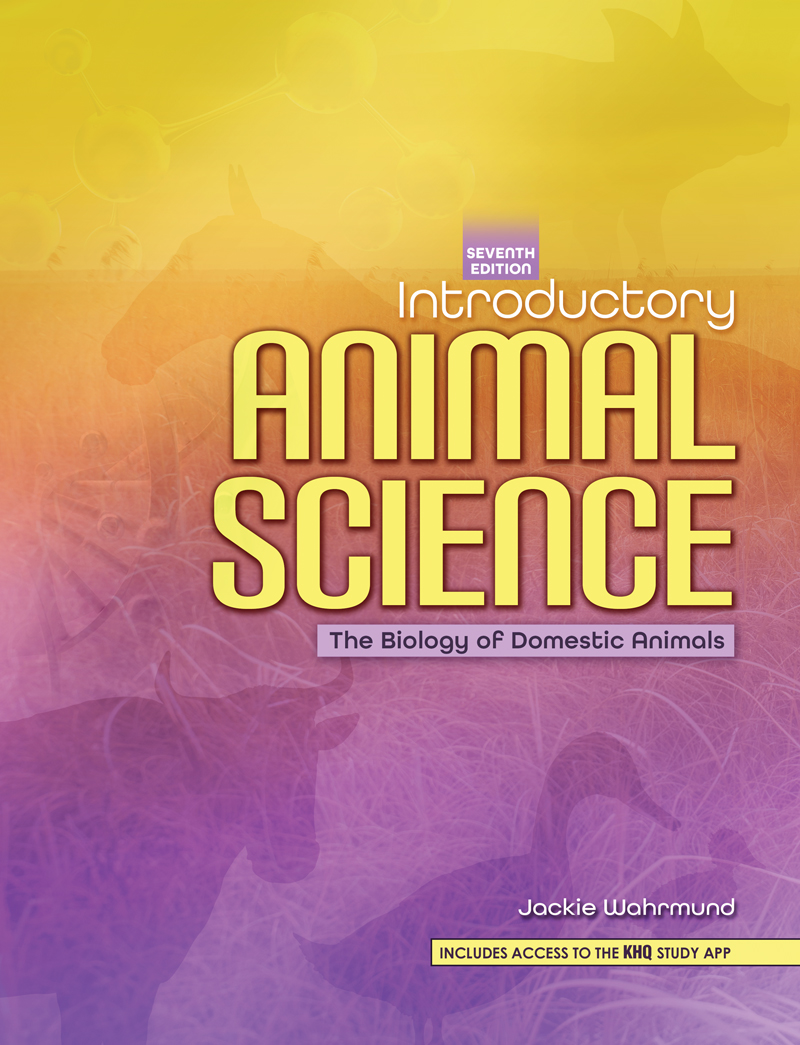
Introductory Animal Science: The Biology of Domestic Animals

Choose Your Format

Introductory Animal Science: The Biology of Domestic Animals delivers the foundation for all future Animal Science courses. Topics including genetics, reproduction, and nutrition provide basic understanding of the major Animal Science disciplines. Additional topics of anatomy, animal health, and animal/environment interactions outline the essentials of animal care. Laboratory exercises, homework assignments, and chapter review questions supplement the material to enhance student success in ASC 101: Domestic Animal Biology. 


1. INTRODUCTION

2. TAXONOMIC CLASSIFICATION OF ANIMALS

3. ANATOMY AND PHYSIOLOGY
External Anatomy
Skeletal Anatomy

4. NUTRITION
The Nutrients
Animal Feeds
Digestive Anatomy

5. REPRODUCTION
Reproduction Basics
Male Reproductive Anatomy
Mammalian Female Reproductive Anatomy
The Physiology of Reproduction
The Hen
Reproductive Technologies

6. LACTATION
Anatomy of the Mammary Gland
Milk Composition
Milk Production

7. GENETICS AND ANIMAL BREEDING
Genetic Material
Heredity
Animal Breeding

8. ANIMAL HEALTH
Maintenance of Body Tempurature

LAB EXERCISES

Jacqueline Louise Wahrmund

Jacqueline Louise Wahrmund is a Lecturer in the Department of Animal and Food Sciences at the University of Kentucky, where she has taught in the Animal Science and Equine Science and Management programs since 2016. She earned bachelor's degrees in Animal Science and Agricultural Economics from the University of Kentucky, a Master of Science in Animal Sciences from the University of Florida, and a Ph.D. in Animal Nutrition from Oklahoma State University. Her teaching has been recognized with the 2024 University of Kentucky TEK Faculty Fellow designation, participation in the 2020 Teaching Innovations Institute, and the 2020 Teacher Who Made a Difference Award from the University of Kentucky College of Education.
 

Introductory Animal Science: The Biology of Domestic Animals delivers the foundation for all future Animal Science courses. Topics including genetics, reproduction, and nutrition provide basic understanding of the major Animal Science disciplines. Additional topics of anatomy, animal health, and animal/environment interactions outline the essentials of animal care. Laboratory exercises, homework assignments, and chapter review questions supplement the material to enhance student success in ASC 101: Domestic Animal Biology. 


1. INTRODUCTION

2. TAXONOMIC CLASSIFICATION OF ANIMALS

3. ANATOMY AND PHYSIOLOGY
External Anatomy
Skeletal Anatomy

4. NUTRITION
The Nutrients
Animal Feeds
Digestive Anatomy

5. REPRODUCTION
Reproduction Basics
Male Reproductive Anatomy
Mammalian Female Reproductive Anatomy
The Physiology of Reproduction
The Hen
Reproductive Technologies

6. LACTATION
Anatomy of the Mammary Gland
Milk Composition
Milk Production

7. GENETICS AND ANIMAL BREEDING
Genetic Material
Heredity
Animal Breeding

8. ANIMAL HEALTH
Maintenance of Body Tempurature

LAB EXERCISES

Jacqueline Louise Wahrmund

Jacqueline Louise Wahrmund is a Lecturer in the Department of Animal and Food Sciences at the University of Kentucky, where she has taught in the Animal Science and Equine Science and Management programs since 2016. She earned bachelor's degrees in Animal Science and Agricultural Economics from the University of Kentucky, a Master of Science in Animal Sciences from the University of Florida, and a Ph.D. in Animal Nutrition from Oklahoma State University. Her teaching has been recognized with the 2024 University of Kentucky TEK Faculty Fellow designation, participation in the 2020 Teaching Innovations Institute, and the 2020 Teacher Who Made a Difference Award from the University of Kentucky College of Education.