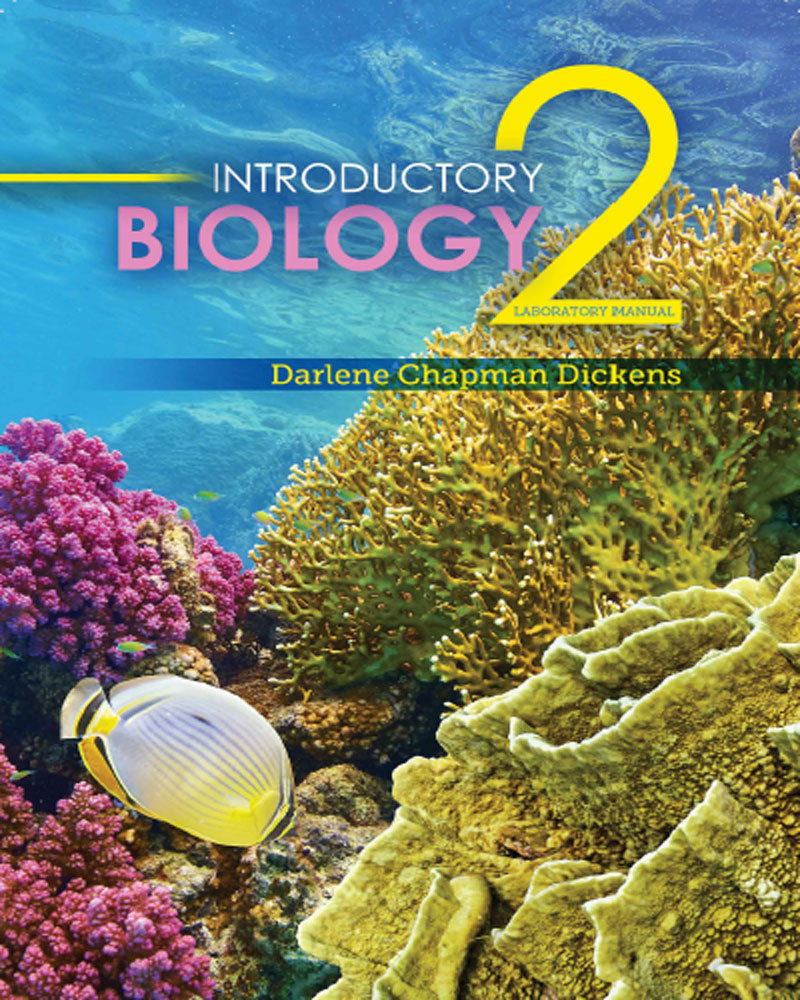
Introductory Biology II Online Laboratory Manual

Author(s): Darlene Dickens

Edition: 1

Copyright: 2019

Choose Your Format

Website

$76.41 USD

ISBN 9781524987923

Details KHPContent 180 days

Introductory Biology II Online Laboratory Manual introduces students to the study of life through a series of interactive laboratory investigations that reinforce key biological concepts. Covering topics such as ecology, evolution, natural selection, classification, microbiology, protists, fungi, plants, and animals, the manual encourages students to apply the scientific method while developing observation, analytical, and critical thinking skills. Each laboratory exercise is designed to complement foundational biology coursework by connecting scientific theory with practical exploration.

Throughout the manual, students investigate the diversity of life across all major domains and kingdoms while gaining experience with laboratory techniques, specimen identification, and anatomical studies through virtual dissections and hands-on activities. From examining ecological case studies and evolutionary processes to exploring microbial life, plant reproduction, and animal anatomy, the manual provides a comprehensive introduction to organismal biology. By the end of the course, students will have developed a deeper understanding of biological diversity, evolutionary relationships, and the structure and function of living organisms.

Lab 1: The Reindeer of St. Matthew Island

Lab 2: As a Consumer Is Your Health at Risk from Pesticides?

Lab 3: Natural Selection

Lab 4: Evolution - Lactose Intolerance and Human Evolution

Lab 5: Why Classify?

Lab 6: Classification of Organisms

Lab 7: Bacteria - Aseptic Techniques - Safety, Material Disposal, Media

Lab 8: Bacteria 

Lab 9: Domain Archaea

Lab 10: Kingdom Protista - A Trip to the Pond

Lab 11: Kingdom Protista

Lab 12: Mushroom

Lab 13: Understanding Symmetry

Lab 14: Earthworm Dissection

Lab 15: Sea Star Dissection

Lab 16: Kingdom Animalia – Crayfish Dissection

Lab 17: Phylum Cephalopod – Squid

Lab 18: Frog Dissection

Lab 19: Reproduction in flowering plants

Lab 20: Study of Plants
 

Darlene Dickens