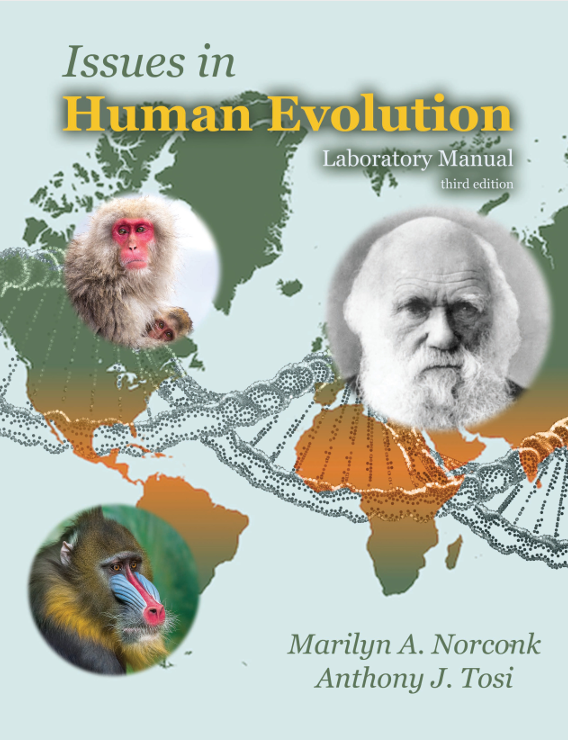
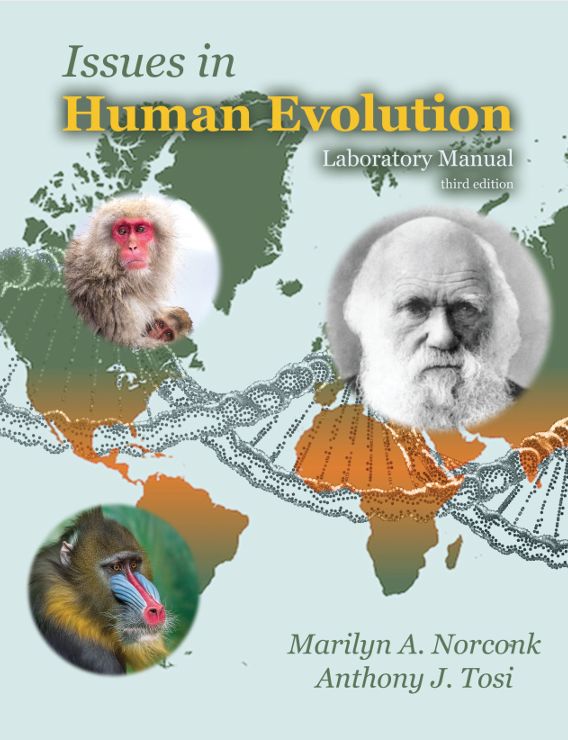
Issues in Human Evolution Laboratory Manual
Edition: 3
Copyright: 2020
Pages: 184
Edition: 3
Copyright: 2020
Pages: 184
Choose Your Format
Choose Your Platform | Help Me Choose


$54.00 USD
Ebook
$43.00 USD
Issues in Human Evolution Laboratory Manual provides students with a hands-on exploration of the biological and evolutionary processes that have shaped humans and our closest primate relatives. Beginning with the foundations of evolutionary theory, genetics, inheritance, and human variation, the manual introduces essential concepts that support a deeper understanding of human biology and evolution. Students also develop practical skills through activities focused on comparative anatomy, scientific observation, and the interpretation of evolutionary evidence.
As the course progresses, the manual examines living primates, their ecology, conservation, and social behavior before tracing the evolutionary history of the human lineage. Laboratory exercises explore the origins of primates, the evolution of bipedalism, the diversity of early hominins, the emergence of the genus Homo, and the evolution of Homo sapiens alongside other contemporary human species. Through inquiry-based investigations and analysis of fossil, anatomical, and genetic evidence, students gain a comprehensive understanding of human evolution and the scientific methods used to study our evolutionary past.
1 Introduction to Evolutionary Thinking
2 DNA Structure and Function
3 Inheritance
4 Human Variation
5 Introduction to Human Anatomy
6 Applications of Anatomy
7 Introduction to Living Primates
8 Primate Ecology and Conservation
9 Primate Social Behavior
10 Understanding Modern Evolutionary Concepts
11 Primate Origins
12 Evolution of Human Bipedality and The Earliest Hominids
13 Late Australopithecines, Early Homo and Homo erectus
14 Homo sapiens and their Contemporaries

Marilyn Norconk, PhD, is Professor Emeritus of Anthropology at Kent State University, where she spent more than two decades teaching and conducting research in biological anthropology and primatology. Her research focuses on the feeding behavior and ecology of saki monkeys, particularly white-faced and bearded sakis, as well as the evolution of sexual dichromatism in white-faced sakis. Her work examines how these seed-eating primates influence the reproduction of the plants they depend on and combines long-term field studies with captive and field-based behavioral experiments to better understand primate ecology and evolution.
Dr. Norconk earned her PhD in Physical and Biological Anthropology from the University of California, Los Angeles (UCLA), and her Master of Arts in Physical and Biological Anthropology from San Diego State University. Her expertise in primate behavior, ecology, and evolutionary biology has contributed significantly to the study of human evolution and the diversity of our closest living relatives.

Anthony Tosi, PhD, is an Associate Professor of Anthropology at Kent State University whose teaching and research focus on human evolution, primate biology, genetics, and biological anthropology. His research explores primate evolution, phylogenetics, biogeography, speciation, behavioral genetics, and the evolutionary relationships among Old World monkeys. In addition to his academic work, Dr. Tosi has extensive experience in molecular forensics, having served as a Level III Criminalist with the New York City Office of Chief Medical Examiner, where he specialized in low-template DNA analysis and forensic genetics.
Prior to joining Kent State University, Dr. Tosi conducted postdoctoral research in primate genetics at New York University's Center for the Study of Human Origins and at Kyoto University's Primate Research Institute. He earned his PhD in Biological Anthropology from Columbia University. His interdisciplinary expertise in evolutionary biology, genetics, and forensic science informs his teaching and scholarship, helping students develop a scientific understanding of human origins and evolutionary processes.
Issues in Human Evolution Laboratory Manual provides students with a hands-on exploration of the biological and evolutionary processes that have shaped humans and our closest primate relatives. Beginning with the foundations of evolutionary theory, genetics, inheritance, and human variation, the manual introduces essential concepts that support a deeper understanding of human biology and evolution. Students also develop practical skills through activities focused on comparative anatomy, scientific observation, and the interpretation of evolutionary evidence.
As the course progresses, the manual examines living primates, their ecology, conservation, and social behavior before tracing the evolutionary history of the human lineage. Laboratory exercises explore the origins of primates, the evolution of bipedalism, the diversity of early hominins, the emergence of the genus Homo, and the evolution of Homo sapiens alongside other contemporary human species. Through inquiry-based investigations and analysis of fossil, anatomical, and genetic evidence, students gain a comprehensive understanding of human evolution and the scientific methods used to study our evolutionary past.
1 Introduction to Evolutionary Thinking
2 DNA Structure and Function
3 Inheritance
4 Human Variation
5 Introduction to Human Anatomy
6 Applications of Anatomy
7 Introduction to Living Primates
8 Primate Ecology and Conservation
9 Primate Social Behavior
10 Understanding Modern Evolutionary Concepts
11 Primate Origins
12 Evolution of Human Bipedality and The Earliest Hominids
13 Late Australopithecines, Early Homo and Homo erectus
14 Homo sapiens and their Contemporaries
Marilyn Norconk, PhD, is Professor Emeritus of Anthropology at Kent State University, where she spent more than two decades teaching and conducting research in biological anthropology and primatology. Her research focuses on the feeding behavior and ecology of saki monkeys, particularly white-faced and bearded sakis, as well as the evolution of sexual dichromatism in white-faced sakis. Her work examines how these seed-eating primates influence the reproduction of the plants they depend on and combines long-term field studies with captive and field-based behavioral experiments to better understand primate ecology and evolution.
Dr. Norconk earned her PhD in Physical and Biological Anthropology from the University of California, Los Angeles (UCLA), and her Master of Arts in Physical and Biological Anthropology from San Diego State University. Her expertise in primate behavior, ecology, and evolutionary biology has contributed significantly to the study of human evolution and the diversity of our closest living relatives.
Anthony Tosi, PhD, is an Associate Professor of Anthropology at Kent State University whose teaching and research focus on human evolution, primate biology, genetics, and biological anthropology. His research explores primate evolution, phylogenetics, biogeography, speciation, behavioral genetics, and the evolutionary relationships among Old World monkeys. In addition to his academic work, Dr. Tosi has extensive experience in molecular forensics, having served as a Level III Criminalist with the New York City Office of Chief Medical Examiner, where he specialized in low-template DNA analysis and forensic genetics.
Prior to joining Kent State University, Dr. Tosi conducted postdoctoral research in primate genetics at New York University's Center for the Study of Human Origins and at Kyoto University's Primate Research Institute. He earned his PhD in Biological Anthropology from Columbia University. His interdisciplinary expertise in evolutionary biology, genetics, and forensic science informs his teaching and scholarship, helping students develop a scientific understanding of human origins and evolutionary processes.