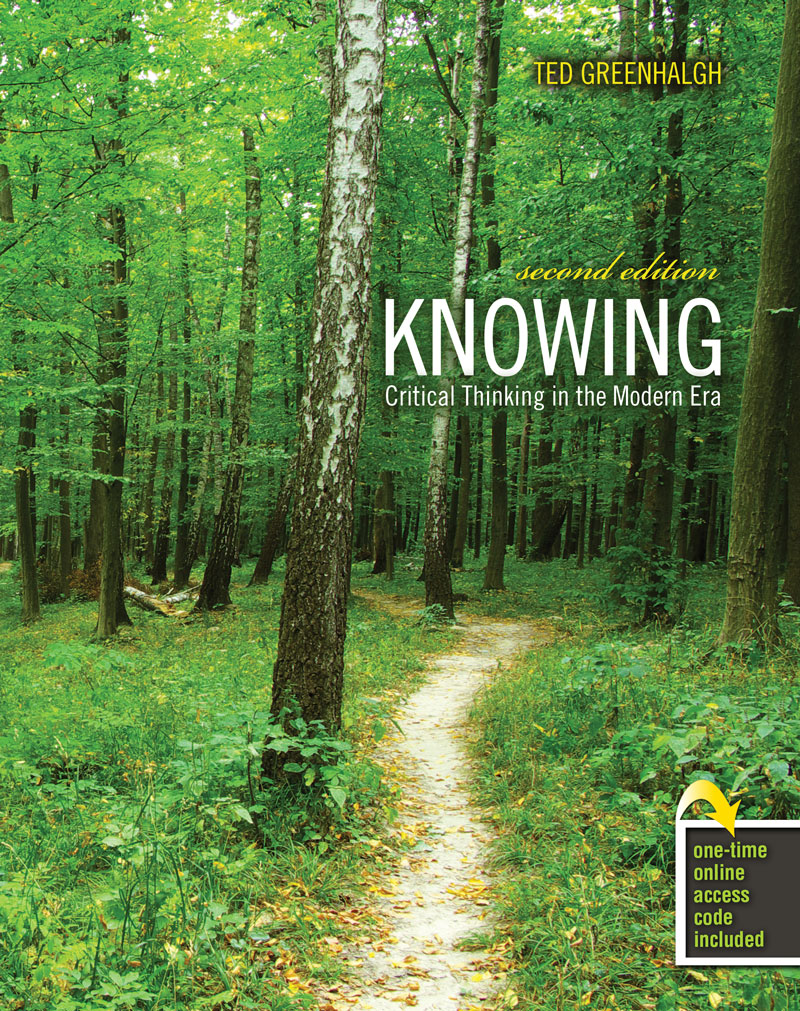
Knowing: Critical Thinking in the Modern Era

Author(s): Ted Greenhalgh

Edition: 2

Copyright: 2018

Choose Your Format

Ebook Package

$64.22 USD

ISBN 9781524969325

Details eBook w/KHPContent Access 180 days

Feeling lost in the Internet woods? Unsure what to believe in the media with all the "fake news" everywhere? Fear not, this book explores how to navigate the complex information landscape by using the methods of scientists and other experts. Utilizing the best practices created over the past 2500 years readers can truly know the world around them and use that knowledge to become an agent of change.  

Features include:

  • Critical Thinking in a Nutshell: A set of easy to use rules to critically evaluate personal beliefs and the ideas of others.
  • Discussions on the limits that human physiology places on understanding complex issues.
  • Simple rules anyone can use to think like a scientist.
  • Learning what mental approaches promote learning and understanding.
  • Steps anyone can take for self improvement and how to avoid traps that can prevent it.
  • Additional online materials designed to increase understanding of the core ideas from the book.

Introduction

Chapter 1 The Allegory of the Cave

1.1 The Prisoners and the Limitations of Our Physiology

1.2 The Puppet Masters and the Limitations They Create

1.3 The Shadows

1.4 Leaving the Cave into the Light of Reason

Chapter 2 Ontology and Epistemology—Knowing beyond the Shadows

2.1 Reflexive and Critical Thinking

2.2 Ontology

2.3 Epistemology

Chapter 3 Living with the Puppet Masters

3.1 Born Scientists

3.2 A New Heuristic

3.3 Benevolent Puppeteers

3.4 The Merchants of Doubt

3.5 Growing Courage and Losing Your Ego

3.6 Using Your New Heuristic

Chapter 4 Outside the Cave

4.1 Fixed and Growth Mindsets

4.2 Mindsets and Learning

4.3 Mindsets and Failure

4.4 Locus of Control

4.5 Ego and Courage Revisited

4.6 Everyone Knows How to Learn

Chapter 5 Knowledge and Expertise

5.1 How Much Practice?

5.2 Understanding Expertise

5.3 Knowing without Becoming an Expert

5.4 Competence and Avoiding the Shadows

5.5 Learning Everything

Chapter 6 Going Back Inside the Cave

6.1 Revolutions Require Revolutionaries

6.2 Teaching without Judging

6.3 Do Some Good

Chapter 7 Self-Actualization

7.1 Maslow’s Hierarchy of Needs

7.2 Maslow’s Hierarchy, Mindsets, and the Locus of Control

7.3 Being Self-actualized

7.4 Be the Change you Seek in the World

Chapter 8 Lifelong Learning and Teaching

8.1 Staying Self-Actualized

8.2 Risks and Rewards of Actualization

8.3 Lifelong Learning

8.4 Always Keep Learning

Index

Ted Greenhalgh

Ted Greenhalgh, a professor at the University of Nevada, Las Vegas, studies the effects of new and evolving environmental risks and how best to communicate these risks with the public. Past research has covered such diverse subjects as Genetically Modified Organisms (GMOs), nanotechnology, synthetic biology, and even the U.S. Department of Homeland Security. His current research deals with the mitigation of climate change and how humanity can adapt to these changes if mitigation does not succeed. This research looks not only to inform policy decisions at the highest levels, but also educate the public about these risks. 

A product of the University of Nevada, Las Vegas system (B.S. in Biology, M.S. in Environmental Science, Ph.D. in Environmental Science), Dr. Greenhalgh also spends time addressing local environmental policy issues like water and energy sustainability as well as their impacts on our desert environment. Having lived in the Las Vegas Valley for more than 25 years, he watched with awe and concern the extraordinary growth phases that occur there. Using the latest technologies and research on urban growth Dr. Greenhalgh hopes to educate the public and policy makers to make wise decisions to maintain our fragile desert ecosystems.

He currently teaches courses in climate change, environmental science, environmental policy, and the first and second year seminar course for new students. All these activities focus on using science to identify problems and solutions to clearly understand the issues involved and communicate them with the people they affect. Woven into this strategy lay the implicit understanding that not everyone agrees on policy or understands science, so as communicators we must find a way to speak clearly to all those affected by the policies created. 

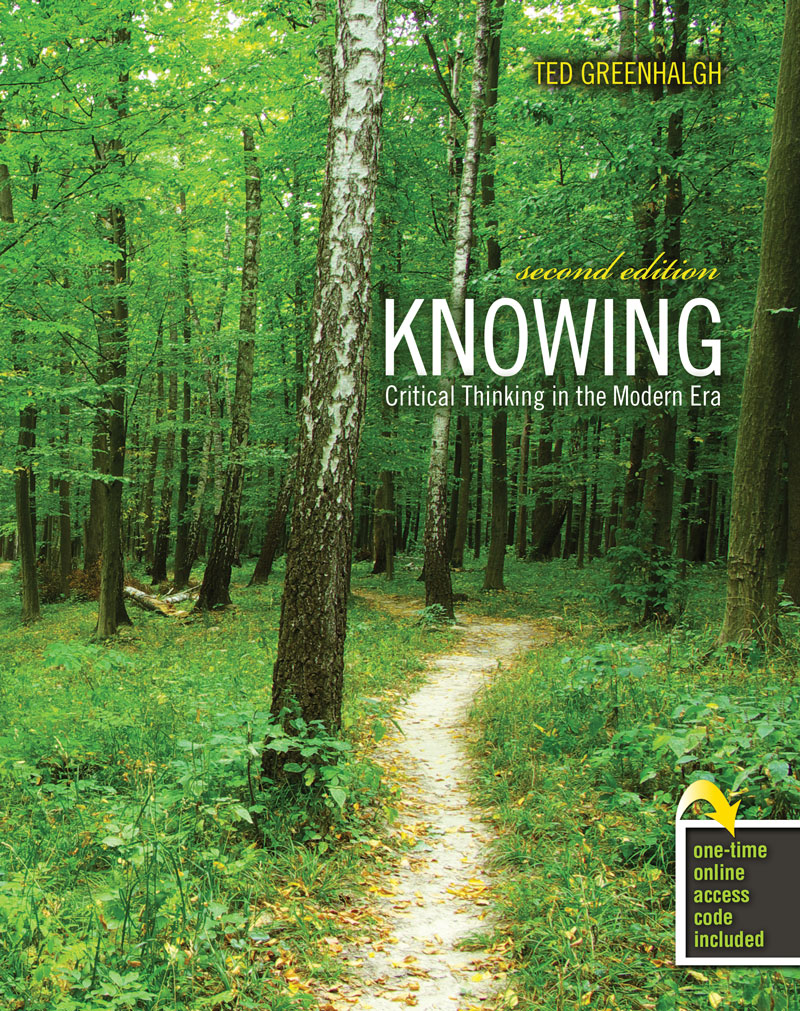
Feeling lost in the Internet woods? Unsure what to believe in the media with all the "fake news" everywhere? Fear not, this book explores how to navigate the complex information landscape by using the methods of scientists and other experts. Utilizing the best practices created over the past 2500 years readers can truly know the world around them and use that knowledge to become an agent of change.  

Features include:

  • Critical Thinking in a Nutshell: A set of easy to use rules to critically evaluate personal beliefs and the ideas of others.
  • Discussions on the limits that human physiology places on understanding complex issues.
  • Simple rules anyone can use to think like a scientist.
  • Learning what mental approaches promote learning and understanding.
  • Steps anyone can take for self improvement and how to avoid traps that can prevent it.
  • Additional online materials designed to increase understanding of the core ideas from the book.

Introduction

Chapter 1 The Allegory of the Cave

1.1 The Prisoners and the Limitations of Our Physiology

1.2 The Puppet Masters and the Limitations They Create

1.3 The Shadows

1.4 Leaving the Cave into the Light of Reason

Chapter 2 Ontology and Epistemology—Knowing beyond the Shadows

2.1 Reflexive and Critical Thinking

2.2 Ontology

2.3 Epistemology

Chapter 3 Living with the Puppet Masters

3.1 Born Scientists

3.2 A New Heuristic

3.3 Benevolent Puppeteers

3.4 The Merchants of Doubt

3.5 Growing Courage and Losing Your Ego

3.6 Using Your New Heuristic

Chapter 4 Outside the Cave

4.1 Fixed and Growth Mindsets

4.2 Mindsets and Learning

4.3 Mindsets and Failure

4.4 Locus of Control

4.5 Ego and Courage Revisited

4.6 Everyone Knows How to Learn

Chapter 5 Knowledge and Expertise

5.1 How Much Practice?

5.2 Understanding Expertise

5.3 Knowing without Becoming an Expert

5.4 Competence and Avoiding the Shadows

5.5 Learning Everything

Chapter 6 Going Back Inside the Cave

6.1 Revolutions Require Revolutionaries

6.2 Teaching without Judging

6.3 Do Some Good

Chapter 7 Self-Actualization

7.1 Maslow’s Hierarchy of Needs

7.2 Maslow’s Hierarchy, Mindsets, and the Locus of Control

7.3 Being Self-actualized

7.4 Be the Change you Seek in the World

Chapter 8 Lifelong Learning and Teaching

8.1 Staying Self-Actualized

8.2 Risks and Rewards of Actualization

8.3 Lifelong Learning

8.4 Always Keep Learning

Index

Ted Greenhalgh

Ted Greenhalgh, a professor at the University of Nevada, Las Vegas, studies the effects of new and evolving environmental risks and how best to communicate these risks with the public. Past research has covered such diverse subjects as Genetically Modified Organisms (GMOs), nanotechnology, synthetic biology, and even the U.S. Department of Homeland Security. His current research deals with the mitigation of climate change and how humanity can adapt to these changes if mitigation does not succeed. This research looks not only to inform policy decisions at the highest levels, but also educate the public about these risks. 

A product of the University of Nevada, Las Vegas system (B.S. in Biology, M.S. in Environmental Science, Ph.D. in Environmental Science), Dr. Greenhalgh also spends time addressing local environmental policy issues like water and energy sustainability as well as their impacts on our desert environment. Having lived in the Las Vegas Valley for more than 25 years, he watched with awe and concern the extraordinary growth phases that occur there. Using the latest technologies and research on urban growth Dr. Greenhalgh hopes to educate the public and policy makers to make wise decisions to maintain our fragile desert ecosystems.

He currently teaches courses in climate change, environmental science, environmental policy, and the first and second year seminar course for new students. All these activities focus on using science to identify problems and solutions to clearly understand the issues involved and communicate them with the people they affect. Woven into this strategy lay the implicit understanding that not everyone agrees on policy or understands science, so as communicators we must find a way to speak clearly to all those affected by the policies created.