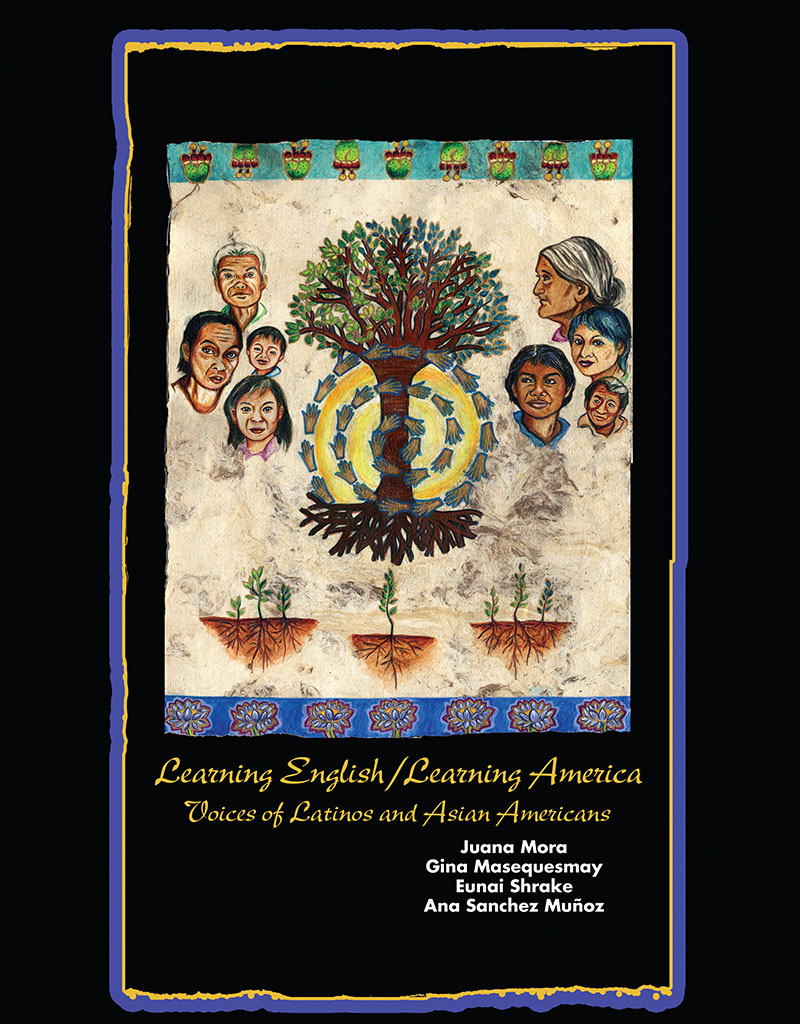
Learning English/Learning America: Voices of Latinos and Asian American

Edition: 1

Copyright: 2008

Pages: 118

Choose Your Format

Ebook

$60.78 USD

ISBN 9781465262028

Details Electronic Delivery EBOOK 180 days

Learning English/Learning America: Voices of Latinos and Asian Americans explores the immigrant experience through personal narratives that examine migration, language acquisition, cultural adaptation, and identity formation. The collection highlights the challenges and opportunities faced by Latino and Asian American communities as individuals navigate new environments, learn English, and build connections between their cultural heritage and American society.


Foreword
Acknowledgments
Introduction: Learning from Our Struggles

SECTION 1. COMING TO AMERICA: THE IMMIGRANT JOURNEY
   Introduction to the Section—by Eunai Shrake
Bibliography 
Story #1 A Lottery to Opportunity—by Lingga Oka
Story #2 From Mexico to California: A Teenager’s Journey— by Víctor Zúñiga 
Story #3 Worlds Apart—by Thuy Le
Story #4 From the “Rancho” to the Metropolis—by Lucia Castillo  
Story #5 From the Korean Beverly Hills to the LA Ghetto— by Hye-Young Kwon
Story #6 A Story of Intergenerational Migration—by Yesenia Sánchez 
Story #7 Escaping Khmer Rouge—by James Van
SECTION 2. LEARNING ENGLISH
   Introduction to the Section—by Ana Sánchez Muñoz
Bibliography
Story #8 Mute and Invisible—by    Mayra    Nunez 
Story #9 How Korean Helped Me Learn English— by Kylie Hwang  
Story #10 My Miseducation in the ESL Ghetto—by Seaksan Pineda
Story #11 A U.S. Born ELL Story—by Amy Chu
Story #12 Overcoming My Insecurities about Learning English— by Alma Campos
Story #13 Shying Away from Language—by Danthuy Vuong 
Story #14 Immersing    Myself    in    English—by    Carlos    Galdámez 
SECTION 3. LEARNING AMERICA: ACCULTURATION AND IDENTITY CHANGE 
   Introduction to the Section—by Gina Masequesmay and Juana Mora
Bibliography
Story #15 Growing Up Poor and Asian—by Angela Kim
Story #16 My De-Mexification—by Sandra R. Rivera Maya 
Story #17 Finding My Roots, Finding My Self— by Zenia Phomphakdy 
Story #18 Becoming American, Remaining Salvadorian—by Carlo Montiel 
Story #19 Adventures in (Pan)Ethnicity— by Jean-Paul deGuzman

About Our Co-Editors
Resource Bibliography
 

Juana Mora

Juana Mora, PhD is a Professor in the Department of Chicana/o Studies at California State University, Northridge (CSUN). Born in Jalisco, Mexico, she immigrated to the United States as a child and became the first member of her family to attend college. She earned a BA in Linguistics from the University of California, Santa Cruz, and a PhD in Education from Stanford University through a Ford Foundation Fellowship.

Dr. Mora’s research focuses on Latino communities, culturally responsive education, health, substance abuse prevention, and community-based research partnerships. Her work emphasizes improving Latino community health through collaborative approaches that center the experiences and needs of community members. 

Eunai Shrake

Eunai Shrake, PhD is Professor Emeritus of Asian American Studies at California State University, Northridge (CSUN). She earned a BA and MA from Presbyterian College, a Master of Theology (ThM) from Austin Presbyterian Seminary, and a PhD from the University of California, Los Angeles. During her tenure at CSUN, Dr. Shrake taught courses in Asian American Studies, contributing to scholarship and education on the histories, cultures, and experiences of Asian American communities. 

Ana Sanchez Munoz

Ana Sánchez-Muñoz, PhD is a linguist and professor specializing in Hispanic linguistics, bilingualism, and language acquisition. Originally from Spain, she earned a BA in Philology from the University of Salamanca and a PhD in Hispanic Linguistics from the University of Southern California. Her research focuses on language variation and change, bilingualism, language contact, and the development and maintenance of Spanish among heritage speakers in the United States.

Dr. Sánchez-Muñoz is an assistant professor in the Department of Chicana/o Studies and a faculty member in the Linguistics Program at California State University, Northridge (CSUN). Her teaching and research examine Spanish-English language contact, heritage language development, and bilingual language acquisition, with an emphasis on how Spanish is learned, used, and maintained within multilingual communities.

Gina Masequesmay

Gina Masequesmay, PhD is a Professor and former Chair of the Department of Asian American Studies at California State University, Northridge (CSUN). She earned her undergraduate degree from Pomona College and a PhD in Sociology from the University of California, Los Angeles. Her teaching and research focus on Asian American studies, immigration, race and racism, gender, sexuality, queer studies, and Vietnamese American experiences, with particular emphasis on the intersections of race, class, gender, sexuality, and disability.

Dr. Masequesmay's scholarship includes Vietnamese American identity, entrepreneurship, LGBTQ+ communities, critical pedagogy, and social justice. She has co-edited works on Asian American sexualities, contributed to research on race and disability, and co-founded the CSUN Positive Space Program and Ally Project to support LGBTQ+ students. Her work also incorporates mindfulness and Buddhist psychology into education, reflecting her broader interest in healing, community well-being, and inclusive teaching practices.

Learning English/Learning America: Voices of Latinos and Asian Americans explores the immigrant experience through personal narratives that examine migration, language acquisition, cultural adaptation, and identity formation. The collection highlights the challenges and opportunities faced by Latino and Asian American communities as individuals navigate new environments, learn English, and build connections between their cultural heritage and American society.


Foreword
Acknowledgments
Introduction: Learning from Our Struggles

SECTION 1. COMING TO AMERICA: THE IMMIGRANT JOURNEY
   Introduction to the Section—by Eunai Shrake
Bibliography 
Story #1 A Lottery to Opportunity—by Lingga Oka
Story #2 From Mexico to California: A Teenager’s Journey— by Víctor Zúñiga 
Story #3 Worlds Apart—by Thuy Le
Story #4 From the “Rancho” to the Metropolis—by Lucia Castillo  
Story #5 From the Korean Beverly Hills to the LA Ghetto— by Hye-Young Kwon
Story #6 A Story of Intergenerational Migration—by Yesenia Sánchez 
Story #7 Escaping Khmer Rouge—by James Van
SECTION 2. LEARNING ENGLISH
   Introduction to the Section—by Ana Sánchez Muñoz
Bibliography
Story #8 Mute and Invisible—by    Mayra    Nunez 
Story #9 How Korean Helped Me Learn English— by Kylie Hwang  
Story #10 My Miseducation in the ESL Ghetto—by Seaksan Pineda
Story #11 A U.S. Born ELL Story—by Amy Chu
Story #12 Overcoming My Insecurities about Learning English— by Alma Campos
Story #13 Shying Away from Language—by Danthuy Vuong 
Story #14 Immersing    Myself    in    English—by    Carlos    Galdámez 
SECTION 3. LEARNING AMERICA: ACCULTURATION AND IDENTITY CHANGE 
   Introduction to the Section—by Gina Masequesmay and Juana Mora
Bibliography
Story #15 Growing Up Poor and Asian—by Angela Kim
Story #16 My De-Mexification—by Sandra R. Rivera Maya 
Story #17 Finding My Roots, Finding My Self— by Zenia Phomphakdy 
Story #18 Becoming American, Remaining Salvadorian—by Carlo Montiel 
Story #19 Adventures in (Pan)Ethnicity— by Jean-Paul deGuzman

About Our Co-Editors
Resource Bibliography
 

Juana Mora

Juana Mora, PhD is a Professor in the Department of Chicana/o Studies at California State University, Northridge (CSUN). Born in Jalisco, Mexico, she immigrated to the United States as a child and became the first member of her family to attend college. She earned a BA in Linguistics from the University of California, Santa Cruz, and a PhD in Education from Stanford University through a Ford Foundation Fellowship.

Dr. Mora’s research focuses on Latino communities, culturally responsive education, health, substance abuse prevention, and community-based research partnerships. Her work emphasizes improving Latino community health through collaborative approaches that center the experiences and needs of community members. 

Eunai Shrake

Eunai Shrake, PhD is Professor Emeritus of Asian American Studies at California State University, Northridge (CSUN). She earned a BA and MA from Presbyterian College, a Master of Theology (ThM) from Austin Presbyterian Seminary, and a PhD from the University of California, Los Angeles. During her tenure at CSUN, Dr. Shrake taught courses in Asian American Studies, contributing to scholarship and education on the histories, cultures, and experiences of Asian American communities. 

Ana Sanchez Munoz

Ana Sánchez-Muñoz, PhD is a linguist and professor specializing in Hispanic linguistics, bilingualism, and language acquisition. Originally from Spain, she earned a BA in Philology from the University of Salamanca and a PhD in Hispanic Linguistics from the University of Southern California. Her research focuses on language variation and change, bilingualism, language contact, and the development and maintenance of Spanish among heritage speakers in the United States.

Dr. Sánchez-Muñoz is an assistant professor in the Department of Chicana/o Studies and a faculty member in the Linguistics Program at California State University, Northridge (CSUN). Her teaching and research examine Spanish-English language contact, heritage language development, and bilingual language acquisition, with an emphasis on how Spanish is learned, used, and maintained within multilingual communities.

Gina Masequesmay

Gina Masequesmay, PhD is a Professor and former Chair of the Department of Asian American Studies at California State University, Northridge (CSUN). She earned her undergraduate degree from Pomona College and a PhD in Sociology from the University of California, Los Angeles. Her teaching and research focus on Asian American studies, immigration, race and racism, gender, sexuality, queer studies, and Vietnamese American experiences, with particular emphasis on the intersections of race, class, gender, sexuality, and disability.

Dr. Masequesmay's scholarship includes Vietnamese American identity, entrepreneurship, LGBTQ+ communities, critical pedagogy, and social justice. She has co-edited works on Asian American sexualities, contributed to research on race and disability, and co-founded the CSUN Positive Space Program and Ally Project to support LGBTQ+ students. Her work also incorporates mindfulness and Buddhist psychology into education, reflecting her broader interest in healing, community well-being, and inclusive teaching practices.