Linguistics for P-12 Classroom Application
Edition: 2
Copyright: 2026
Pages: 147
Choose Your Format
Choose Your Platform | Help Me Choose


Ebook
$42.55 USD
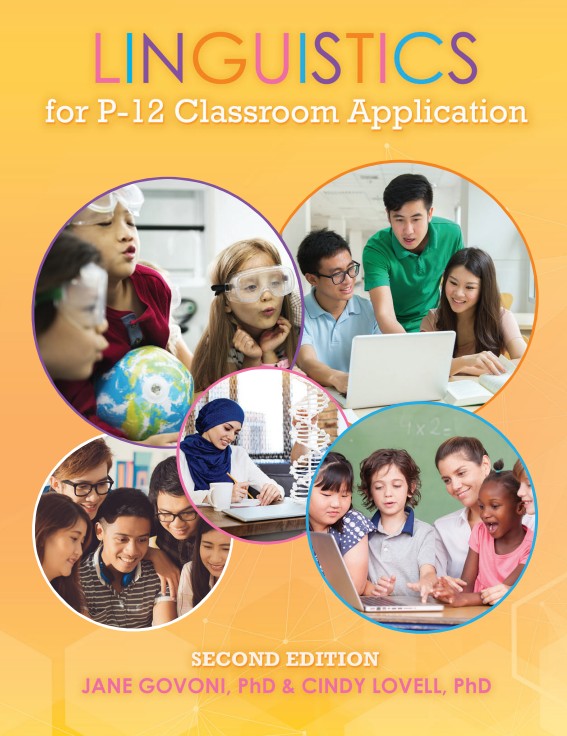
Linguistics for P - 12 Classroom Application guides educators toward a practical, classroom-centered understanding of phonology, morphology, syntax, semantics, and pragmatics as the foundation for supporting English learners' language development. Mastery of these five components will support educators in developing effective lessons and modeling clear, purposeful communication for students from varied linguistic and heritage backgrounds.
Through rich classroom scenarios, the text illustrates how linguistic concepts surface in everyday teacher-student interactions. This concrete, scenario-based approach helps to demystify linguistics and connects theory to instructional contexts, with a focus on strengthening ELs’ language proficiency and academic achievement.
The text also offers research-based, ready-to-implement activities for P - 12 classrooms and is written in an accessible, reader-friendly style suitable for all educators, whether new to linguistics or experienced in working with multilingual learners.
I Pleased to Meet You! (aka: The Introduction)
About the Authors
II Phun with Phonology
Objectives
Classroom Scenario: Ms. Hall, Third Grade
Phonology
Critical Thinking Questions
Practical Classroom Application
III Building a Larger Vocabulary Through Morphology
Objectives
Classroom Scenario: Mr. Riese, Eighth Grade Language Arts
Morphology
Critical Thinking Questions
Practical Classroom Application
IV Which Came First, the Chicken or the Syntax?
Objectives
Classroom Scenario: Ms. Sayler, First Grade
Syntax
Critical Thinking Questions
Practical Classroom Application
V Semantics: From Propaganda to Word Play
Objectives
Classroom Scenario: Mrs. Lemkelde, Fifth Grade Gifted
Semantics
Critical Thinking Questions
Practical Classroom Application
VI Practical Pragmatics: Context is Everything
Objectives
Classroom Scenario: Mr. Graham, Tenth Grade English
Pragmatics
Critical Thinking Questions
Practical Classroom Application
VII Okey-Dokey Then, Uh-Huh, Bye-Bye! (aka: The Last Word)
Essential Question
References

Jane M. Govoni received her MA in Spanish from Boston College and her PhD in Curriculum and Instruction with a focus on Second Language Acquisition in Technology (SLAIT) from the University of South Florida. Her background includes teaching Spanish at middle/high school and college levels, and ESOL in Teacher Preparation Programs. She held a tenured faculty position at Saint Leo University and has written several books related to teaching English learners in the P-12 classroom. She has served on national and state educational boards and was the recipient of the Florida Irving Wershow Award in Foreign Language Education and the Mary L. Collins Award for Excellence in Teacher Education in Florida. She currently teaches undergraduate and graduate teacher candidates in the College of Education at the University of South Florida.

Cindy Lovell earned her BA and MA in Elementary Education at Stetson University and her PhD in Education at The University of Iowa, specializing in ESOL and gifted education. She held tenured faculty positions at Volusia County Schools, Stetson, and Quincy University. She has authored numerous publications, presented at conferences, and is a consultant for the Florida DOE writing ESOL test items for the FTCE. Since 2017, Dr. Lovell has served as Director of Education at Epic Flight Academy, an international aviation school, and is an adjunct professor. In 2021, 2023, and 2025 she received the University of South Florida College of Education Excellence in Undergraduate Education Award and in 2024 received the University of Missouri, Trulaske College of Business John A. Riggs, Jr. Excellence in MBA Teaching Award.
Understanding how language works and how to support and scaffold language development is something all teachers need to be able to do as linguistic and cultural diversity is the norm in their classrooms. Applied linguistics is often seen as too theoretical and technical, however, and many teachers avoid diving into the crucial linguistic dimensions of teaching their English language learners. Through real-life case studies, classroom examples, and hands-on activities, Govoni and Lovell make the linguistic domains of phonology, morphology, syntax, semantics, and pragmatics accessible and provide practical tips that teachers can immediately apply. This a wonderful resource for teacher educators, practicing teachers, and teacher candidates.
--Ester De Jong, EdD
Professor of ESOL/Bilingual Education
University of Florida
Knowledge of Applied Linguistics, the study of how the human mind creates and acquires language, is essential to effective L2 instruction. In their new e-book, Linguistics for K-12 Classroom Application, co-authors Jane Govoni and Cindy Lovell provide a thorough and compelling presentation of all aspects of the language acquisition process: Phonology, Morphology, Syntax, Semantics and Pragmatics. The pages brim with insightful classroom scenarios, practical yet innovative EL instructional strategies and provocative questions designed to challenge the reader. Whether you are a seeking your EL certification, are new to the profession, or a seasoned classroom veteran, this book is a ‘must’ read!...
--John De Mado
John De Mado Language Seminars LLC
Unlike many applied linguistics texts, this book is written in an accessible way. Each chapter begins with specific objectives to help readers focus; contains helpful, real-life scenarios to which teacher candidates may relate; and includes several active learning strategies for readers, such as running notes, infographic creation, and engagement in the same hands-on work that students would be expected to do. This organization keeps readers’ attention and invites and supports their continued learning through activities that draw on both content and language learning, thereby modeling what is expected of teachers who work with emergent bilingual students. The text also includes key information and strategies to support students whose bilingualism is comprised of specific named languages, such as Korean and English or Spanish and English.
--Ryan W. Pontier, PhD
Visiting Assistant Professor, School of Education & Human Development
Florida International University
As a teacher candidate and former ESOL paraprofessional, I believe that this book has a lot of practical information and truly depicts the reality of learning experiences for multicultural ELs in schools. I really appreciate the section that discusses how teachers need to develop an awareness of ELs’ heritage language by analyzing its similarities and differences with English. The activities in the book will help teacher candidates develop the responsiveness and the working tools to help ELs thrive in their journey to bilingualism.
--Jessica Pérez Maqueda
Undergraduate student, Teacher Education Program
University of South Florida
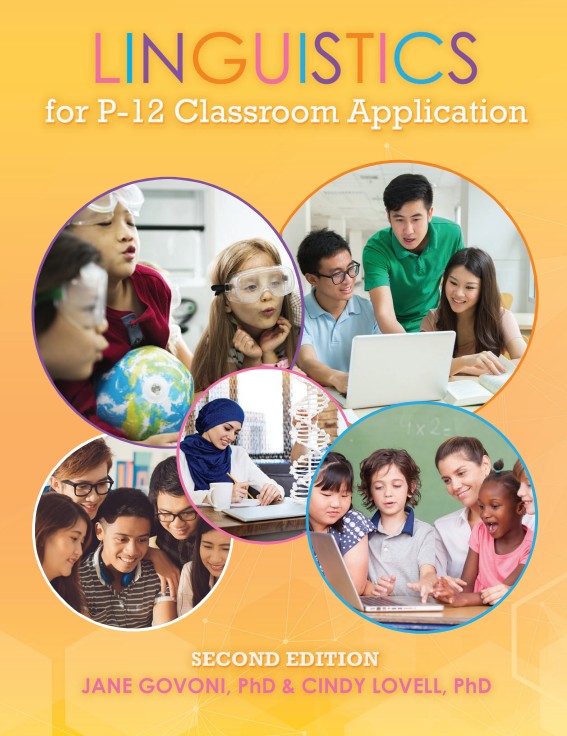
Linguistics for P - 12 Classroom Application guides educators toward a practical, classroom-centered understanding of phonology, morphology, syntax, semantics, and pragmatics as the foundation for supporting English learners' language development. Mastery of these five components will support educators in developing effective lessons and modeling clear, purposeful communication for students from varied linguistic and heritage backgrounds.
Through rich classroom scenarios, the text illustrates how linguistic concepts surface in everyday teacher-student interactions. This concrete, scenario-based approach helps to demystify linguistics and connects theory to instructional contexts, with a focus on strengthening ELs’ language proficiency and academic achievement.
The text also offers research-based, ready-to-implement activities for P - 12 classrooms and is written in an accessible, reader-friendly style suitable for all educators, whether new to linguistics or experienced in working with multilingual learners.
I Pleased to Meet You! (aka: The Introduction)
About the Authors
II Phun with Phonology
Objectives
Classroom Scenario: Ms. Hall, Third Grade
Phonology
Critical Thinking Questions
Practical Classroom Application
III Building a Larger Vocabulary Through Morphology
Objectives
Classroom Scenario: Mr. Riese, Eighth Grade Language Arts
Morphology
Critical Thinking Questions
Practical Classroom Application
IV Which Came First, the Chicken or the Syntax?
Objectives
Classroom Scenario: Ms. Sayler, First Grade
Syntax
Critical Thinking Questions
Practical Classroom Application
V Semantics: From Propaganda to Word Play
Objectives
Classroom Scenario: Mrs. Lemkelde, Fifth Grade Gifted
Semantics
Critical Thinking Questions
Practical Classroom Application
VI Practical Pragmatics: Context is Everything
Objectives
Classroom Scenario: Mr. Graham, Tenth Grade English
Pragmatics
Critical Thinking Questions
Practical Classroom Application
VII Okey-Dokey Then, Uh-Huh, Bye-Bye! (aka: The Last Word)
Essential Question
References
Jane M. Govoni received her MA in Spanish from Boston College and her PhD in Curriculum and Instruction with a focus on Second Language Acquisition in Technology (SLAIT) from the University of South Florida. Her background includes teaching Spanish at middle/high school and college levels, and ESOL in Teacher Preparation Programs. She held a tenured faculty position at Saint Leo University and has written several books related to teaching English learners in the P-12 classroom. She has served on national and state educational boards and was the recipient of the Florida Irving Wershow Award in Foreign Language Education and the Mary L. Collins Award for Excellence in Teacher Education in Florida. She currently teaches undergraduate and graduate teacher candidates in the College of Education at the University of South Florida.
Cindy Lovell earned her BA and MA in Elementary Education at Stetson University and her PhD in Education at The University of Iowa, specializing in ESOL and gifted education. She held tenured faculty positions at Volusia County Schools, Stetson, and Quincy University. She has authored numerous publications, presented at conferences, and is a consultant for the Florida DOE writing ESOL test items for the FTCE. Since 2017, Dr. Lovell has served as Director of Education at Epic Flight Academy, an international aviation school, and is an adjunct professor. In 2021, 2023, and 2025 she received the University of South Florida College of Education Excellence in Undergraduate Education Award and in 2024 received the University of Missouri, Trulaske College of Business John A. Riggs, Jr. Excellence in MBA Teaching Award.
Understanding how language works and how to support and scaffold language development is something all teachers need to be able to do as linguistic and cultural diversity is the norm in their classrooms. Applied linguistics is often seen as too theoretical and technical, however, and many teachers avoid diving into the crucial linguistic dimensions of teaching their English language learners. Through real-life case studies, classroom examples, and hands-on activities, Govoni and Lovell make the linguistic domains of phonology, morphology, syntax, semantics, and pragmatics accessible and provide practical tips that teachers can immediately apply. This a wonderful resource for teacher educators, practicing teachers, and teacher candidates.
--Ester De Jong, EdD
Professor of ESOL/Bilingual Education
University of Florida
Knowledge of Applied Linguistics, the study of how the human mind creates and acquires language, is essential to effective L2 instruction. In their new e-book, Linguistics for K-12 Classroom Application, co-authors Jane Govoni and Cindy Lovell provide a thorough and compelling presentation of all aspects of the language acquisition process: Phonology, Morphology, Syntax, Semantics and Pragmatics. The pages brim with insightful classroom scenarios, practical yet innovative EL instructional strategies and provocative questions designed to challenge the reader. Whether you are a seeking your EL certification, are new to the profession, or a seasoned classroom veteran, this book is a ‘must’ read!...
--John De Mado
John De Mado Language Seminars LLC
Unlike many applied linguistics texts, this book is written in an accessible way. Each chapter begins with specific objectives to help readers focus; contains helpful, real-life scenarios to which teacher candidates may relate; and includes several active learning strategies for readers, such as running notes, infographic creation, and engagement in the same hands-on work that students would be expected to do. This organization keeps readers’ attention and invites and supports their continued learning through activities that draw on both content and language learning, thereby modeling what is expected of teachers who work with emergent bilingual students. The text also includes key information and strategies to support students whose bilingualism is comprised of specific named languages, such as Korean and English or Spanish and English.
--Ryan W. Pontier, PhD
Visiting Assistant Professor, School of Education & Human Development
Florida International University
As a teacher candidate and former ESOL paraprofessional, I believe that this book has a lot of practical information and truly depicts the reality of learning experiences for multicultural ELs in schools. I really appreciate the section that discusses how teachers need to develop an awareness of ELs’ heritage language by analyzing its similarities and differences with English. The activities in the book will help teacher candidates develop the responsiveness and the working tools to help ELs thrive in their journey to bilingualism.
--Jessica Pérez Maqueda
Undergraduate student, Teacher Education Program
University of South Florida