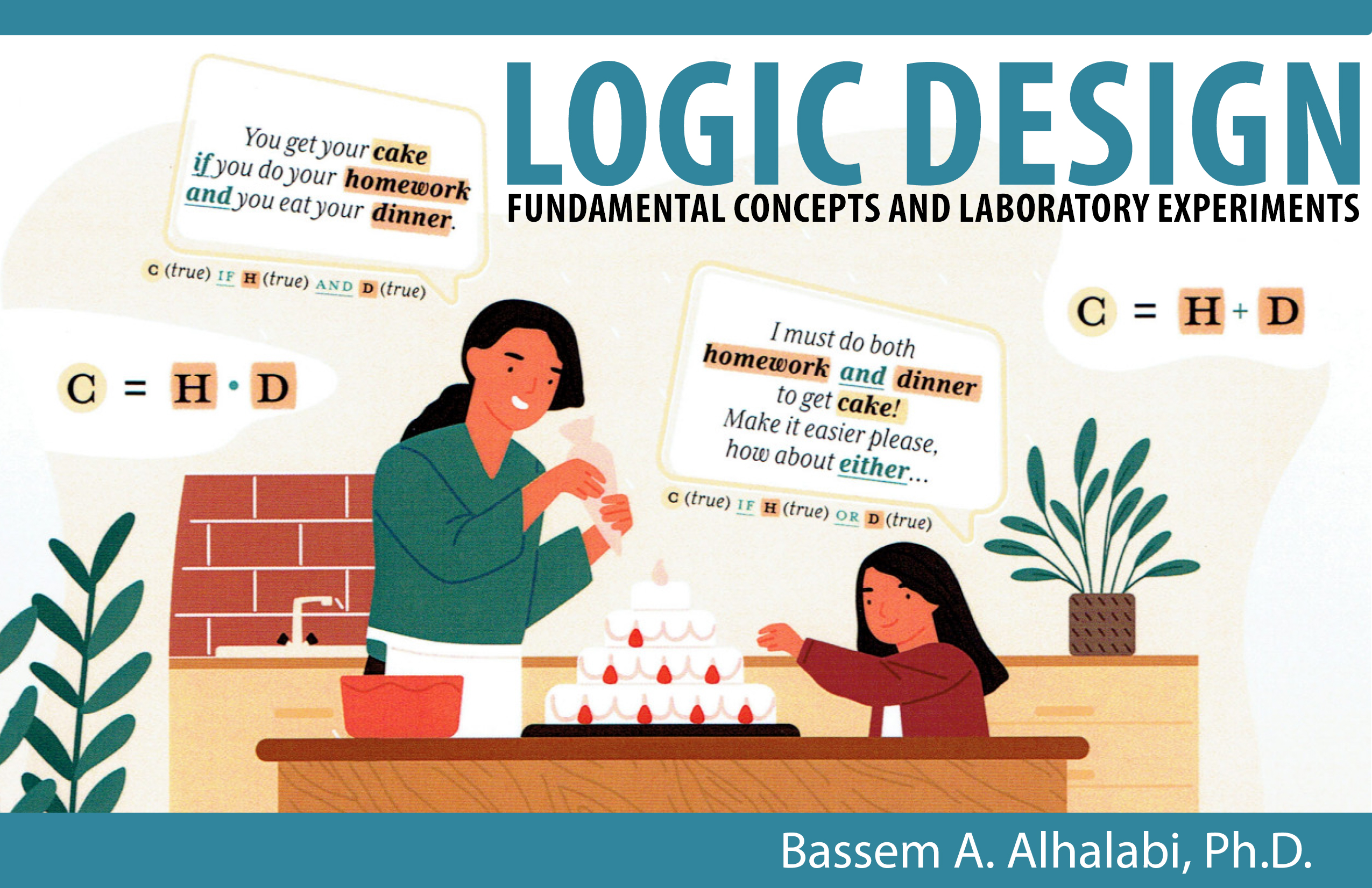
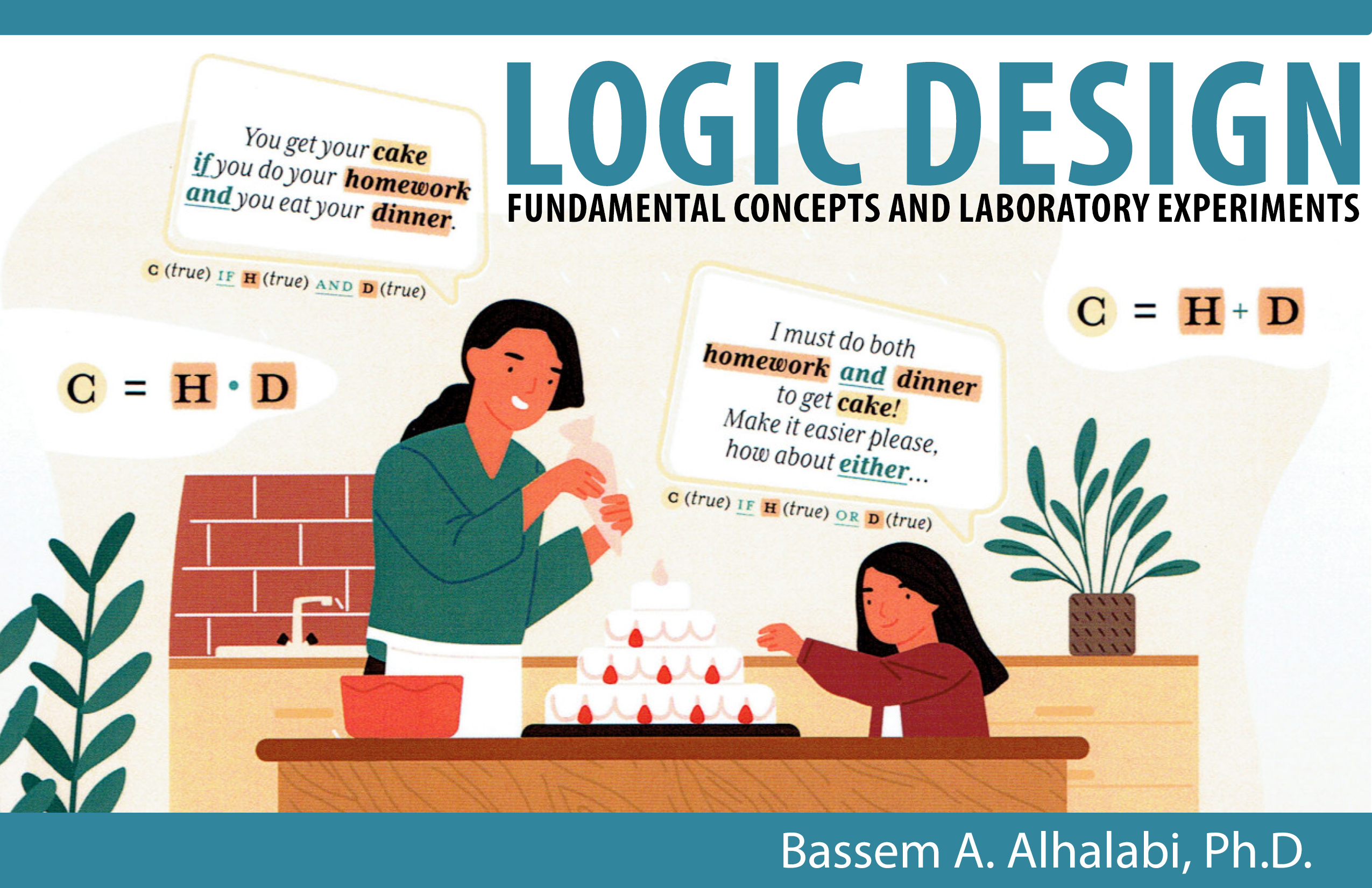
Logic Design: Fundamental Concepts and Laboratory Experiments
Edition: 1
Copyright: 2024
Choose Your Format
Website
$50.00 USD
Logic Design: Fundamental Concepts and Laboratory Experiments introduces the principles of digital logic design through a combination of theoretical concepts and laboratory exercises. Topics include logic gates, Boolean operations, binary arithmetic, encoders and decoders, signal timing and propagation, sequential logic, and the design of counters and timers. Laboratory activities reinforce digital circuit analysis, implementation, and troubleshooting while developing practical skills in designing and testing fundamental digital systems.
Chapter 1: Basic Logic Design Functions and Gates
Chapter 2: Binary and Digital Arithmetic
Chapter 3: Decoders and Encoders
Chapter 4: Signal Delays and Propagation
Chapter 5: Sequential Networks
Chapter 6: Counters and Timers
Appendix 1
Appendix 2
Bassem Alhalabi, Ph.D., is an Associate Professor in the Department of Electrical Engineering and Computer Science at Florida Atlantic University. He earned his Ph.D. from the University of Louisiana at Lafayette. His research focuses on embedded systems, web-based control and automation, and remote laboratories and distance learning technologies, with an emphasis on developing innovative approaches to engineering education and applied computing.