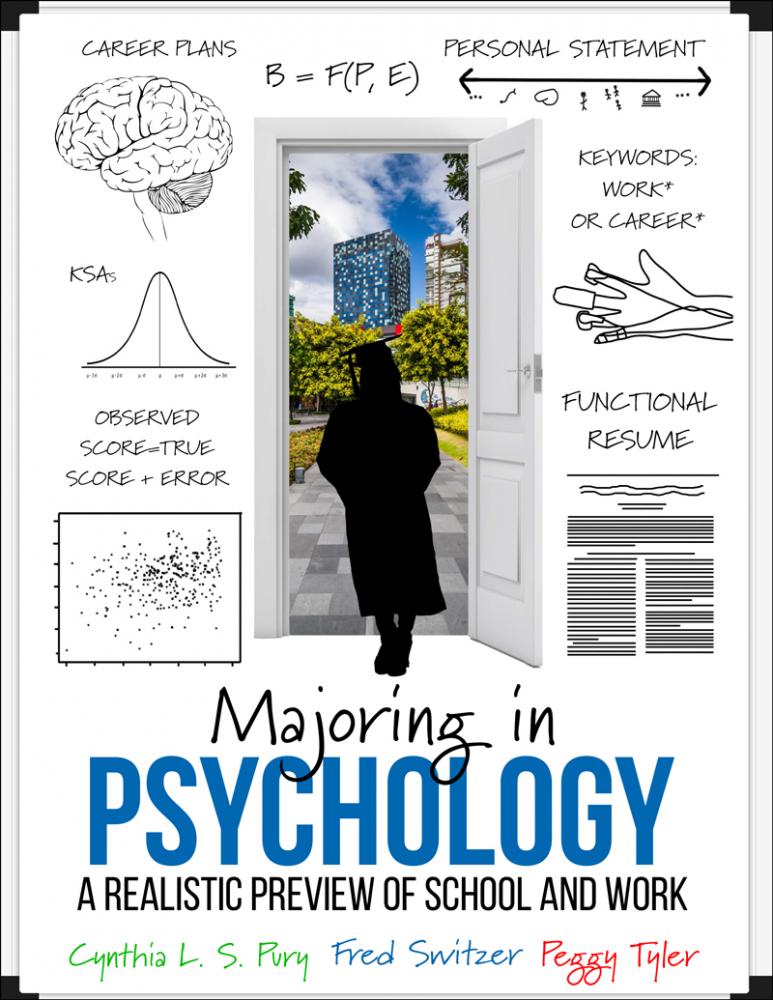
Majoring in Psychology: A Realistic Preview of School and Work
Edition: 1
Copyright: 2021
Pages: 167
Choose Your Format
Choose Your Platform | Help Me Choose


Ebook
$86.82 USD
Psychology is the sixth most popular undergraduate major in the U.S, with almost half a million majors on college campuses across the country. But do new students really understand what psychology majors study and accomplish? Do they know what jobs they will be prepared for with their degree? Do they have a realistic picture of graduate school or how to get a good job with a bachelor’s degree in psychology?
The authors of Majoring in Psychology: A Realistic Preview of School and Work developed a publication for new psychology majors to prepare them to take a psychologist’s view of their coursework and careers. This textbook focuses on critical thinking, building awareness of skills, career planning, and an introduction to the core competencies in psychology.
Psychological Science: Introduction to the Fundamentals
Chapter 1 What Psychology Is and Isn’t
Chapter 2 The Range of Psychological Science Areas and How They Developed
What Can You Do With a Psychology Degree?
Chapter 3 Competencies—What They Are and How to Get Them
Chapter 4 Jobs with a Bachelor’s Degree
Chapter 5 Jobs Requiring Graduate and Professional School or Other Additional Training
Chapter 6 Graduate and Professional School: Getting In and Thriving Once You Do
Chapter 7 How to Find a Job—Narrowing the Search
How Do Psychological Scientists Communicate?
Chapter 8 What Science Does (And Does Not) Look Like
Chapter 9 How to Read and Cite Empirical Studies
Chapter 10 Finding and Evaluating Scholarly Work
What All Psychological Scientists Need to Know: Measurement
Chapter 11 What’s Different About Measurement in Psychology?
Chapter 12 Error is Everywhere
Chapter 13 Reliability and Validity (Application of Measurement)
What All Psychological Scientists Need to Know: Doing and Using Research
Chapter 14 Statistics
Chapter 15 Experiments and Other Research Designs
Conclusion
Chapter 16 Is the Psychology Major for You?
Appendix
Career Plan

Ph.D Clinical Psychology
Northwestern University 1997
M.S. Clinical Psychology
Northwestern University 1991
B.A. Psychology
University of Wisconsin - Madison 1989

Ph.D. Industrial-Organizational Psychology
University of Illinois at Urbana-Champaign 1988
M.S. Industrial-Organizational Psychology
Lamar University 1982
B.A. Psychology
University of Texas at Austin 1975
Dr. Switzer is currently continuing his work with colleagues in the College of Engineering and Sciences on issues in infrastructure resilience and automotive safety. Dr. Switzer and his colleagues in the Department of Psychology established the Clemson University Driving Simulator Laboratory to provide a tool for examining issues of human judgment and decision-making and risk perception. He also established the Clemson Process Control Simulator laboratory to facilitate studies in the training of industrial operator teams and the interactions of training and supervision (industrial psychology) with interface design and plant operation (computer science and engineering) and with operator judgment and control (human factors psychology). In addition to this area of research, Dr. Switzer is currently conducting studies on cognitive and physiological indicators of team performance in industrial and military teams. Dr. Switzer has been a co-investigator on grants from Honda Research and Development Americas, the Office of Naval Research, and the Defense Advanced Research Projects Agency. Fred has published in journals ranging from Accident Analysis and Prevention to the Journal of Applied Psychology as well as coauthoring multiple chapters in the Handbook of Industrial-Organizational Psychology Research Methods.
Psychology is the sixth most popular undergraduate major in the U.S, with almost half a million majors on college campuses across the country. But do new students really understand what psychology majors study and accomplish? Do they know what jobs they will be prepared for with their degree? Do they have a realistic picture of graduate school or how to get a good job with a bachelor’s degree in psychology?
The authors of Majoring in Psychology: A Realistic Preview of School and Work developed a publication for new psychology majors to prepare them to take a psychologist’s view of their coursework and careers. This textbook focuses on critical thinking, building awareness of skills, career planning, and an introduction to the core competencies in psychology.
Psychological Science: Introduction to the Fundamentals
Chapter 1 What Psychology Is and Isn’t
Chapter 2 The Range of Psychological Science Areas and How They Developed
What Can You Do With a Psychology Degree?
Chapter 3 Competencies—What They Are and How to Get Them
Chapter 4 Jobs with a Bachelor’s Degree
Chapter 5 Jobs Requiring Graduate and Professional School or Other Additional Training
Chapter 6 Graduate and Professional School: Getting In and Thriving Once You Do
Chapter 7 How to Find a Job—Narrowing the Search
How Do Psychological Scientists Communicate?
Chapter 8 What Science Does (And Does Not) Look Like
Chapter 9 How to Read and Cite Empirical Studies
Chapter 10 Finding and Evaluating Scholarly Work
What All Psychological Scientists Need to Know: Measurement
Chapter 11 What’s Different About Measurement in Psychology?
Chapter 12 Error is Everywhere
Chapter 13 Reliability and Validity (Application of Measurement)
What All Psychological Scientists Need to Know: Doing and Using Research
Chapter 14 Statistics
Chapter 15 Experiments and Other Research Designs
Conclusion
Chapter 16 Is the Psychology Major for You?
Appendix
Career Plan
Ph.D Clinical Psychology
Northwestern University 1997
M.S. Clinical Psychology
Northwestern University 1991
B.A. Psychology
University of Wisconsin - Madison 1989
Ph.D. Industrial-Organizational Psychology
University of Illinois at Urbana-Champaign 1988
M.S. Industrial-Organizational Psychology
Lamar University 1982
B.A. Psychology
University of Texas at Austin 1975
Dr. Switzer is currently continuing his work with colleagues in the College of Engineering and Sciences on issues in infrastructure resilience and automotive safety. Dr. Switzer and his colleagues in the Department of Psychology established the Clemson University Driving Simulator Laboratory to provide a tool for examining issues of human judgment and decision-making and risk perception. He also established the Clemson Process Control Simulator laboratory to facilitate studies in the training of industrial operator teams and the interactions of training and supervision (industrial psychology) with interface design and plant operation (computer science and engineering) and with operator judgment and control (human factors psychology). In addition to this area of research, Dr. Switzer is currently conducting studies on cognitive and physiological indicators of team performance in industrial and military teams. Dr. Switzer has been a co-investigator on grants from Honda Research and Development Americas, the Office of Naval Research, and the Defense Advanced Research Projects Agency. Fred has published in journals ranging from Accident Analysis and Prevention to the Journal of Applied Psychology as well as coauthoring multiple chapters in the Handbook of Industrial-Organizational Psychology Research Methods.