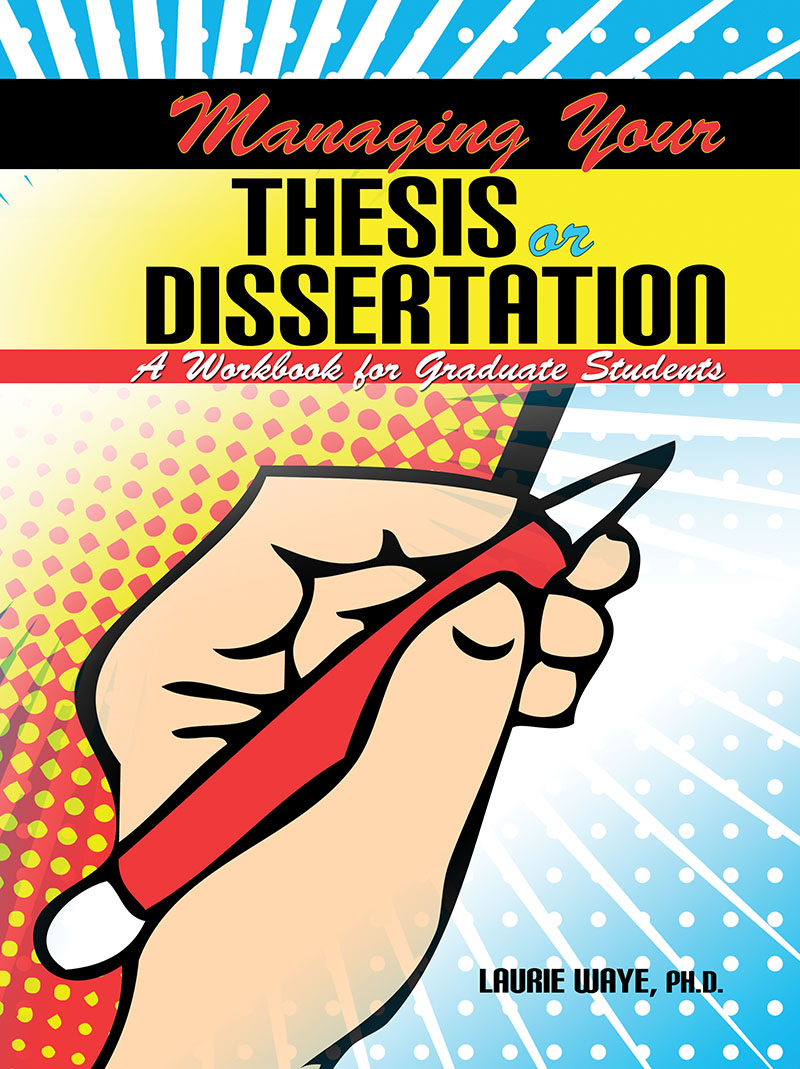
Managing Your Thesis or Dissertation: A Workbook for Graduate Students
Edition: 1
Copyright: 2011
Pages: 106
Choose Your Format
$49.77 USD
Many graduate students are overwhelmed with the process of writing such a large and complex document.
Managing Your Thesis or Dissertation helps the reader map out their project in order to understand what they need to do, when, and how, by applying the eight project management concepts listed below to the process of academic writing:
- Drawing out your ideas and their connection to each other in a concept map,
- Analyzing the scope of the project,
- Identifying tasks to be done,
- Creating the Work Breakdown Structure (WBS),
- Identifying the critical path,
- Making a Gantt chart to organize the work,
- Understanding ownership of the project,
- Using your resources.
Managing Your Thesis or Dissertation:
- Features a workbook section that invites students to make maps and charts to guide and plan their writing.
- Presents ideas to help balance the many roles graduate students play in addition to student (parent, research assistant, full-time worker, etc.), including tips for time management.
- Introduces suggestions for overcoming procrastination, perfectionism, and over-identification with one’s writing.
- Showcases a formula to follow again and again when writing a larger piece of work.
- Features tips that all graduate students should know; a self-editing guide, and tips for getting the most out of texts that are dense and dry.
Introduction
Step 1: Find the Beginning
So Where Is the Beginning?
Building Your Map
Project Management Principle #1: Creating a map
Get Going
Graduate Student Tip: The literature review as a party
Step 2: Get Focused
What Can Go?
Project Management Principle #2: Analyzing the scope of the project
Get Going
Management Skills: A Top Ten List
Graduate Student Tip: What a thesis/dissertation really is
Step 3: Identify Tasks
The Academic Writing Process: 40/20/40
The First 40
The Middle 20
The Final 40
Project Management Principle #3: Identifying the tasks
Get Going
Graduate Student Tip: Are you a nouveau graduate student?
Step 4: Organize Your Tasks
Project Management Principle #4: Creating the Work Breakdown Structure (WBS)
Project Management Principle #5: Identifying the Critical Path
Get Going
Graduate Student Tip: Are you demonstrating academic integrity?
Step 5: Make a Plan
Project Management Principle #6: The Gantt chart
Get Going
Graduate Student Tip: Take Control of Feedback
Step 6: Follow your Plan
Project Management Principle #7: Ownership
Project Management Principle #8: Use your resources
Get Going
Graduate Student Tip: Self-editing strategies
References
Appendix
Extra mind map pages
Extra Gantt chart pages
Gee (2001) storyboard
Feedback chart
Self-editing checklist