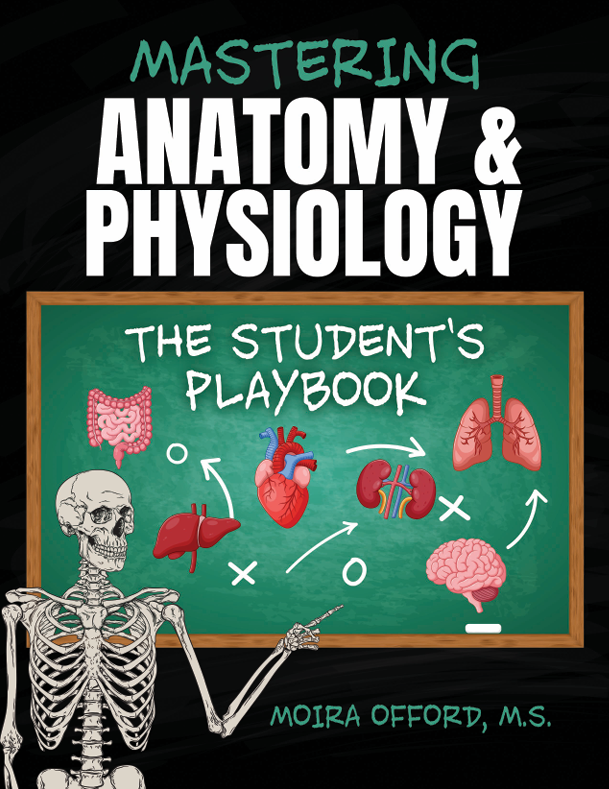
Mastering Anatomy & Physiology: The Student's Playbook
Edition: 1
Copyright: 2026
Pages: 536
Choose Your Format
Ebook
$120.00 USD
Mastering Anatomy & Physiology: The Student's Playbook provides a comprehensive, clinically focused introduction to human anatomy and physiology, connecting foundational science to medical practice. It covers anatomy, biochemistry, histology, the integumentary, skeletal, muscular, nervous, endocrine, cardiovascular, lymphatic, respiratory, urinary, digestive, and reproductive systems, with emphasis on clinical applications, physiology, and diagnostic concepts. It also incorporates biophysics, pathology, health, development, inheritance, and professionalism to help students connect scientific knowledge with patient care and future healthcare careers.
Acknowledgments
Preface
About the Author
Part I Unlocking the Student Playbook Mindset
Part II The Playbook in Action: Core Body Systems
Chapter 1 The Language of Anatomy—Speaking Like a Clinician
1.1 Anatomical Terms
Pathology and Diagnosis Terminology
Anatomical Position
Regional Anatomy
Directional Terms
1.2 Planes of the Human Body and Sectional Division
Abdominal Quadrants
Body Cavities
1.3 Biological Hierarchy and Major Organ Systems
From Atoms to Organisms
Major Organ Systems of the Body
1.4 Clinical Imaging Studies
1.5 End of Chapter Review
Continue Your Learning Online
Chapter 2 The Biochemistry of Life
2.1 Chemical Level of Organization: Atoms, Elements, and Beyond
Chemical Compounds
2.2 The Four Biomolecules of Life
2.3 Chemical Reactions
Types of Bonds
Reactions in Water—The Solvent of Life
Acids and Bases
Properties of Reactions
2.4 The Cellular Level of Organization—Level Two
Bacteria—Our Biological Helpers
Viruses—The Nonliving Parasites
The Cell Theory
Origins of Aerobic Respiration in Eukaryotes—Evolutionary Medicine
The Eukaryotic Cell as We Know it Today
Osmosis—Simple and Facilitated Diffusion of Water
Osmolarity and Tonicity—The Fluid Level Triad
Membrane-Bound Organelles and Beyond in a Eukaryotic Cell
The Cell Cycle—Prokaryotes and Eukaryotes
Cytology and Microscopy Imaging
2.5 End-of-Chapter Review
Continue Your Learning Online
Chapter 3 Histology and Clinical Medicine
3.1 Embryonic Tissue Development
3.2 Epithelial Tissue
Membranes of the Epithelium
Tissue Classification
3.3 Connective Tissue That Holds Us Together
Connective Tissue Proper—Loose and Dense Types
Supporting Connective Tissue
Fluid Connective Tissue
3.4 Muscular Tissue
3.5 Nervous Tissue
3.6 Cell Junctions—The Connections Tissues Form
3.7 Clinical Correlation—Boss Round Punch Biopsy
3.8 End-of-Chapter Review
Continue Your Learning Online
Chapter 4 First Line of Defense—Integumentary Play
4.1 The Integumentary System as a Homeostatic Blanket
4.2 Layers of the Skin
Your Scaly Shield—The Epidermis
Deep Dive into the Dermis
Beyond the Skin—The Hypodermis
4.3 Glands of the Integumentary System and Their Diverse Secretions
4.4 Hair Anatomy
Hair Structure
Hair Types in Anatomy
Life Cycle of Hair
4.5 Nail Anatomy
4.6 End of Chapter Review
Continue Your Learning Online
Chapter 5 Osteology Deep Dive
5.1 Cellular and Histological Levels of Osteology
Chemical and Cellular Level of the Skeletal System
The Biophysics of Bone—Wolff’s Law
Tissue Level of the Skeletal System
5.2 Major Bone Types
5.3 Bone Growth
Bone Development—Endochondral and Intramembranous Ossification
5.4 Joint Types
5.5 Gross Anatomy of the Skeletal System—Interactive Companion
5.6 End-of-Chapter Review
Continue Your Learning Online
Chapter 6 Power, Movement, and the Muscular System
6.1 Muscular System Overview and Histological Features
6.2 Muscle Contraction, and Classification of the Muscular System - Interactive Companion
6.3 End-of-Chapter Review
Continue Your Learning Online
Chapter 7 Signaling and Electrophysiology—A Deep Dive into Neuroanatomy
7.1 Overview of the Nervous System—Our Central Control Hub
7.2 Cellular and Tissue Levels of Organization for the Nervous System
Structural Classes of Neurons
Glial Cells
The Blood-Brain-Barrier (BBB)—Your Nervous System’s Gate
Glymphatics—Your Nervous System’s Immunologic Defense
White Versus Gray Matter
The Meninges—The Brain and Spinal Cord’s Protective Covering
Histology of Peripheral Nerves
7.3 Introduction to Electrophysiology—Action Potentials and Cell Signaling
7.4 Anatomy and Physiology of the Central Nervous System (CNS)
The Spinal Cord
7.5 Anatomy and Physiology of the Peripheral Nervous System (PNS)
7.6 Sensation and Perception
7.7 End-of-Chapter Review
Continue Your Learning Online
Chapter 8 Hormone Headquarters—The Endocrine System as a Chemical Playbook
8.1 Overview of the Endocrine System
8.2 Cellular and Tissue Level of Organization for the Endocrine System
Histology of the Thyroid Gland
Parathyroid Gland
Histology of the Adrenal Gland
Histology of the Pancreas
8.3 Chemical Level of Organization of the Endocrine System—Major
Signaling Types
8.4 Hormone Classification
8.5 Hormone Categories and the Holy Grail Offord Table
8.6 Negative versus Positive Feedback
8.7 End-of-Chapter Review
Continue Your Learning Online
Further Reading
Chapter 9 Pressure, Flow, and Charge—The Biophysics of the Cardiovascular System
9.1 Overview of the Cardiovascular System
9.2 Cellular and Tissue Level of Organization for the Cardiovascular System
Histology of the Heart
Histology of Blood Vessels
Histology of the Blood
9.3 An Introduction to Hematology
The Family Tree of Blood—Hematopoiesis, Erythropoiesis,
Leukopoiesis, and Thrombopoiesis
The Formed Elements of Blood
Hemostasis and The Coagulation Cascade
9.4 The Heart—Introduction to Cardiology
Embryogenesis of the Heart
Gross Anatomy of the Heart
Cardiac Cycle and Electrophysiology
Fluid Dynamics, EKG Reading, and Biophysics Equations for a
Patient Profile
9.5 Blood Vessels and Vascular Physiology
Angiogenesis
Arteries and Veins
Hydrostatic and Osmotic Pressure
Biophysics in Vasculature—Meet Poiselle’s Law!
Circulatory Pathways—An Interactive Companion
9.6 End-of-Chapter Review
Continue Your Learning Online
Further Readings
Chapter 10 Drain, Defend, and Destroy! The Lymphatic System and Immune Response
10.1 Overview of the Lymphatic System
10.2 Cellular and Tissue Level of Organization—The Lymphatic System
Histology of lymph, lymphatic vessels, and lymph nodes
Histology of the Spleen
Histology of the Bone Marrow and Thymus
Histology of Tonsils and Lymphatic Mechanisms in the Digestive System
10.3 Lymphatics and Their Defense Team—Levels I, II, and III
Level I: Physical and Chemical Barriers
Level II: The Innate Immune System
Level III: Adaptive Immune System
10.4 The Histamine Response/Inflammatory Cascade and End-of-Chapter
Review: An Interactive Companion
Continue Your Learning Online
Further Readings
Chapter 11 The Respiratory System—Part One of Acid-Base Physiology
Continue Your Learning Online
Chapter 12 The Urinary System—Part Two of Acid-Base Physiology
12.1 Overview of the Urinary System
12.2 Cellular and Tissue Level of Organization—The Urinary System
12.3 Characteristics of Urine
12.4 Gross Anatomy of the Urinary System
12.5 The Nephron—The Functional Driver of Excretion
12.6 Endocrine Correlation to Renal Physiology
12.7 Fluid and Body Compartments
Fluid Compartments
Electrolytes and Hydration - Movement of water through ion gradients
Tonicity Review in Regards to Fluid Compartments in the Body
Acid-Base Balance
Arterial Blood Gases (ABGs) and Tic-Tac Toe: A Key Diagnostic Tool for Clinicians
12.8 End-of-Chapter Review
Continue Your Learning Online
Further Reading
Chapter 13 The Digestive System—Energy Storage and Use
13.1 Overview of the Digestive System
13.2 Cellular and Tissue Levels of Organization—The Digestive System
Histology of the Oral Cavity
Histology of the Esophagus
Histology of the Stomach
Histology of the Intestines
Histology of the Mesentery, Mesocolon, and Omentum—The Protective Sheaths of the Abdomen
Histology of the Liver
Histology of the Gallbladder
Histology of the Pancreas
13.3 Chemical Versus Mechanical Digestion of Food
13.4 Gut microbiome—Mutualistic Microbes at Work
What Makes Us Fart? The Microbes!
The Gut-Brain Axis (GBA)
13.5 Metabolism: An Introduction to Biochemistry
Anaerobic Respiration, Lipid, and Protein Metabolism
Fed Versus Fasted State
13.6 Nutrition
13.7 End-of-Chapter Review
Continue Your Learning Online
Further Readings
Chapter 14 Reproductive System, Development, and Inheritance
14.1 Overview of the Reproductive System
14.2 Cellular and Tissue Level of Organization—The Reproductive System
Male Reproductive Histology
Female Reproductive Histology
Gestational Histology
14.3 Men’s Health: A Deep Dive Into Male Reproductive Physiology
Spermatogenesis
14.4 Women’s Health: A Deep Dive and New Frontier in Female Reproductive Physiology
Oogenesis and Folliculogenesis: The Maturation of Viable Egg
The Menstrual Cycle
New Changes in the Field of Women’s Health
14.5 Fertilization and Embryonic Development
Prenatal to Postpartum: Pregnancy, Labor, and Childbirth
Embryonic Development
The Fetal Period of Development
Childbirth: The Main Event
Teratogens and Mutagens
The Thalidomide Tragedy
Future in Obstetrics Advocacy
14.6 Inheritance
14.7 End-of-Chapter Review
Continue Your Learning Online
Further Readings
Part III The Aftermath and a Call to Action
Epilogue
History and Milestones in Medicine: The Motivation to Keep You Going
Mentorship and Professionalism: Key Resources for Students
Advocacy Programs for Nurses
Further Readings and Helpful Links and Organizations for Students
This is Moira Offord’s debut textbook, and she is a dedicated advocate for equitable healthcare for Black, Indigenous, and People of Color (BIPOC) communities. She earned her undergraduate degree in Biology with a minor in Military Leadership from Old Dominion University before commissioning as a Naval Officer in the United States Navy, where she served for 5 years. During her military service, she worked in damage control and emergency medical response aboard a naval vessel as the ship’s Repair Officer (REPO), Medical Training Team (MTT) member, and Combat Life Saving (CLS) instructor. She continued her pursuit of medical education and earned a Master’s degree in Physiology and Biophysics at Georgetown University. Her capstone research examined postpartum hemorrhaging and its comorbidities, identifying key factors that predispose Black women to increased maternal mortality. Drawing on her
experience as a surgical technologist in obstetrics and gynecology (OBGYN), she explored the pathologies disproportionately affecting Black women.
Moira has taught, mentored, and guided future healthcare professionals at Norfolk State University, Virginia’s largest Historically Black College and University (HBCU), where she worked to address health disparities and expand opportunities in medicine. She
currently teaches anatomy and physiology at Virginia Peninsula Community College (VPCC), preparing future allied health professionals. Recently, she was awarded the 2025 Learning Environment Award, a student-nominated accolade for cultivating an inclusive,
engaging, and high-impact learning environment for undergraduate studies in anatomy and physiology courses. Moira is committed to carrying forward her lifelong passion for equitable care as a current medical student and aspiring physician at Edward Via College
of Osteopathic Medicine (VCOM-Virginia). For her, women’s health is not just an area of interest but a calling: one that fuels her mission to improve the lives of her community members and to advance medical equity worldwide. Her passion for teaching, mentorship, and medical education inspired the creation of this textbook, which aims to make complex scientific concepts engaging, clinically relevant, and accessible to students pursuing careers in healthcare.