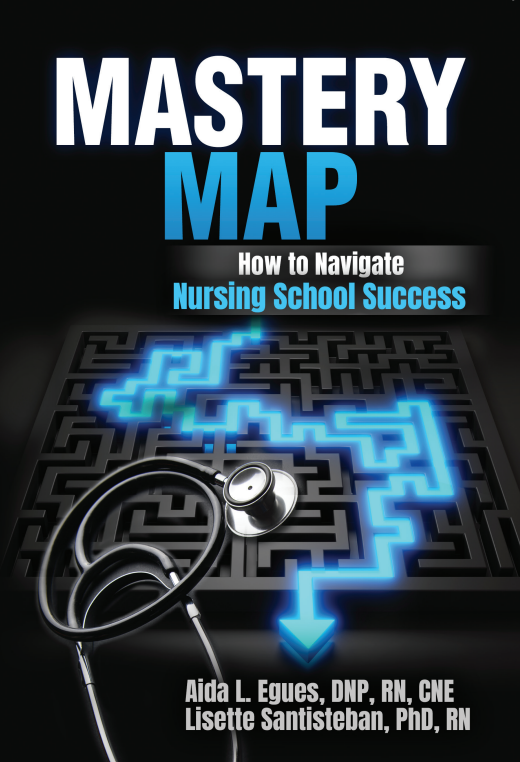
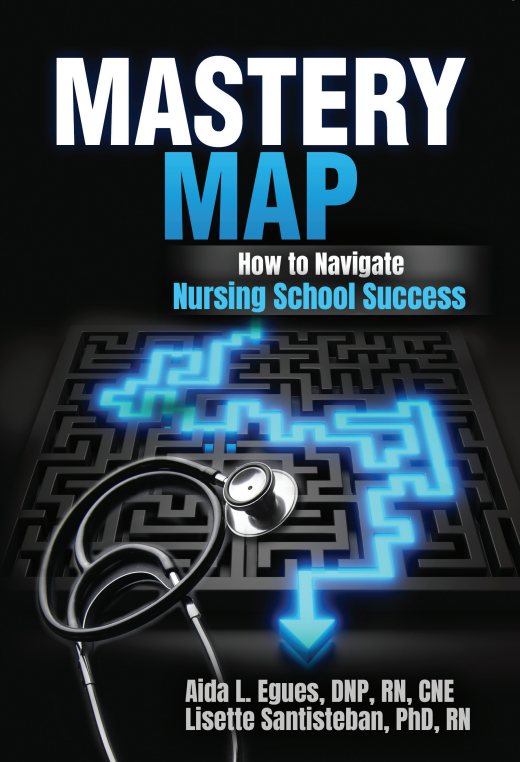
Mastery Map: How To Navigate Nursing School Success
Edition: 1
Copyright: 2026
Pages: 152
Edition: 1
Copyright: 2026
Choose Your Format
$49.00 USD
Ebook
$40.00 USD
Mastery Map: How To Navigate Nursing School Success is a unique and comprehensive guide that helps lay out time-tested accomplishment strategies for students in nursing school. The text takes a student on a journey that covers a vast array of essential topics needed for mastery in nursing education, including what makes nursing school unique, how to approach instructors with respect, what is meant by the notion of ethical conduct, how to focus on building and sustaining study habits and techniques such as memorization and note-taking, what successful studying alone or in groups looks like, how to get a handle on time management, as well as how to face nursing school examinations with confidence.
The benefits of using Mastery Map: How to Navigate Nursing School Success for the nursing student are many.
1. Enhanced Understanding: Written explanations and visual examples help clarify relationships between learning approaches and concepts, making it easier for the student to effectively absorb and apply these relationships to intricate topics throughout their studies.
2. Improved Retention: A mapping strategies approach to studies, known to allow for brainstorming and organizing thoughts, fosters creativity in problem-solving and memory retention, vital skills in nursing, where the student needs to recall large amounts of information in both classroom and clinical settings.
3. Critical Thinking Development and Cultivation: Student awareness and growth is encouraged via illustrations on how to identify learning styles to develop critical thinking and synthesis skills that are necessary for advancing through their nursing program and the profession.
4. Integration of Knowledge: Consistent use of mapping activities and relationships allow the student to develop a deeper appreciation for how nursing education embraces collaborative communication, peer learning, and teamwork in diverse and challenging
present and future practice environments.
5. Classroom and Clinical Preparation: The text makes clear those common academic and behavioral expectations of the nursing student across classroom, clinical, laboratory and simulation settings. It provides guidance the student can embrace to enhance those
personal assessment and decision-making abilities transferable to the different ways the student is tested in all areas of learning
About the Authors
Chapter 1 Mastery Map—The Key to Success
Introduction
Common Challenges Nursing Students Confront in Nursing School
What Makes Nursing School Unique?
What Makes Nursing Unique?
Thinking Like a Nurse
Challenges of the Profession
Areas of Nursing Practice
Key Takeaways
Chapter 2 What Type of Learner Are You?
Introduction
The VARK Model of Learning
Alternative Styles of Learning
How You Can Help Yourself Learn
Key Takeaways
Chapter 3 Critical Thinking
Introduction
What Does Thinking Critically Mean?
Why You Must Develop Your Critical Thinking Skills
How Do You Become a Critical Thinker?
Critical Thinking in the Classroom
Critical Thinking in the Clinical Setting
Lifelong Critical Thinking Skills Development
Key Takeaways
Chapter 4 The Importance of Ethics
Introduction
Definition of Ethics
Code of Ethics
Ethical Principles
Clinical Significance
Key Takeaways
Chapter 5 Ethical Conduct: How to Behave in Nursing School
Introduction
Ethical Classroom Behavior as an Expectation
How to Professionally Conduct Oneself
Learning How to be Respectful in Learning Environments
Specific Strategies to Promote Classroom and Clinical Respect
Key Takeaways
Chapter 6 Time Management
Introduction
Why is Time Management So Important?
General Time Management Techniques
Specific Time Management Examples
Key Takeaways
Chapter 7 How to Study—Note Taking
Introduction
Why Effective Note-Taking Matters
How to Take Notes
Common Note-Taking Methods in Nursing School
Where to Start
Outline Note-Taking Method
Sentence Note-Taking Method
REAP Note-Taking Method
Paragraph Shrinking Note-Taking Method
Cornell Note-Taking Method
Question/Evidence/Conclusion Note-Taking Method
Charting Note-Taking Method
Boxing Note-Taking Method
Mapping Note-Taking Method
Flow Note-Taking Method
Sketch Notes Note-Taking Method
Nursing Notes
Clinical Practice and Charting as Note-Taking Methods
Clinical Note-Taking: SOAP and SOAPIE
Clinical Note-Taking: DAR
Clinical Note-Taking: APIE/ADPIE/PIE
Nursing Abbreviations and Acronyms Note-Taking
Key Takeaways
Chapter 8 How to Study—Memorization
Introduction
Memorization Methods
Using An Acrostic for Memorization
Using An Acronym for Memorization
Using A Mnemonic for Memorization
Association for Memorization
Distributed Practice/Spaced Repetition for Memorization
Memorization via Chunking
Memorization via Visualization
Memorization via Active Recall
Memorization via The Method of Loci
Memorization via Sharing Concepts
Memorization via Mindfulness Meditation
Memorization via Elaborative Interrogation
Adequate Nutrition
Sleep as the Memorization Booster
The Case for Using Multiple Memorization Methods
Key Takeaways
Chapter 9 How to Study—Studying on Your Own
Introduction
The Importance of Self-Study
The Pieces of Self-Study
How to Get Yourself to Engage in Self-Study
Key Takeaways
Chapter 10 How to Study—The Study Group Approach
Introduction
Benefits of Study Groups
Key Differences Between Individual and Group Study
Choosing Effective Study Group Members
Maintaining Group Effectiveness
Tips for Productive Group Study
Study Group Member Roles and Behaviors
Study Group Roles and Behaviors to Avoid
How to Deal with Study Group Conflict
Key Takeaways
Chapter 11 How to Study—Examinations and Other Testing
Introduction
Testing in Nursing—Background Information
Every Quiz, Lab, and Clinical Session is Important
Map Out a Testing-Strategy Plan
What Makes Testing Difficult
How to Assess Your Test Readiness
Types of Nursing Test Items
Types of Licensure Questions
How to Review and Relearn
Key Takeaways
Index
Dr. Aida L. Egües, DNP, RN, PHNA-BC, PHCNS-BC, CNE, is Professor Emerita from The City University of New York. A New York Academy of Medicine Fellow with decades of educational and practice experience, she remains a nationally certified nurse educator, a board-certified public health clinical nurse specialist, and a board-certified advanced public health nurse and practitioner. She is a peer-reviewed published author, a local, national, and international presenter, a widely requested invited speaker, and consultant with multiple national, regional, and local awards and federal grants. Dr. Egües has designed and delivered dozens of courses for all types of nursing-degree preparation programs in public and private universities. Her specializations in nursing education, mentorship, and public health curriculum assessment, design, and evaluation have strength-ened community and nursing recruitment and retention campaigns and outcomes for major health corporations and hospital systems across the nation. Dr. Egües has served as a contributor and consultant for the National Council of State Boards of Nursing, and continues to work as a subject-matter expert in nursing content development, review, and testing for nursing-based companies, publishers, and universities in preparing nursing students for licensure preparation and success, such as in passing the NCLEX-RN examination.
Dr. Lisette Santisteban, PhD, RNC, FNP-BC is an Associate Professor at The City University of New York and an active clinician with over 15 years of combined educational and clinical experience. She maintains board certification as a Family Nurse Practitioner and holds certifications in obstetrical nursing. Dr. Santisteban is a peer-reviewed published author and a presenter at both national and regional professional conferences. She has taught a wide range of courses across undergraduate and graduate nursing programs in both public and private universities. Recognized as a subject matter expert in nursing education and assessment, Dr. Santisteban consults with multiple nursing education companies on the development of Next Generation NCLEX (NGN)–style questions and testing frame-works. She also actively conducts NCLEX-RN review programs, demon-strating her strong commitment to supporting pre-licensure nurses in achieving first-time success on the NCLEX-RN examination.
"I like the positive, personal writing style that is continuous throughout... Its tone is motivational and positive, backed up with realistic rationales... I liked the references. The mix of practical & theoretical sources is very helpful, and I think appealing to nursing students... I also like that the content is framed as skills-based, and students are encouraged and motivated to practice."
Nancy Simpson, Associate Professor
University of New England
"Easy to read, easy to understand. Comparable to current resources. It was interesting...The key takeaways are helpful and covers the chapters information well."
Jessica Skaltsis, Clinical Professor, Director
University of Rhode Island