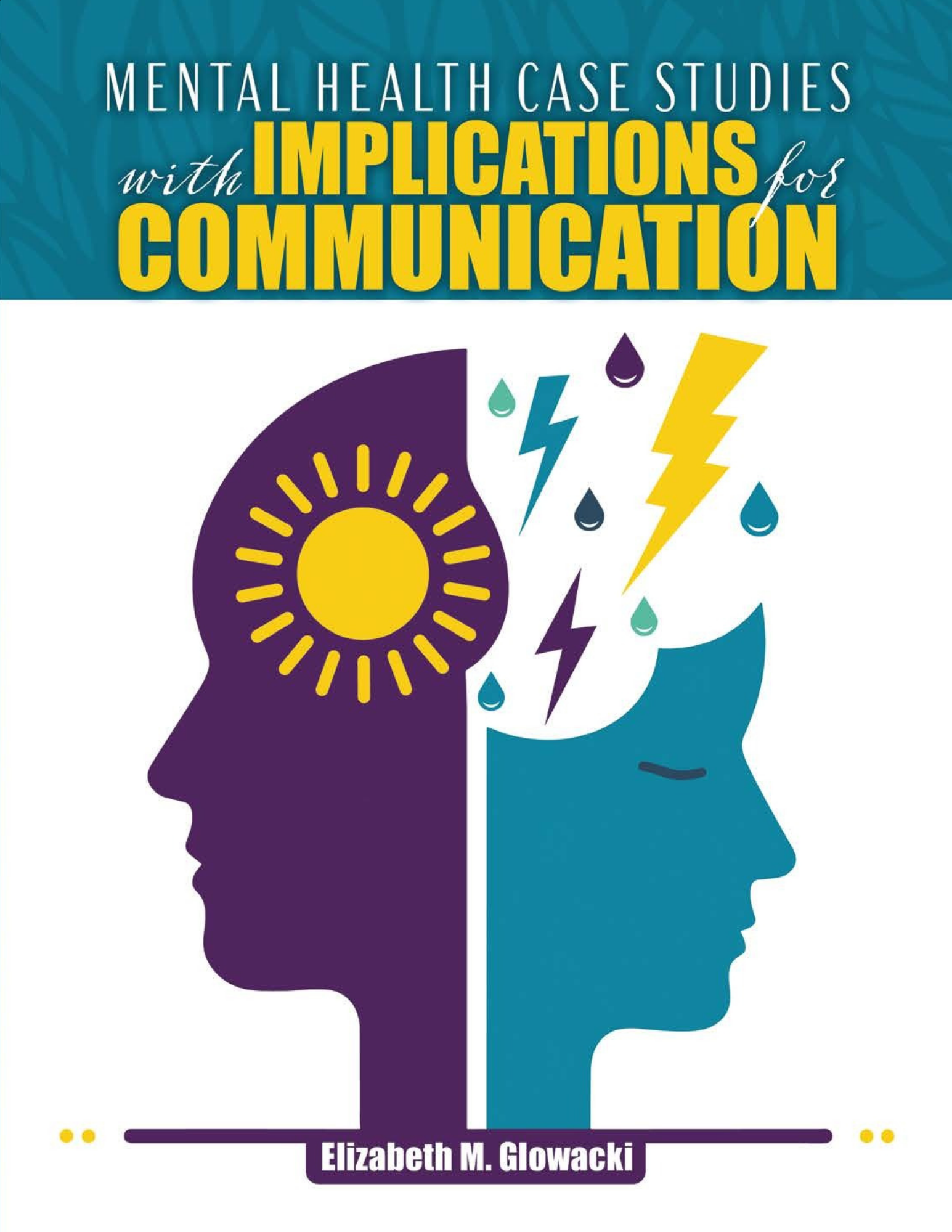
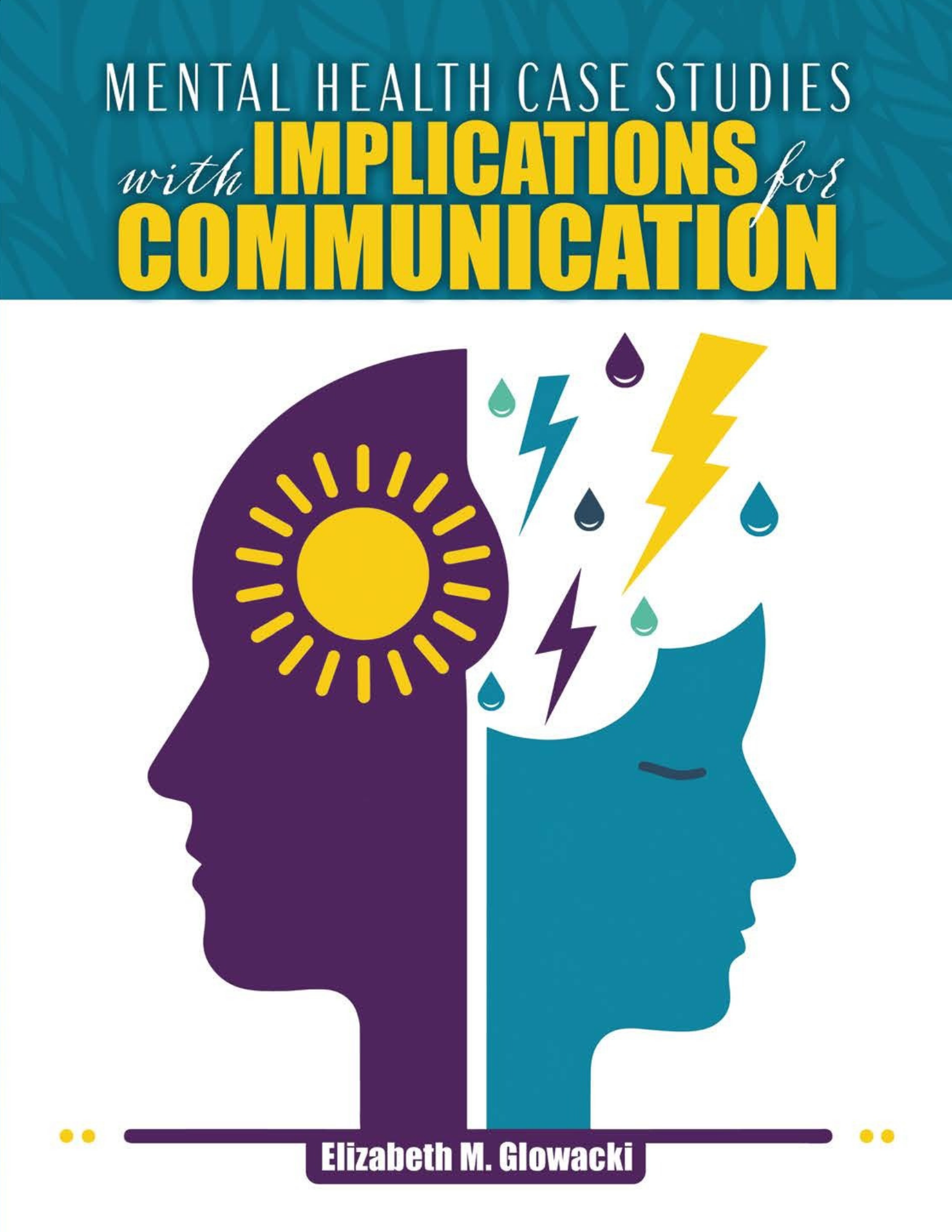
Mental Health Case Studies with Implications for Communication
Edition: 1
Copyright: 2026
Pages: 362
Edition: 1
Copyright: 2026
Pages: 500
Choose Your Format
$80.00 USD
Ebook
$35.00 USD
Mental health and related issues (e.g., substance abuse, identity and self-esteem, relationship satisfaction, stress, violence, and death) are prevalent in all kinds of relationships and present themselves in daily interactions ranging from parent-child, patient-provider, supervisor-subordinate, police-civilian, teacher-student, friendships, romantic relationships, and teammates. The goal of Mental Health Case Studies With Implications for Communication is to speak to this wide array of relationships and contexts in which discourse about mental health takes place in order to identify both barriers to and facilitators of effective communication practices. This collection presents case studies that examine larger themes related to stigma, advocacy, coping, and wellness to illustrate how communication is the thread that ties all of these facets of mental health together.
Module 1: Mental Health and the Criminal Justice System
Chapter 1 – Using the value creation process in managing a mental health-focused hostage negotiation incident…William A. Donohue, PhD
Chapter 2 –Despite parents’ best efforts, sometimes the apple doesn’t fall far from the tree: Considerations for prospective adoptive parents…Jeffrey Owens, JD
Chapter 3 – Crisis and communication breakdowns between individuals with a mental illness and law enforcement: Empowering patients and professionals to manage invisible disabilities effectively…Dorothy Neave-DiToro, AuD; Michael Bergen, AuD
Chapter 4 – Mental health communication, disclosure decisions, and engagement in wellness programs: A multiple-case study of police departments… Erin S. Craw, PhD
Chapter 5 – Let’s go fly a kite: The importance of maintaining independent mindedness during incarceration…Theodore A. Avtgis, PhD; Corey Liberman, PhD
Module 2: Mental Health and Health Care Settings
Chapter 6 – Autism spectrum disorder (ASD) stigma, communication issues in clinical settings, and mental health outcomes: A case study of James and his family’s emergency room experience…Kevin B. Wright, PhD
Chapter 7 – Zoom dysmorphia: A destructive cycle of self-scrutiny… Saroja Rao, BS; Sarah Ferree, MD; Arianne Shadi Kourosh, MD, MPH
Chapter 8 – The weight of silence: Stigma, silence, and safety… Tiffany Tupper, MS; Lynne McDermott, MA
Chapter 9 – Navigating difficult conversations with patients with HIV: Overcoming barriers to medication compliance…Joseph B. Glowacki, DO; Elizabeth M. Glowacki, PhD
Chapter 10 – The language of letting go: Social support and ostensive communication in animal euthanasia conversations… Ashley D. Koszarek, MA; Matthew S. McGlone, PhD
Module 3: Mental Health and Conversations in Close Relationships
Chapter 11 – Mental illness disclosure in close relationships: Insight into disclosers’ and confidants’ perspectives…Emiko Taniguchi-Dorios, PhD; Heather Voorhees, PhD; Charee Thompson, PhD
Chapter 12 – “Lifestyle change” or “consumption of life?”: A disordered eating and eating disorders disclosure between friends….Ashleigh Shields, PhD, MPH; Caitlin Laska, BS
Chapter 13 – “I’m still learning to be sick”: Mental health communication between romantic partners managing post-COVID-19 condition…Jennifer L. Bevan, PhD
Chapter 14 – Facilitating well-being: “Meliotropism” in communication and relationships through purposeful AI chatbots…Ashley P. Duggan, PhD; Croía Loughnane, PhD; Pádraic J. Dunne, PhD
Chapter 15 – Reducing stress in adolescents by improving sleep: The promise of motivational interviewing as a communication skill for behavior change…Samantha Garbers, PhD, MPA; Melanie A. Gold, DO, DMQ, DABMA, FAAP
Module 4: Mental Health and Organizations
Chapter 16 – Whistleblowing: Mental health risks of exposing organizational wrongdoing…Joseph McGlynn, PhD; Jacinta Tran, MA; Brian K. Richardson, PhD
Chapter 17 – Silent impact: Concussion non-disclosure and institutional betrayal in forgotten athletes …Daniel Hartman, PhD
Chapter 18 – Who gets to flourish? Examining U.S. political barriers to mental health and social well-being for LGBTQ+ people...Mary Anne Taylor, PhD
Chapter 19 – “Chasing Natalie”: An application of motivator hygiene theory in the context of health literacy trainings…Daniela Corrent, MA; Elizabeth M. Glowacki, PhD; Theodore A. Avtgis, PhD; Christopher J. Carpenter, PhD
Chapter 20 – Mandated sensemaking in public education: Boundary-spanning communication, institutional constraints, and trauma-informed advocacy … Maria L. Modzelewski, EdS; Veronica Will, PhD

Dr. Elizabeth M. Glowacki (PhD, University of Texas at Austin) is an Associate Teaching Professor jointly appointed in the Department of Public Health and Health Sciences (Bouvé College of Health Sciences) and in the Department of Communication Studies (College of Arts, Media and Design) at Northeastern University. Her research interests lie in health communication, message design, persuasion, and mobile health. Her work has appeared in Substance Abuse, Journal of Health Communication, Journal of Language and Social Psychology, and American Journal of Infection Control. Dr. Glowacki has taught courses on medical communication, interpersonal communication, interviewing, public speaking, media writing, and intercultural communication. She is also the Associate Chair of Faculty Governance in the Department of Public Health and Health Sciences. Dr. Glowacki has been interviewed and quoted in such outlets as ABC News and National Public Radio. Dr. Glowacki has published over 40 journal articles and book chapters, and recently published Mental Health Case Studies With Implications for Communication, an edited work that illustrates connections between theory and practice in order to identify recommendations for improving mental health communication.
"Mental Health Case Studies With Implications for Communication is an exceptional resource for understanding the wide-ranging communication challenges presented by mental health conditions. The case studies vividly connect theory with practice to offer engaging learning opportunities for students and professionals interested in mental health."
Stephen A. Rains, PhD, The University of Arizona
“Through vivid case studies, this exciting book leverages the power of storytelling to help students, across multiple disciplines, bridge theory and practice in order to develop the knowledge and skills needed to positively impact the mental health of individuals, families and communities."
Shan Mohammed, MD, MPH, FAAFP, Northeastern University
“At the intersection of communication studies, health communication, and public health, this work scaffolds mental health cases across applied communication concepts in practical and usable ways for students and faculty. The editor expertly integrates and coordinates learning objectives across core domains using a dynamic case chapter structure that provides mental health applications for health communication and its interdisciplinary partners.”
Joy V. Goldsmith, PhD, The University of Memphis
“This book brings together communication scholars in a meaningful and inspiring way. Each chapter presents clear definitions, a real-life scenario, and discussion questions that support classroom learning with focus and clarity. Every module offers a phenomenal compilation of essential mental health terms while connecting to an applicable, emotion-evoking case study that highlights the importance of understanding mental health in today’s society. Each section concludes with valuable teaching tips and discussion questions that encourage students to take part in thought-provoking conversations. I highly recommend this textbook for classroom use.”
Alicia Booth, PhD, Utah Tech University
"This compelling casebook fills a critical gap in legal and professional education by bringing the realities of mental health directly into the work of representing clients. Through vivid, real-world scenarios involving whistleblowers, adoptive parents, prisoners, and others navigating high-stakes situations, it shows how legal and institutional experiences themselves can shape and strain mental health. By translating psychological research into clear, practical guidance, it equips students to better understand, communicate with, and effectively serve the people who depend on them in moments of real vulnerability."
Jennifer S. Bard, JD, MPH, PhD, University of Cincinnati
Mental health and related issues (e.g., substance abuse, identity and self-esteem, relationship satisfaction, stress, violence, and death) are prevalent in all kinds of relationships and present themselves in daily interactions ranging from parent-child, patient-provider, supervisor-subordinate, police-civilian, teacher-student, friendships, romantic relationships, and teammates. The goal of Mental Health Case Studies With Implications for Communication is to speak to this wide array of relationships and contexts in which discourse about mental health takes place in order to identify both barriers to and facilitators of effective communication practices. This collection presents case studies that examine larger themes related to stigma, advocacy, coping, and wellness to illustrate how communication is the thread that ties all of these facets of mental health together.
Module 1: Mental Health and the Criminal Justice System
Chapter 1 – Using the value creation process in managing a mental health-focused hostage negotiation incident…William A. Donohue, PhD
Chapter 2 –Despite parents’ best efforts, sometimes the apple doesn’t fall far from the tree: Considerations for prospective adoptive parents…Jeffrey Owens, JD
Chapter 3 – Crisis and communication breakdowns between individuals with a mental illness and law enforcement: Empowering patients and professionals to manage invisible disabilities effectively…Dorothy Neave-DiToro, AuD; Michael Bergen, AuD
Chapter 4 – Mental health communication, disclosure decisions, and engagement in wellness programs: A multiple-case study of police departments… Erin S. Craw, PhD
Chapter 5 – Let’s go fly a kite: The importance of maintaining independent mindedness during incarceration…Theodore A. Avtgis, PhD; Corey Liberman, PhD
Module 2: Mental Health and Health Care Settings
Chapter 6 – Autism spectrum disorder (ASD) stigma, communication issues in clinical settings, and mental health outcomes: A case study of James and his family’s emergency room experience…Kevin B. Wright, PhD
Chapter 7 – Zoom dysmorphia: A destructive cycle of self-scrutiny… Saroja Rao, BS; Sarah Ferree, MD; Arianne Shadi Kourosh, MD, MPH
Chapter 8 – The weight of silence: Stigma, silence, and safety… Tiffany Tupper, MS; Lynne McDermott, MA
Chapter 9 – Navigating difficult conversations with patients with HIV: Overcoming barriers to medication compliance…Joseph B. Glowacki, DO; Elizabeth M. Glowacki, PhD
Chapter 10 – The language of letting go: Social support and ostensive communication in animal euthanasia conversations… Ashley D. Koszarek, MA; Matthew S. McGlone, PhD
Module 3: Mental Health and Conversations in Close Relationships
Chapter 11 – Mental illness disclosure in close relationships: Insight into disclosers’ and confidants’ perspectives…Emiko Taniguchi-Dorios, PhD; Heather Voorhees, PhD; Charee Thompson, PhD
Chapter 12 – “Lifestyle change” or “consumption of life?”: A disordered eating and eating disorders disclosure between friends….Ashleigh Shields, PhD, MPH; Caitlin Laska, BS
Chapter 13 – “I’m still learning to be sick”: Mental health communication between romantic partners managing post-COVID-19 condition…Jennifer L. Bevan, PhD
Chapter 14 – Facilitating well-being: “Meliotropism” in communication and relationships through purposeful AI chatbots…Ashley P. Duggan, PhD; Croía Loughnane, PhD; Pádraic J. Dunne, PhD
Chapter 15 – Reducing stress in adolescents by improving sleep: The promise of motivational interviewing as a communication skill for behavior change…Samantha Garbers, PhD, MPA; Melanie A. Gold, DO, DMQ, DABMA, FAAP
Module 4: Mental Health and Organizations
Chapter 16 – Whistleblowing: Mental health risks of exposing organizational wrongdoing…Joseph McGlynn, PhD; Jacinta Tran, MA; Brian K. Richardson, PhD
Chapter 17 – Silent impact: Concussion non-disclosure and institutional betrayal in forgotten athletes …Daniel Hartman, PhD
Chapter 18 – Who gets to flourish? Examining U.S. political barriers to mental health and social well-being for LGBTQ+ people...Mary Anne Taylor, PhD
Chapter 19 – “Chasing Natalie”: An application of motivator hygiene theory in the context of health literacy trainings…Daniela Corrent, MA; Elizabeth M. Glowacki, PhD; Theodore A. Avtgis, PhD; Christopher J. Carpenter, PhD
Chapter 20 – Mandated sensemaking in public education: Boundary-spanning communication, institutional constraints, and trauma-informed advocacy … Maria L. Modzelewski, EdS; Veronica Will, PhD
Dr. Elizabeth M. Glowacki (PhD, University of Texas at Austin) is an Associate Teaching Professor jointly appointed in the Department of Public Health and Health Sciences (Bouvé College of Health Sciences) and in the Department of Communication Studies (College of Arts, Media and Design) at Northeastern University. Her research interests lie in health communication, message design, persuasion, and mobile health. Her work has appeared in Substance Abuse, Journal of Health Communication, Journal of Language and Social Psychology, and American Journal of Infection Control. Dr. Glowacki has taught courses on medical communication, interpersonal communication, interviewing, public speaking, media writing, and intercultural communication. She is also the Associate Chair of Faculty Governance in the Department of Public Health and Health Sciences. Dr. Glowacki has been interviewed and quoted in such outlets as ABC News and National Public Radio. Dr. Glowacki has published over 40 journal articles and book chapters, and recently published Mental Health Case Studies With Implications for Communication, an edited work that illustrates connections between theory and practice in order to identify recommendations for improving mental health communication.
"Mental Health Case Studies With Implications for Communication is an exceptional resource for understanding the wide-ranging communication challenges presented by mental health conditions. The case studies vividly connect theory with practice to offer engaging learning opportunities for students and professionals interested in mental health."
Stephen A. Rains, PhD, The University of Arizona
“Through vivid case studies, this exciting book leverages the power of storytelling to help students, across multiple disciplines, bridge theory and practice in order to develop the knowledge and skills needed to positively impact the mental health of individuals, families and communities."
Shan Mohammed, MD, MPH, FAAFP, Northeastern University
“At the intersection of communication studies, health communication, and public health, this work scaffolds mental health cases across applied communication concepts in practical and usable ways for students and faculty. The editor expertly integrates and coordinates learning objectives across core domains using a dynamic case chapter structure that provides mental health applications for health communication and its interdisciplinary partners.”
Joy V. Goldsmith, PhD, The University of Memphis
“This book brings together communication scholars in a meaningful and inspiring way. Each chapter presents clear definitions, a real-life scenario, and discussion questions that support classroom learning with focus and clarity. Every module offers a phenomenal compilation of essential mental health terms while connecting to an applicable, emotion-evoking case study that highlights the importance of understanding mental health in today’s society. Each section concludes with valuable teaching tips and discussion questions that encourage students to take part in thought-provoking conversations. I highly recommend this textbook for classroom use.”
Alicia Booth, PhD, Utah Tech University
"This compelling casebook fills a critical gap in legal and professional education by bringing the realities of mental health directly into the work of representing clients. Through vivid, real-world scenarios involving whistleblowers, adoptive parents, prisoners, and others navigating high-stakes situations, it shows how legal and institutional experiences themselves can shape and strain mental health. By translating psychological research into clear, practical guidance, it equips students to better understand, communicate with, and effectively serve the people who depend on them in moments of real vulnerability."
Jennifer S. Bard, JD, MPH, PhD, University of Cincinnati